
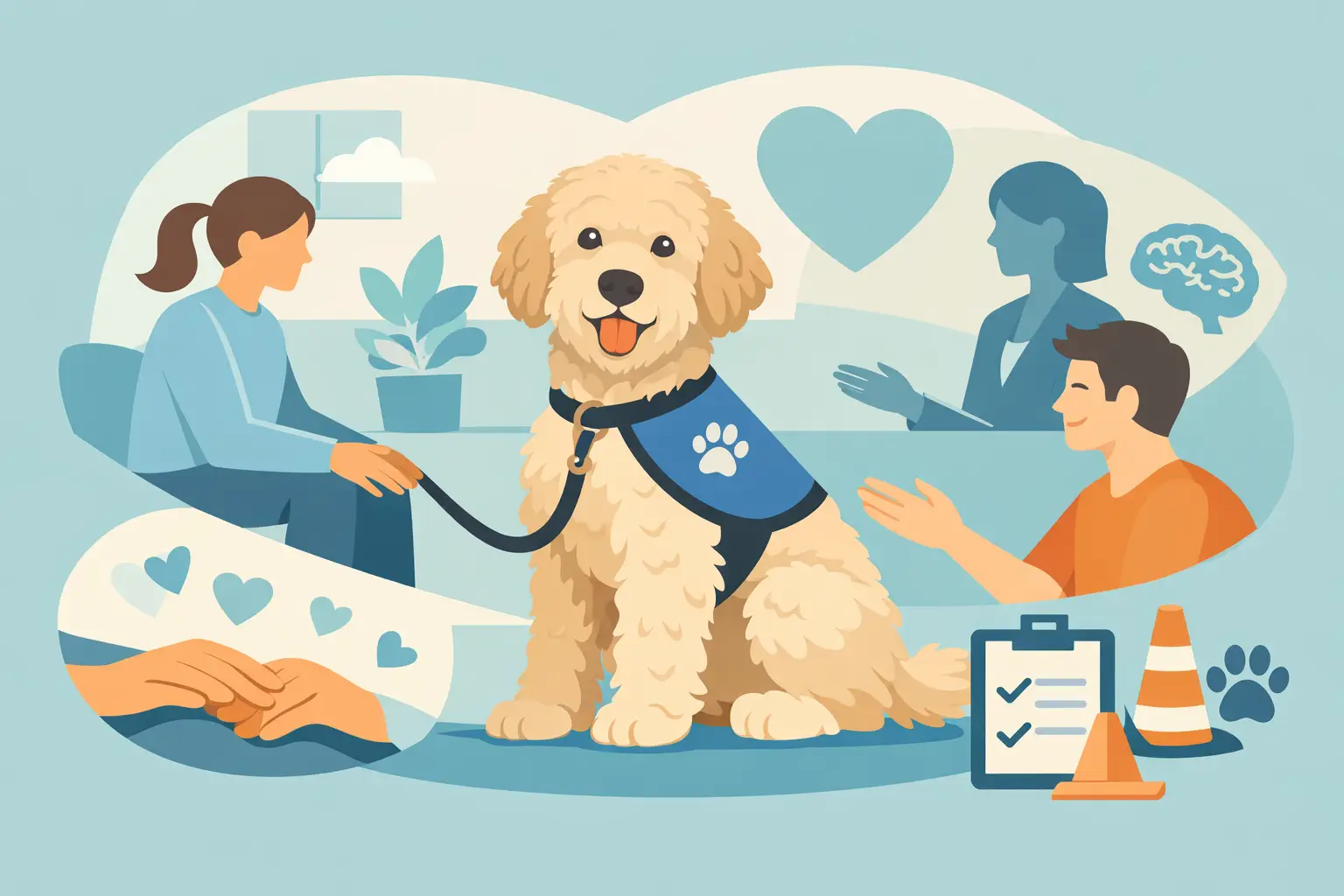
A calm dog resting her head in a child’s lap after a hard day can make a meaningful difference. But can labradoodles become therapy dogs? Many can be wonderful candidates, particularly Australian Labradoodles bred and raised with stable, people-focused temperaments. Still, a soft coat and friendly face are only the beginning. A successful therapy dog needs sound health, steady manners, thoughtful training, and a genuine comfort around all kinds of people.
For families considering an Australian Labradoodle, therapy work can be a beautiful goal. It should never be a promise placed on a young puppy, though. The best approach is to choose a puppy with a strong foundation, nurture confidence as your dog matures, and let your dog’s individual temperament guide the decision.
What a Therapy Dog Actually Does
Therapy dogs visit people who may benefit from the comfort, encouragement, and connection a well-mannered dog can offer. They may spend time in schools, libraries, nursing homes, hospitals, counseling settings, or community programs. Their work is voluntary and is usually done alongside their owners or handlers.
A therapy dog is different from a service dog. A service dog is specifically trained to perform tasks that help a person with a disability and has legal public-access protections. Therapy dogs provide emotional support and companionship to many people, but they do not automatically have the same right to enter public places. Facilities and therapy dog organizations set their own requirements for visits, registration, health records, and behavior evaluations.
This distinction matters because therapy work asks for more than affection. A dog must be able to remain calm around wheelchairs, walkers, medical equipment, sudden noises, excited children, unfamiliar handling, and people who may move or speak differently than expected.
Why Australian Labradoodles Can Be Strong Candidates
Australian Labradoodles are often loved for their affectionate nature, intelligence, and desire to be close to their people. Those qualities can support therapy work when they are paired with responsible breeding, early socialization, and consistent training.
Many Australian Labradoodles are highly responsive to human emotion. They tend to enjoy companionship and often form close bonds with family members. Their trainability can make it easier to teach the practical skills therapy settings require, such as walking politely on a loose leash, settling quietly beside a chair, greeting without jumping, and responding promptly to their handler.
Their low-shedding coats may also be appealing to some families and facilities. However, low shedding does not mean allergen-free. Anyone with allergies should spend time around the individual dog before assuming an Australian Labradoodle will be a suitable fit.
Size can be another advantage. Australian Labradoodles come in different sizes, allowing families to consider which dog may be most manageable for their lifestyle and potential volunteer setting. A smaller dog may be easier to lift or position near a bed, while a medium or standard dog may be better suited for people who appreciate a dog they can comfortably pet while seated.
Temperament Matters More Than Breed
Even within a thoughtfully bred litter, puppies have individual personalities. Not every friendly Labradoodle will enjoy therapy work, and that is perfectly okay. A wonderful family companion does not need to greet every stranger or thrive in busy environments.
The strongest therapy dog candidates are typically relaxed, social, resilient, and able to recover quickly after something unexpected happens. They enjoy meeting new people without becoming overly excited or demanding attention. They can accept gentle handling from unfamiliar adults and children, then settle again when the interaction is over.
Watch for a dog who is curious rather than fearful in new environments. A dog who notices a dropped object, loud cart, or unfamiliar person but looks back to the handler for reassurance may have a better foundation than a dog who shuts down, lunges, barks persistently, or cannot regain focus.
Confidence should never be confused with pushiness. Therapy dogs need to be comfortable, but they also need self-control. A dog that pulls toward every person, jumps to say hello, or becomes frustrated when asked to wait may need more maturity and training before visiting others.
A Healthy Start Supports Meaningful Work
Therapy work can be physically and emotionally demanding, especially for dogs who visit busy facilities. Health-focused breeding and preventive veterinary care help give a dog the best possible start.
Families should work with a breeder who prioritizes genetic screening, sound structure, and stable temperament rather than focusing only on appearance or coat type. At Providence Hill Australian Labradoodles, we believe a puppy’s early environment matters deeply as well. Puppies raised in a home environment have valuable opportunities to experience normal household sounds, gentle handling, age-appropriate enrichment, and positive human interaction from the beginning.
As your dog grows, keep regular veterinary care, vaccinations, parasite prevention, dental care, and grooming on track. Most therapy organizations require dogs to be healthy, clean, well-groomed, and current on vaccinations before they can participate. A dog with chronic discomfort, skin irritation, untreated anxiety, or pain may not be comfortable in the close-contact settings therapy visits involve.
Training for Therapy Work Begins at Home
A future therapy dog does not need advanced tricks. What matters most is dependable everyday behavior. Training should be kind, consistent, and built around trust. Reward-based training helps an Australian Labradoodle understand what you want while keeping learning positive.
Start with the skills your family uses every day: coming when called, walking politely, waiting at doors, leaving dropped food, settling on a mat, and calmly greeting visitors. Practice these behaviors in gradually more distracting places once your dog is ready. A dog who can listen in your quiet kitchen but cannot respond outside the home still needs time and practice.
Socialization is equally important, but it should be intentional. Socialization does not mean overwhelming a puppy with every possible experience. It means helping your dog build positive associations with the world at a pace that protects confidence. Introduce new surfaces, sounds, friendly people, car rides, hats, umbrellas, mobility aids, and carefully selected dogs. Give your puppy room to observe, and never force an interaction.
As adolescence arrives, many dogs go through temporary periods of distraction or sensitivity. This is normal. Continue short training sessions, protect your dog from situations that are too intense, and ask for help from a qualified trainer if worries or reactivity appear. Rushing a young dog into therapy work can create stress where patience would have built confidence.
When Is a Labradoodle Ready to Be Evaluated?
Most therapy dog programs require dogs to be at least one year old, and some may prefer older dogs. Age requirements vary, but maturity is just as important as the number on the calendar. Your dog should have a reliable foundation of obedience, a consistent ability to settle, and a clear enjoyment of meeting unfamiliar people.
Before pursuing an evaluation, honestly consider how your dog responds in real-life situations. Can your dog walk past another dog without pulling? Can they remain relaxed if a child squeals, an item falls, or someone approaches awkwardly? Can they handle brief petting from strangers without becoming worried or overly excited? Do they willingly take direction from you when attention is elsewhere?
A reputable therapy dog evaluator is not looking for a perfect robot. They are looking for a safe, friendly dog with predictable responses and a handler who understands how to advocate for that dog. If your Labradoodle is not ready yet, more training and maturity may help. If therapy work never feels right for your dog, honoring that answer is an act of good ownership.
The Handler’s Role Is Just as Important
Therapy dogs work as a team with their people. During a visit, your job is to read your dog’s body language, maintain a comfortable distance, manage interactions, and end the visit before your dog becomes tired or stressed.
Signs of stress can be subtle: lip licking, yawning when not tired, turning away, tucked posture, a stiff body, repeated shaking off, or refusing treats the dog normally loves. A responsible handler notices those signals and gives the dog a break. Therapy work should feel positive for the dog, not like a duty they must endure.
Short, successful visits are often better than long ones. Some Labradoodles may thrive with frequent community visits, while others may prefer occasional reading programs with children or quieter one-on-one settings. The right fit depends on the dog and the environment.
A Labradoodle who is gentle, confident, healthy, and happy to connect with people can bring real comfort beyond the family home. Give your dog the time to grow into that role, celebrate the progress along the way, and let their wellbeing remain at the center of every next step.