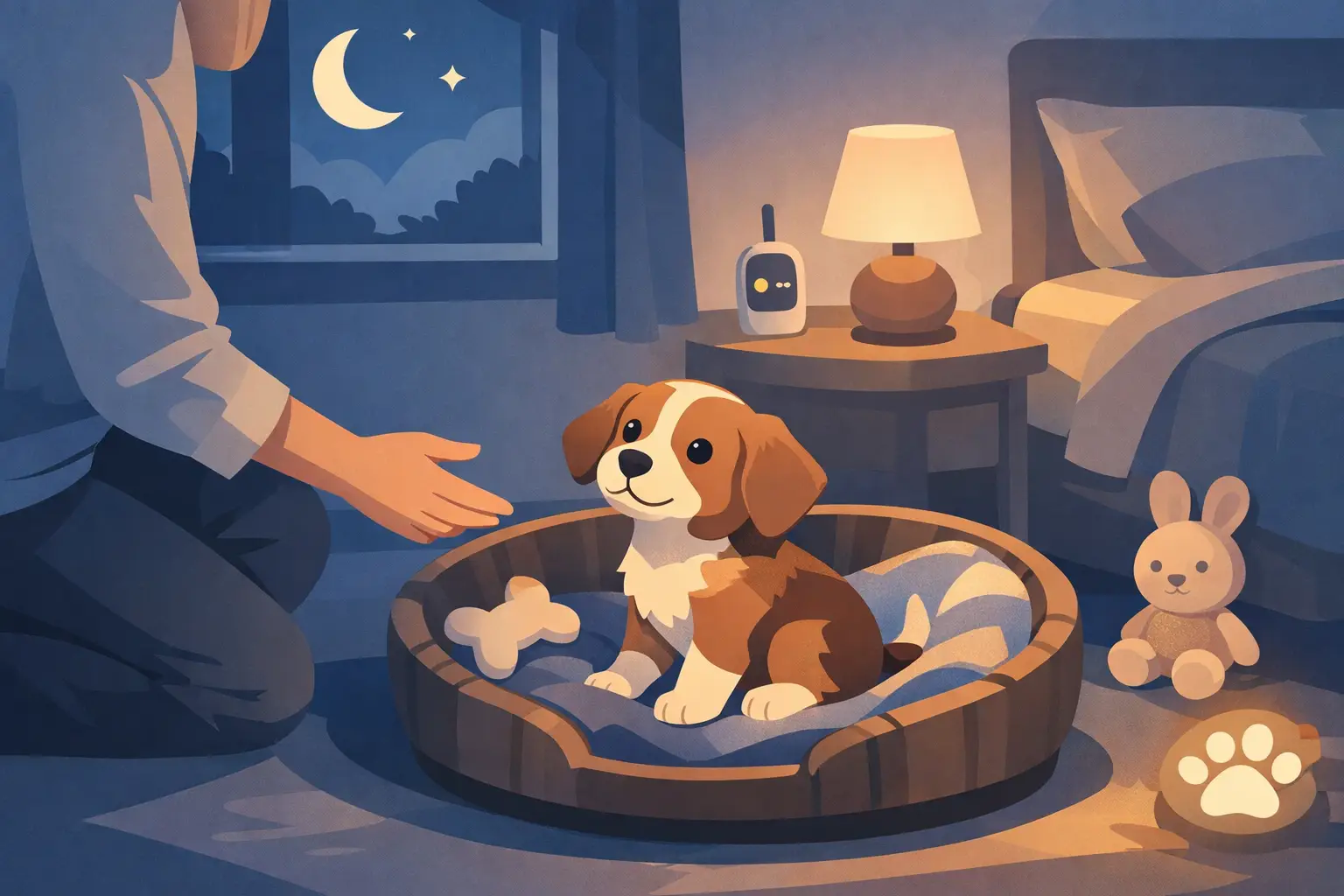
The car pulls into the driveway, the house is quiet, and suddenly the puppy you have been anticipating is in your arms. Bringing home a puppy at night can be a tender, exciting beginning, but it also asks a lot of a young puppy. They have just left familiar scents, littermates, and the routine they knew. Your goal is not a perfect first night. It is helping your puppy feel safe enough to begin settling into their new family.
A little preparation makes a meaningful difference. Keep the evening calm, expect a few wake-ups, and let the first night be about comfort and consistency rather than training progress.
Before Bringing Home a Puppy at Night, Set Up One Safe Space
Do not give your puppy a full tour of the house when you arrive late. A large, unfamiliar space can be overstimulating, especially after travel. Choose one quiet area near where you sleep and have it ready before pickup day.
Set up a properly sized crate or puppy pen with comfortable, washable bedding. The crate should be large enough for your puppy to stand, turn around, and lie down, but not so large that they can comfortably use one end as a bathroom. Keep water available during the evening, then follow your veterinarian’s guidance and your puppy’s age when deciding how to manage water overnight.
Remove cords, shoes, small toys, houseplants, and anything else a curious puppy could chew or swallow. If there are children in the home, explain that the puppy needs a gentle, quiet welcome. Everyone will have time for cuddles and introductions in the morning.
A soft blanket that carries a familiar scent can be reassuring, if your breeder has provided one. You may also use a low, steady sound machine or quiet white noise to soften unfamiliar household sounds. Skip loud television, energetic play, and a parade of visitors. The first evening should feel smaller than usual.
Make the Drive Home Calm and Secure
Your puppy should travel safely restrained in a crate or secured with an appropriate puppy car seat. Holding a puppy in someone’s lap may feel comforting, but it is not safe if the driver needs to brake suddenly.
Keep the vehicle comfortably cool and bring paper towels, a spare towel, and a few cleanup supplies. Motion sickness and nervous stomachs are common during a puppy’s first ride. Speak softly, but do not feel pressured to entertain them the whole way. Many puppies simply need a quiet place to rest.
If the drive is long, plan a brief potty opportunity in a clean, low-traffic area. Avoid dog parks, pet store floors, and heavily used public dog areas until your veterinarian confirms it is safe for your puppy based on their vaccination schedule. Young puppies are still building protection against contagious illness.
Start With a Potty Break, Then Keep Expectations Simple
As soon as you arrive home, carry or lead your puppy directly to the potty spot. Use a simple phrase such as “go potty,” then stand quietly and give them a few minutes. If they go, offer calm praise and a small treat. This is the beginning of a routine, not a test your puppy must pass.
If nothing happens, bring them inside for a short, supervised settling period and try again in 10 to 15 minutes. Puppies may be too distracted, tired, or uncertain to potty immediately in a new yard.
After that, offer a brief chance to explore their designated indoor space. A few minutes of gentle connection is enough. Avoid introducing every room, practicing commands, or encouraging a burst of late-night play. A tired puppy can become mouthy, restless, or fussy just like an overtired child.
If your puppy arrives around a normal mealtime and your breeder has recommended a meal, offer the same food they have been eating. Do not switch foods on the first night. A sudden food change combined with travel stress can lead to digestive upset. If it is already very late, follow the feeding plan you received from your breeder and resume the recommended schedule the next day.
Where Should Your Puppy Sleep the First Night?
For most new puppies, the best first-night setup is a crate beside your bed. Your presence helps them feel less isolated, and being close makes it easier for you to hear when they need a potty break. It also helps you respond before a worried whimper becomes a full cry.
Sleeping near your puppy does not mean creating a habit you cannot maintain. You can gradually move the crate farther from your bed over several nights or weeks if your long-term plan is for the crate to be in another room. What matters is being consistent once you choose a routine.
Some families prefer a puppy pen connected to a crate, particularly if they need a little more room for supervised settling. That can work, but it may slow early house-training if the puppy has enough space to sleep in one corner and eliminate in another. For a young puppy who is learning bladder control, a cozy crate and regular outings are often the clearer option.
Expect Whining, but Respond With Purpose
A puppy may cry when the lights go out. They are not being difficult or trying to manipulate you. They have experienced a major change, and their littermates are no longer nearby.
Pause for a moment and listen. If your puppy has recently pottied and settles after a few seconds, a calm verbal reassurance may be all they need. You can speak softly from your bed or place your hand near the crate without turning it into a play session.
If the crying continues, especially after sleep, assume they may need to go outside. Take them directly to the potty spot with minimal talking, lights, or excitement. Give them a chance to eliminate, offer quiet praise if they do, and return them straight to the crate. Middle-of-the-night potty breaks should be pleasantly boring. That teaches your puppy that nighttime is for sleeping, not socializing.
Avoid scolding a puppy for crying or having an accident. Fear does not teach a puppy where to potty, and it can make crate time more stressful. Instead, clean accidents thoroughly with an enzymatic cleaner and adjust the timing of the next potty break.
Plan for Overnight Potty Breaks
Very young puppies cannot hold their bladder all night. The exact schedule depends on age, size, what they drank, their activity level, and how well they settled before bed. A puppy who is eight to ten weeks old often needs one or more nighttime trips outside.
Set an alarm before you go to sleep rather than waiting for your puppy to become distressed. In the first few nights, it is usually better to take a preventative potty break than to clean up an accident and leave your puppy confused about the routine. As your puppy grows and succeeds, you can gradually extend the time between outings.
Keep a leash and slip-on shoes near the door. The easier you make the routine for yourself, the more calmly you can handle those sleepy trips outside.
The Morning After Is Part of the Transition
When your puppy wakes for the day, head outside promptly for another potty break. Then offer breakfast according to the schedule provided by your breeder, followed by a little supervised play, affection, and rest. Puppies need far more sleep than many families expect, often 18 to 20 hours across a full day.
It is normal for appetite, stool, and sleep to be a little different during the first day or two. However, repeated vomiting, ongoing diarrhea, unusual lethargy, coughing, or any concern that feels significant deserves a call to your breeder or veterinarian. Responsible breeders want to support families through the transition, and a veterinarian can help you decide what needs prompt attention.
At Providence Hill Australian Labradoodles, we encourage families to think of the first night as the start of a relationship built on patience. Your puppy does not need a flawless arrival. They need a calm voice, a safe place to sleep, regular potty opportunities, and the steady reassurance that they are home.