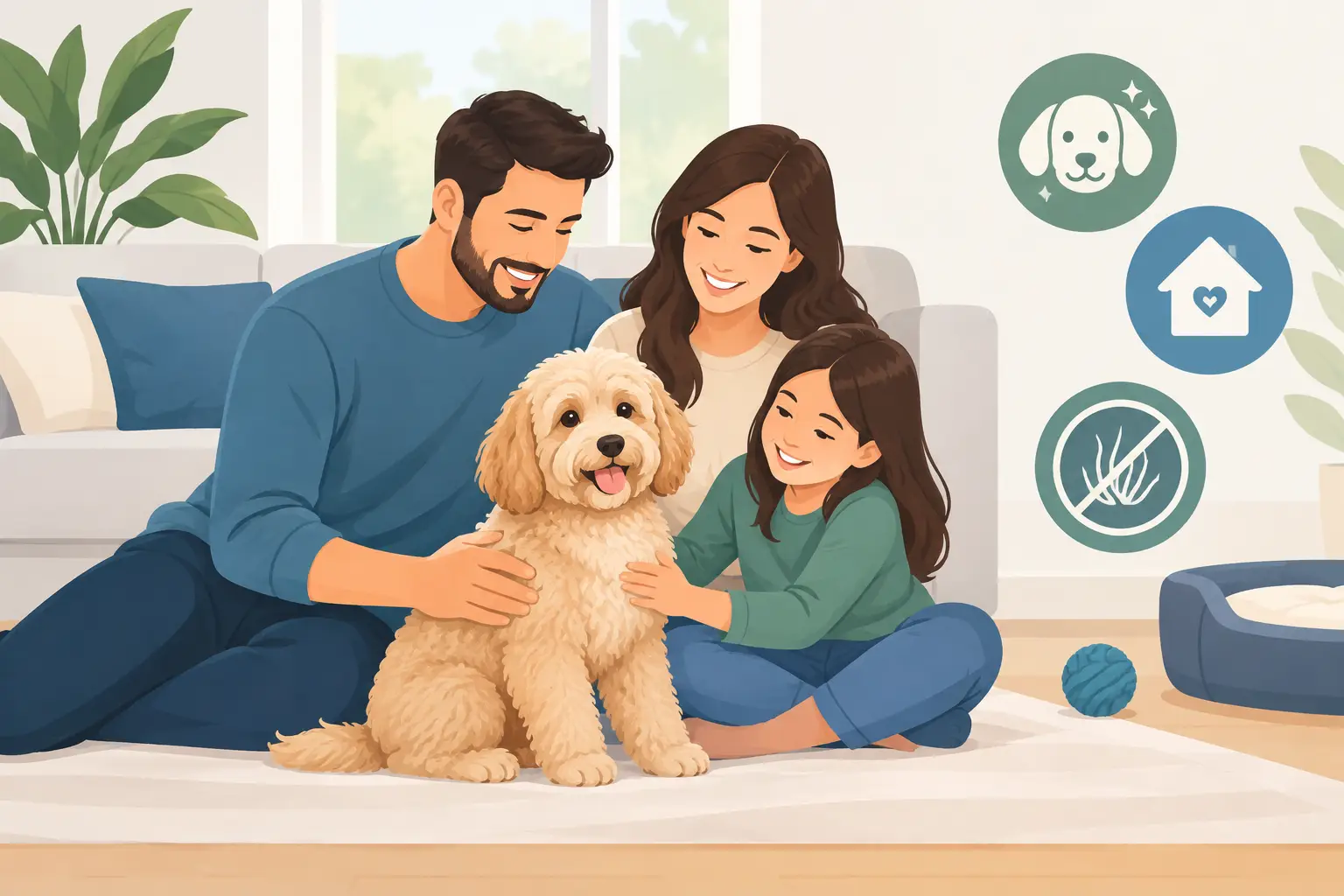
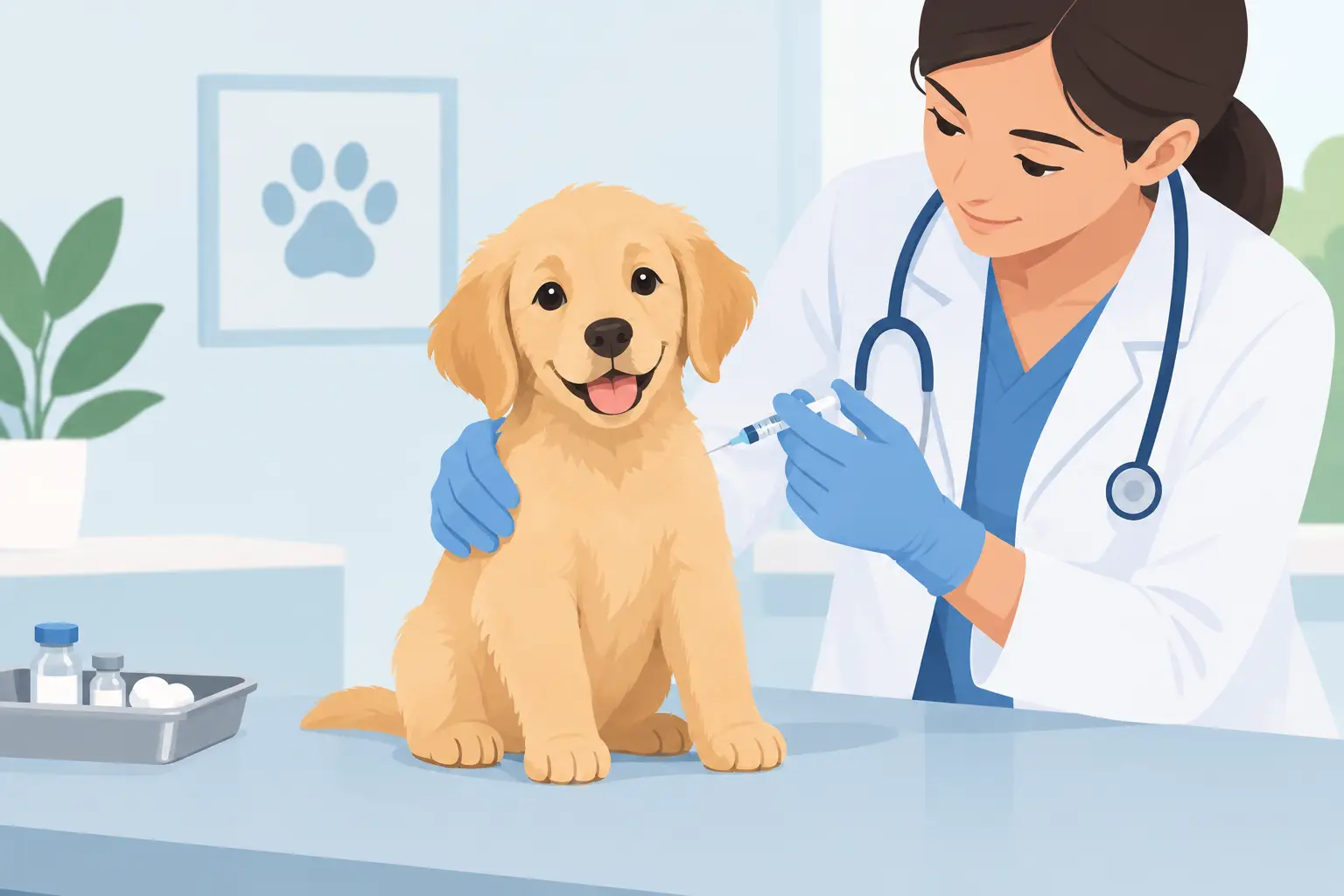
The first few months with a puppy are full of small milestones: the first night at home, the first successful potty break outside, the first confident tail wag for a new friend. Puppy vaccines may not feel as exciting, but they are one of the most meaningful ways you protect those moments. A thoughtful vaccine plan helps guard your puppy against serious, preventable illnesses while giving your veterinarian a clear picture of their growing health.
For families bringing home an Australian Labradoodle, knowing what is due, when it is due, and how to safely socialize along the way can make those early weeks feel far less overwhelming. Your puppy’s individual schedule should always be guided by your veterinarian, but understanding the purpose behind it helps you make confident choices.
Why Puppy Vaccines Are Given in a Series
Puppies are not fully protected after one vaccine appointment. During their first weeks of life, they receive helpful antibodies from their mother. Those maternal antibodies offer early protection, but they gradually fade. The challenge is that, while they are present, they can also interfere with a vaccine’s ability to create lasting immunity.
That is why veterinarians give a series of vaccinations at carefully spaced intervals. Each visit is another opportunity for your puppy’s immune system to respond as maternal antibodies decrease. Missing or delaying an appointment can leave a longer gap in protection, especially during the period when a curious puppy is starting to explore more of the world.
A well-bred puppy should come home with clear health records, including any vaccinations and deworming already completed. Bring those records to your first veterinary visit so your veterinarian can continue the schedule accurately rather than starting from guesswork.
A Typical Puppy Vaccine Timeline
Your veterinarian may adjust timing based on your puppy’s age, health, local disease risks, and the vaccines already received. Still, most family puppies follow a pattern similar to this one.
Six to eight weeks
Many puppies receive their first combination vaccine at this age, often before they leave their breeder. This commonly protects against distemper, adenovirus, parvovirus, and parainfluenza. You may hear it called DHPP or DAPP, depending on the practice.
Nine to twelve weeks
The combination vaccine is repeated. Your veterinarian may also recommend a non-core vaccine at this stage, such as Bordetella for kennel cough, depending on your family’s plans for puppy classes, grooming, boarding, daycare, or frequent contact with other dogs.
Twelve to sixteen weeks
Puppies typically receive additional boosters during this period. Rabies vaccination is commonly given between 12 and 16 weeks, based on state law and your veterinarian’s recommendation. In Virginia and throughout the East Coast, rabies requirements matter not only for your puppy’s health but also for legal compliance and community safety.
Around sixteen weeks and beyond
The final puppy booster is particularly important. Core combination vaccines are generally continued until at least 16 weeks of age because some puppies retain maternal antibodies longer than others. Your veterinarian will also tell you when adult boosters are due, usually one year later and then on a schedule based on the vaccine and local guidance.
Keep every record in one easy-to-find place. A photo on your phone is helpful, but a dedicated folder is even better for grooming appointments, training programs, travel, boarding, and future veterinary care.
Core and Lifestyle Vaccines: What Is the Difference?
Core vaccines are widely recommended because they protect against diseases that can be severe, widespread, or dangerous to people. For puppies, these generally include the distemper-parvovirus combination vaccine and rabies.
Parvovirus deserves special attention because it can survive in the environment and cause severe vomiting, diarrhea, dehydration, and illness in young dogs. Distemper can affect the respiratory, gastrointestinal, and nervous systems and can be life-threatening. These are not illnesses families want to face, and vaccination is the best available protection.
Other vaccines are considered based on lifestyle and location. Your veterinarian may discuss Bordetella, leptospirosis, Lyme disease, canine influenza, or other options. There is no one-size-fits-all answer. A puppy who will hike in wooded areas, visit dog-friendly stores, attend daycare, or spend time around wildlife may have different needs than a puppy who stays mostly at home.
For example, leptospirosis can be spread through the urine of infected wildlife and is a consideration in areas where dogs encounter puddles, standing water, rodents, or wooded property. Lyme vaccination may be worth discussing for families in tick-prone regions, though tick prevention remains essential whether or not your dog is vaccinated. Your veterinarian can help you weigh exposure risk, age, health history, and the activities your family enjoys.
Safe Socialization Before the Vaccine Series Is Complete
One of the most common questions new puppy families ask is whether they should keep their puppy completely indoors until every vaccine is finished. The answer is more nuanced than a simple yes or no.
Your puppy’s early socialization window is brief, and positive experiences during this time shape confidence for years to come. Waiting until the entire vaccine series is complete can mean missing valuable opportunities to introduce new sounds, surfaces, people, car rides, grooming tools, and gentle handling.
The goal is not isolation. It is smart exposure. Carry your puppy through a pet-friendly store if permitted, sit together on a clean bench to watch the world, invite calm and healthy visitors over, or arrange playtime with a known, friendly, fully vaccinated dog. A quality puppy class that requires age-appropriate vaccines and follows careful sanitation practices can also be a wonderful option.
Until your veterinarian says otherwise, avoid dog parks, shared apartment dog runs, pet store floors, unknown dogs, and areas where many dogs relieve themselves. Parvovirus risk is highest where infected dogs may have been, and it is impossible to judge that risk by appearance alone. If you have a private yard, ask your veterinarian when it is appropriate for your puppy to use it, particularly if unvaccinated dogs have visited recently.
What to Expect After a Vaccine Appointment
Most puppies do very well after vaccines. Mild sleepiness, tenderness at the injection site, a temporary decrease in appetite, or a quieter-than-usual evening can happen and often resolves within a day or two. Plan a calm afternoon, offer water, and let your puppy rest.
Call your veterinarian promptly if you see facial swelling, hives, repeated vomiting, difficulty breathing, collapse, or extreme lethargy. These reactions are uncommon, but they need immediate attention. It is also wise to call if mild symptoms last longer than your veterinary team advised.
Do not give human pain relievers or allergy medications unless your veterinarian specifically tells you to. Even common over-the-counter medicines can be unsafe at the wrong dose or for the wrong puppy.
Making Vaccine Visits Easier for Your Puppy
Veterinary care can become part of a puppy’s confidence-building routine. Bring a few small, high-value treats if your clinic allows them, and let your puppy meet the team at their own pace. Practice gentle handling at home too: briefly touch paws, lift ears, look at teeth, and reward calm cooperation.
Try not to make appointments feel rushed. A puppy who learns that the veterinary office includes kind voices, treats, and calm handling is more likely to feel comfortable with lifelong care. This is especially valuable for intelligent, people-focused Australian Labradoodles, who often notice and respond to their family’s energy.
At Providence Hill Australian Labradoodles, we believe preparation is part of caring for the whole puppy, not just getting ready for pickup day. Your breeder, veterinarian, trainer, and family each play a different role, and good communication between them gives your puppy the strongest start.
Questions to Ask at Your First Veterinary Visit
Bring a written list so the excitement of a new puppy does not cause you to forget something important. Ask your veterinarian which vaccines are due now, which lifestyle vaccines they recommend for your area, when it is safe to begin puppy class, and what parasite prevention is appropriate for your puppy’s age and weight.
It is also a good time to discuss feeding, stool testing, microchipping, nail care, and the best way to contact the clinic after hours. These early conversations create a practical care plan tailored to your household rather than a generic checklist.
Your puppy does not need a perfect first year. They need consistent care, patient guidance, and a family willing to ask good questions. Keeping vaccine appointments on schedule is one quiet, powerful way to support a healthy, happy life together.