The first night home with a new puppy is usually a mix of excitement, photos, and very little sleep. A puppy who has just left littermates and familiar routines does not automatically understand why they are suddenly expected to settle alone. That is why learning how to crate train puppy the right way matters so much. When done with patience and consistency, crate training gives your puppy a safe place to rest, helps with potty training, and creates structure that makes the early weeks feel much more manageable.
For families bringing home an Australian Labradoodle or any companion breed, the goal is not to force independence too quickly. The goal is to teach security. A crate should feel like a quiet bedroom, not a punishment box.
Why crate training helps puppies settle
Young puppies need a surprising amount of sleep, often 18 to 20 hours a day. Without a calm place to rest, many become overtired, mouthy, and much more likely to have accidents indoors. A crate helps reduce all of that by limiting space in a gentle way and encouraging your puppy to relax.
It also supports house training because puppies naturally try not to soil their sleeping area. That does not mean a crate magically prevents accidents. It simply helps you build better timing. If your puppy is crated for an appropriate amount of time, taken out on a regular schedule, and praised for pottying outside, progress usually comes much faster.
There is another benefit many first-time owners do not think about right away. Puppies who are comfortably crate trained often handle travel, vet visits, grooming appointments, and temporary confinement with less stress later on.
How to crate train puppy without creating fear
The biggest mistake people make is moving too fast. If a puppy is placed in a crate, the door is shut, and the family walks away while the puppy panics, the crate can become emotionally charged very quickly. That does not mean crate training has failed. It means you need to slow down and rebuild the association.
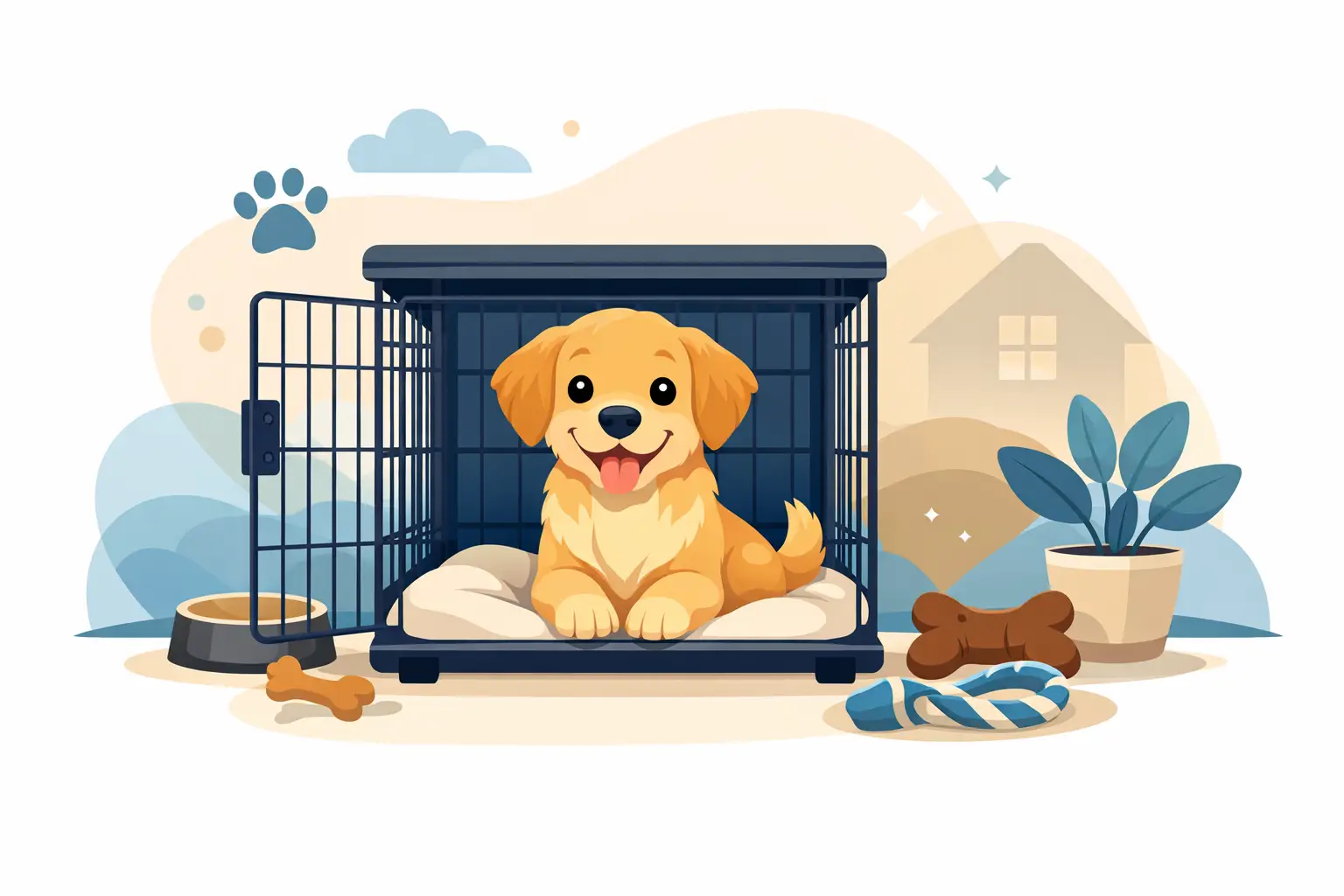
Start by placing the crate in an area where your family spends time. For most puppies, a crate in the bedroom at night and near daily activity during the day works best in the beginning. Add a soft crate pad if your puppy is not likely to shred it, and keep the space simple and comfortable. Very young puppies often do best when the crate feels cozy rather than oversized.
Begin with the door open. Let your puppy explore it freely. Toss a few pieces of kibble or small treats inside and allow your puppy to walk in and out without pressure. Feed meals near the crate first, then just inside it, then farther back as your puppy becomes more comfortable. This helps the crate feel predictable and positive.
Once your puppy is willingly entering the crate, close the door briefly while you sit nearby. Open it before your puppy becomes distressed. Over several short sessions, increase the time a little at a time. What you are building is trust. Your puppy learns that being inside the crate is safe and temporary, and that you always come back.
The best crate routine for the first few weeks
A good routine matters more than perfection. Puppies thrive on repetition, especially in a new home where everything else feels unfamiliar.
During the day, use the crate after play sessions, training, meals, and potty breaks. A puppy who has recently gone outside, had a bit of activity, and is sleepy is much more likely to settle than a puppy who has extra energy and a full bladder. Many owners find success with a rhythm of potty break, playtime, short training, then crate for a nap.
At night, expect some adjustment. Most young puppies cannot make it through the night without at least one potty trip. Keep nighttime outings calm and quiet. Take your puppy out, give them the chance to potty, praise softly, and return them to the crate without starting playtime.
If your puppy cries as soon as the crate door closes, pause and listen carefully. Some fussing is normal. Full panic is different. If the crying escalates, your puppy may need a potty break, may be too awake to settle, or may need more gradual crate training during the day. It depends on the puppy’s age, temperament, and how much preparation happened before bedtime.
Choosing the right crate setup
The crate itself should be large enough for your puppy to stand up, turn around, and lie down comfortably, but not so large that one end becomes a bathroom. If you are using a larger crate for a growing puppy, a divider can help adjust the space.
Some puppies settle better with a light cover over part of the crate, while others do better when they can see out. A safe chew toy can help, especially during daytime crate sessions. Water is a bit situational. For short daytime periods, many puppies do fine without it. Overnight, your routine and your puppy’s age will guide that decision.
This is one of those areas where there is no single perfect formula. Confident, easygoing puppies may adapt quickly. More sensitive puppies may need more closeness, slower steps, and a little more support.
Common crate training mistakes
When families struggle with crate training, the issue is usually not the crate itself. It is the way the crate is being used.
Using the crate only when leaving the house can create a negative pattern. Your puppy starts to associate the crate with isolation instead of rest. The better approach is to use it regularly when you are home too, especially for naps.
Another common mistake is keeping a puppy crated too long. Puppies have small bladders and limited emotional stamina. If they are repeatedly pushed past what they can handle, accidents and resistance are much more likely.
Inconsistency also slows things down. If one day the crate is part of a calm routine and the next day it is ignored until the puppy is overtired and wild, your puppy gets mixed signals. Calm repetition is what builds understanding.
Finally, avoid using the crate as punishment. If your puppy is corrected and then sent into the crate, that safe space can quickly lose its value.
How long can a puppy stay in a crate?
This depends on age, energy level, and whether your puppy is awake or sleeping. Very young puppies need frequent potty breaks and a lot of human guidance. As a general rule, daytime crating should stay fairly short in the early months. Overnight is different because sleeping puppies can usually last longer than awake puppies.
Even with a good schedule, remember that crate time should be balanced with training, play, socialization, and connection. The crate is a helpful tool, not a substitute for engagement.
For family dogs, this balance matters. A well-adjusted companion puppy needs both structure and relationship. Crate training works best when it is one part of a thoughtful overall routine.
What if your puppy hates the crate?
Some puppies object at first simply because they prefer being near you. Others are more vocal by nature. That does not always mean the crate is wrong for them. It may mean the pace needs adjusting.
Go back to shorter sessions. Feed in the crate. Sit beside it while your puppy settles. Practice crate time when your puppy is tired, not when they are in a playful mood. Reward calm behavior generously. If your puppy falls asleep next to you, gently transfer them to the crate for a short nap.
If distress is intense and persistent, look at the whole picture. Is the crate too isolated? Is your puppy getting enough daytime activity? Are you expecting too much too soon? Families are often relieved to find that one or two small changes make a big difference.
At Providence Hill Australian Labradoodles, we encourage families to think of early crate training as a process of reassurance rather than control. Puppies learn best when they feel safe.
When crate training starts to click
You will notice small signs before big ones. Your puppy may begin walking into the crate on their own. Bedtime crying may shorten from fifteen minutes to three. Naps may get longer and more restful. Accidents in the house may become less frequent because your schedule is improving.
Those changes matter. They tell you your puppy is starting to understand the routine and trust the environment you have created.
If you stay consistent, most puppies make real progress in the first few weeks. Some move faster than others, and that is perfectly normal. The best results usually come from families who stay calm, keep expectations realistic, and treat crate training as a steady part of raising a confident companion.
A crate should never feel like a shortcut. Used well, it becomes something much better – a safe place your puppy can count on while they learn how to feel at home with you.