If you are looking for a dog that can keep up with family life without turning your home upside down, australian labradoodle temperament is usually the first thing people want to understand. That makes sense. A beautiful coat may catch your eye, but temperament is what determines whether your puppy grows into an easy companion, a confident family dog, and a true part of your daily routine.
Australian Labradoodles are widely loved for being affectionate, intuitive, and highly people-oriented. In the right breeding program and home environment, they tend to be the kind of dogs that want to be close to their families, learn quickly, and settle well into everyday life. That said, no breed is a carbon copy. Temperament is influenced by genetics, early socialization, handling, and the consistency of the home the puppy joins.
What Is Australian Labradoodle Temperament Like?
At their best, Australian Labradoodles are friendly without being frantic, smart without being hard to manage, and social without being overwhelming. Many families are drawn to them because they often strike a rare balance. They enjoy activity and engagement, but they are also bred to be companion dogs, which means they typically want connection more than chaos.
This breed is known for being gentle and emotionally responsive. Many owners notice that their dog seems tuned in to the mood of the home. If the kids are playing in the yard, the dog is happy to join. If the evening is quiet, many Australian Labradoodles are just as content lying nearby while the family relaxes.
That emotional sensitivity is part of what makes them so appealing, especially for households that want a dog who feels involved rather than independent or aloof. It is also one reason they are often appreciated in roles that value steadiness, trainability, and human focus.
Why Temperament Matters More Than Looks
For most families, life with a dog is shaped far more by personality than appearance. A low-shedding coat and teddy bear face are wonderful traits, but they do not tell you whether a puppy will be patient with children, eager to train, or adaptable when guests visit.
A stable temperament can make early puppyhood easier and adult life much more enjoyable. Dogs with strong companion temperaments are often easier to introduce to routines, respond better to training, and recover more quickly from new experiences. That does not mean every puppy is calm from day one. Puppies are still puppies. They chew, test boundaries, and have bursts of energy. But good temperament gives you a solid foundation to work with.
This is one of the biggest reasons responsible breeding matters. Thoughtful breeders do not simply pair dogs based on size or coat. They also consider personality, confidence, sociability, and overall suitability for family life.
Australian Labradoodles and Family Life
One of the strongest features of australian labradoodle temperament is how naturally it often fits into a home setting. These dogs are usually happiest when they are included in family activities. They do not tend to do best as dogs who are left emotionally on the sidelines.
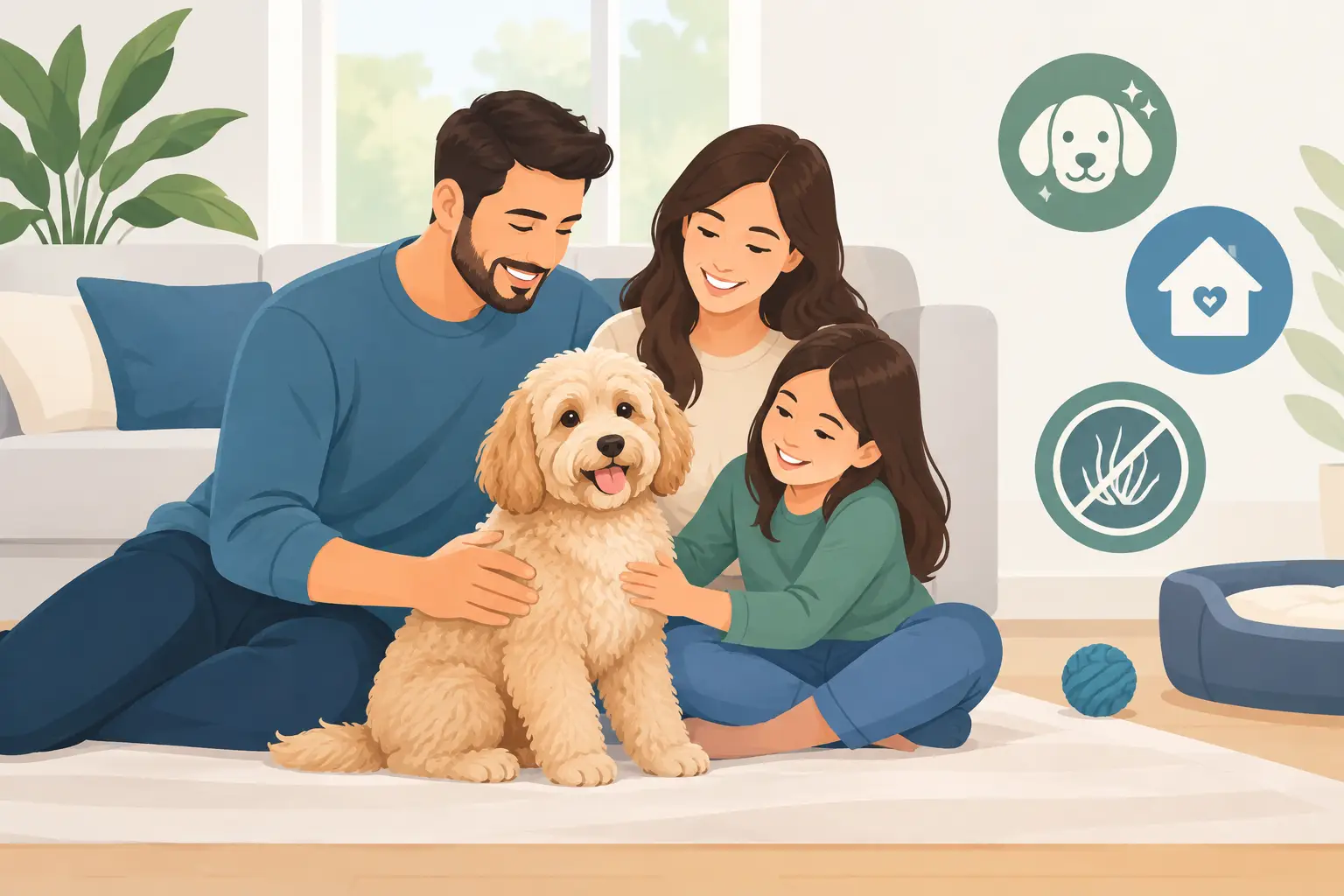
For families with children, that can be a major advantage. A well-bred and well-socialized Australian Labradoodle is often patient, playful, and eager to interact. Many are gentle enough for homes with younger kids while still being energetic enough for older children who want a dog to walk, train, and play with.
Of course, the phrase family-friendly should never mean supervision is optional. Any dog and any child need guidance, boundaries, and respectful interaction. Even the sweetest puppy needs rest, structure, and protection from rough handling. The goal is always to build trust on both sides.
For couples, singles, and empty nesters, the same temperament qualities are just as valuable. These dogs often form close bonds, enjoy companionship, and adapt well to homes where they can be involved in daily routines, errands, training sessions, and relaxed downtime.
Are They Easy to Train?
In many cases, yes. Australian Labradoodles are generally intelligent, eager to please, and responsive to positive training. That combination is a big reason they are so attractive to first-time owners who want a dog that is willing to learn rather than constantly resist.
Still, trainability is not automatic. Smart dogs also learn bad habits quickly if expectations are inconsistent. A puppy that is allowed to jump, mouth, or ignore cues in the early months can carry those habits forward. The good news is that this breed usually responds well when training is clear, kind, and consistent.
Short sessions tend to work best. They enjoy praise, repetition, and feeling connected to their person. Harsh correction is usually counterproductive with a sensitive, people-focused dog. Confidence-building methods are often far more effective.
This is where early breeder involvement matters. Puppies that are handled carefully, introduced to everyday sights and sounds, and raised in an enriching home environment often transition more smoothly into training because they already have a healthy start.
Energy Level and Emotional Balance
Families sometimes hear that Australian Labradoodles are calm and assume that means low energy. That is not quite right. Most have a moderate energy level. They need exercise, play, attention, and mental engagement, but they are not usually as intense as some high-drive working breeds.
This middle ground is part of their appeal. They can enjoy walks, games, and training, then settle in the home when their needs are met. Problems usually arise when people expect a puppy to self-regulate without enough structure. A bored puppy may bark, chew, or become overly busy. An overtired puppy may look wild when what they really need is rest.
Temperament is not only about sweetness. It is also about resilience. A balanced dog can enjoy stimulation without becoming unglued by every new experience. That kind of emotional steadiness is shaped over time through breeding, socialization, and routine.
What Can Change a Puppy’s Temperament?
Even within a well-bred litter, each puppy will have individual traits. One may be a little more outgoing. Another may be softer and more observant. Those differences are normal and important.
Several factors influence how temperament develops. Genetics sets the baseline. Early neurological and social experiences shape confidence. Daily handling teaches puppies whether the world feels safe and predictable. After that, the new home has a major role. Sleep, training, crate introduction, household noise, travel, and the way family members respond to the puppy all matter.
This is why choosing a breeder should never be only about availability or color. Families who care about australian labradoodle temperament should ask how parent dogs are selected, how puppies are raised, and what kind of early exposure they receive before going home.
At Providence Hill Australian Labradoodles, that family-centered start is a meaningful part of the process because puppies are not simply produced – they are raised with the goal of becoming confident companions.
Are Australian Labradoodles Good for First-Time Owners?
For many people, they are an excellent fit. Their social nature, intelligence, and desire to be with people often make them more approachable than breeds that are highly stubborn, intensely driven, or emotionally distant.
That said, first-time owners still need realistic expectations. A puppy will need house training, leash training, grooming routines, social experiences, and time to mature. Being easy to train does not mean being maintenance-free. It means the dog is often more willing to meet you halfway.
Families who do best with this breed are usually the ones who want a dog involved in everyday life. If you want a companion that joins your routines, learns your household rhythm, and enjoys connection, this temperament can be a wonderful match.
The Temperament You Want Starts Before Go-Home Day
When people ask whether Australian Labradoodles are good family dogs, the honest answer is that the breed has many qualities that support that reputation. They are often loving, intuitive, trainable, and adaptable. But those qualities do not happen by accident.
They are strengthened by intentional breeding, strong health standards, early socialization, and families who are ready to continue that work once the puppy comes home. If temperament is high on your priority list, that is exactly where your search should begin.
The best puppy for your home is not simply the cutest one in the litter. It is the one raised with care, matched thoughtfully, and given every chance to grow into the steady, affectionate companion your family is hoping for.