The first week with a puppy usually answers one big question fast: did we choose the right breed for our home? If you are considering an australian labradoodle for first time owners, that question matters even more. A first dog should be loving and trainable, but also forgiving while you learn routines, training, grooming, and all the little details that come with daily life.
For many families, couples, and individuals, the Australian Labradoodle is a very good fit. These dogs are known for friendly temperaments, strong social connection, intelligence, and lower-shedding coats. But that does not mean they are effortless. The best match happens when expectations are realistic from the start.
Why an Australian Labradoodle works for first-time owners
A well-bred Australian Labradoodle often brings together several traits that new owners appreciate right away. They tend to be people-focused, eager to learn, and comfortable becoming part of family routines. That matters when you are learning how to house train, introduce a crate, build confidence, and teach basic manners.
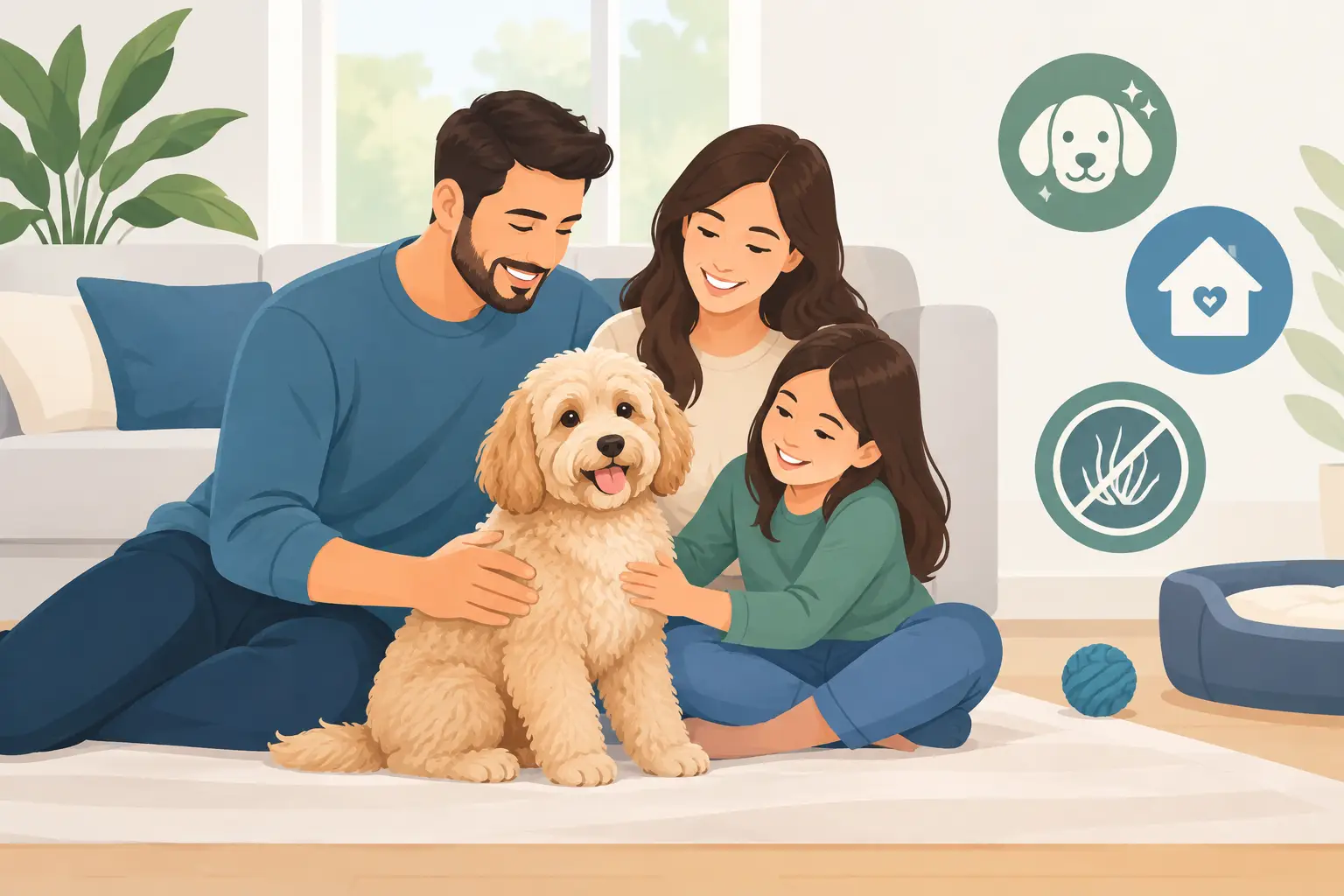
Their temperament is one of the biggest reasons first-time owners are drawn to them. Many are affectionate without being overly intense, playful without being impossible to settle, and smart enough to learn patterns quickly. In homes with children, that balanced temperament can make daily life feel smoother, especially when the puppy has been raised with early socialization and thoughtful handling.
Their low-shedding coat is another major plus for many households. Less shedding can mean less hair on furniture and clothing, which is appealing for busy families and for people who are sensitive to pet dander. Still, low shedding does not mean low maintenance. Coat care is one of the trade-offs that first-time owners need to understand clearly.
What first-time owners should know before bringing one home
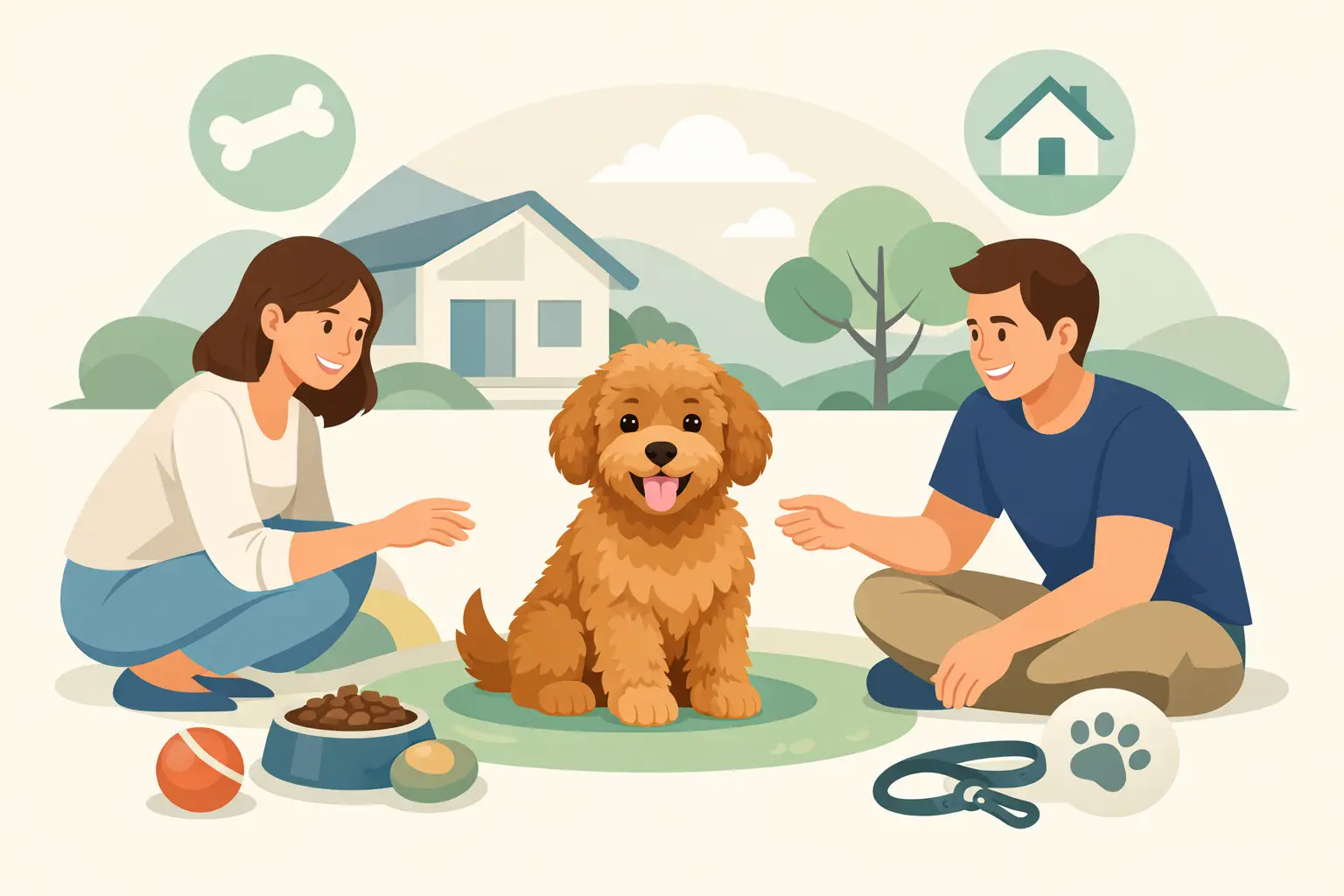
The easiest mistake to make is assuming a friendly, beautiful puppy will simply fit into your life on day one. Even a wonderful breed needs structure. An Australian Labradoodle puppy needs sleep, a schedule, patient repetition, and clear boundaries.
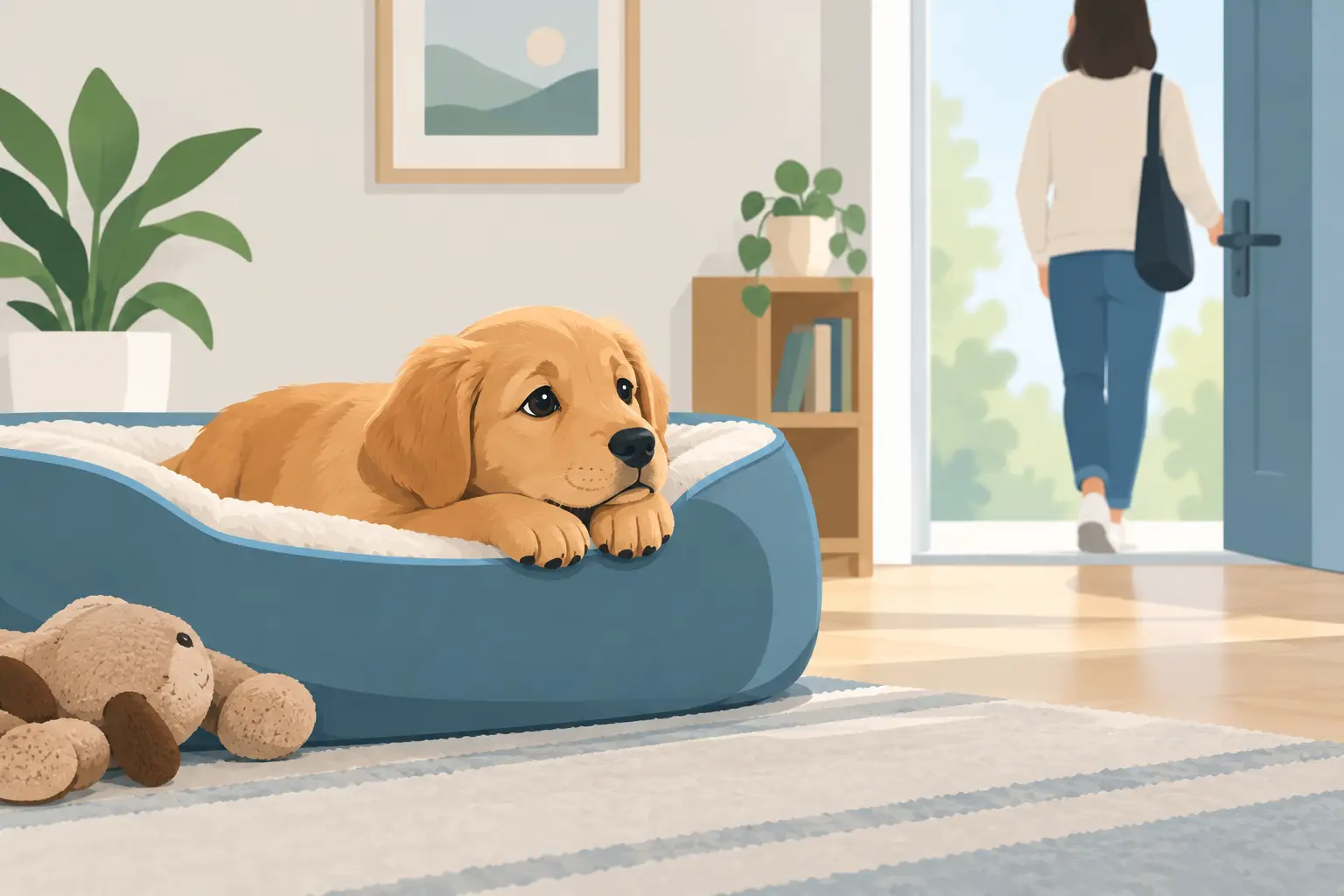
The early months are busy. Potty training means frequent trips outside, close supervision, and consistency. Crate training takes patience. Teething means your puppy will need appropriate chew outlets and guidance about what belongs in their mouth. If you work long hours away from home with no support plan, puppyhood can feel overwhelming, no matter how good the breed is.
This is where breeder support matters. A puppy that comes from health-tested parents, strong temperament lines, and an in-home environment with intentional early socialization gives first-time owners a better starting point. Good beginnings do not replace training, but they do make the path more manageable.
Australian Labradoodle for first-time owners: temperament and trainability
Most first-time owners want a dog that feels responsive rather than stubborn. Australian Labradoodles are often a strong choice because they generally enjoy interaction and learn quickly. They tend to do well with positive reinforcement, short training sessions, and predictable routines.
That said, intelligence cuts both ways. A smart puppy also notices inconsistency. If one family member allows jumping and another corrects it, the puppy will be confused. If potty breaks happen on a schedule one day and randomly the next, progress slows down. These dogs usually want to get it right, but they still need owners to be clear.
Many also have a natural sensitivity that can be a real benefit in family life. They often bond deeply and read the room well. The upside is a dog that feels emotionally connected and responsive. The downside is that harsh correction can backfire. Calm, confident guidance works much better than frustration.
Grooming is the part many new owners underestimate
If there is one area where first-time owners are sometimes surprised, it is grooming. Australian Labradoodles are often chosen for their beautiful coats and lower-shedding qualities, but those same coats need regular care.
At home, brushing is not optional. A neglected coat can mat quickly, especially around the ears, collar area, legs, and tail. Mats are uncomfortable for the dog and can become a bigger issue than many people expect. Regular brushing, routine bathing, and a professional grooming schedule are part of responsible ownership.
The good news is that once you build a rhythm, coat care becomes part of normal life. Many families find that a short brushing routine several times a week is much easier than trying to fix a heavily tangled coat later. For first-time owners, it helps to think of grooming as ongoing care, not occasional maintenance.
Exercise needs are reasonable, but they still need engagement
An Australian Labradoodle is not usually the right choice for someone who wants a dog with very low interaction needs. They are companion dogs, and they usually thrive when they are included in everyday life.
Most do well with a mix of walks, play, training, and family time. They do not necessarily need extreme exercise, but they do need consistent mental and physical activity. A bored puppy may invent their own entertainment, and that often looks like chewing, barking, or pestering everyone in the house.
For first-time owners, this is actually manageable. You do not need a complicated dog sports routine to keep your puppy happy. A structured day with short walks, toy play, basic training, and rest often goes a long way. What matters most is regularity.
Are they good with kids and family life?
In many homes, yes. A well-bred and properly socialized Australian Labradoodle often fits naturally into family life because of its affectionate and adaptable nature. Many enjoy being near people, participating in routines, and moving with the household from room to room.
That does not mean every puppy automatically knows how to behave around children. Puppies nip, chase movement, and get overstimulated. Children also need guidance on how to interact gently and respectfully. The best results come when adults actively teach both sides.
Families often appreciate that these dogs can be playful and cuddly without being too independent. For homes that want a dog who feels like part of the family rather than just a pet in the background, this breed is often appealing.
Is an Australian Labradoodle right for your home?
The better question is not whether this is a good breed in general, but whether it fits your real life. An australian labradoodle for first time owners can be an excellent choice if you want a dog that is social, trainable, and closely connected to the family. It is especially appealing if lower shedding, strong temperament, and companionship are high on your list.
It may be less ideal if you want a dog that requires very little grooming, can be left alone for long stretches, or needs minimal interaction. Even the easiest puppy still needs time, planning, and follow-through.
For many first-time owners, the sweet spot is this: you want a dog that is beginner-friendly, but you are also ready to participate. You are willing to learn the routine, stay consistent with training, and invest in proper care. In that setting, an Australian Labradoodle often shines.
Choosing the right puppy matters as much as choosing the breed
Not every puppy has the same start. This is especially important for new owners, because early health, socialization, and temperament work can shape how manageable the transition feels.
A responsible breeder should be able to speak clearly about health testing, parent temperament, puppy development, and how the puppies are raised before going home. For first-time owners, this kind of transparency matters. It gives you more confidence in what you are bringing into your home and more support as you prepare.
At Providence Hill Australian Labradoodles, that belief is central to the process. Families are not just choosing a puppy. They are choosing the foundation for years of companionship, and that foundation should be built with care.
The right puppy does not make you a perfect owner overnight. But a healthy, well-started Australian Labradoodle can make the learning curve feel far more encouraging. If you are ready for a dog that wants to be with you, learn from you, and grow into family life with you, this breed is worth serious consideration.