The first 48 hours with a puppy can feel sweet, messy, and a little chaotic all at once. A solid new puppy routine checklist gives your family something even better than a plan on paper – it gives your puppy a predictable day, which is one of the fastest ways to build confidence, support training, and lower stress for everyone in the house.
For most puppies, especially those adjusting to a new home, routine matters more than perfection. They do not need a packed schedule or constant entertainment. They need clear rhythms around sleep, potty breaks, meals, short play sessions, and quiet time. When those pieces happen in a consistent order, puppies settle in faster and learn what to expect.
Why a new puppy routine checklist matters
Young puppies are still learning how to regulate their bodies, their energy, and their emotions. They wake up quickly, get tired quickly, and often need to go outside right after eating, drinking, playing, or napping. That is why many early puppy challenges are not really behavior problems at all. They are routine problems.
A puppy that seems wild in the evening may be overtired. A puppy having accidents every afternoon may simply be staying awake too long between potty trips. A puppy crying in the crate may need a more gradual transition, or may be missing enough daytime rest. Structure helps you spot what is actually going on.
For families, a checklist also keeps everyone on the same page. If one person feeds at 7:00, another takes the puppy out at 7:45, and someone else starts a play session right after a long nap, the day can become confusing very fast. Consistency does not mean rigid timing down to the minute, but it does mean a stable pattern.
The core rhythm of a puppy day
The easiest way to build your new puppy routine checklist is to think in cycles, not hours. Most puppies do best with a simple pattern: wake up, potty, eat or play, potty again, then rest. That cycle repeats throughout the day.
Very young puppies usually sleep far more than new owners expect. Many need 18 to 20 hours of total sleep in a day. If your puppy seems to switch from adorable to frantic in ten minutes, lack of rest is often the reason. Families sometimes worry they are not doing enough, when the healthiest choice is actually a quiet nap in the crate or puppy pen.
That said, every puppy has a slightly different rhythm. Some wake early and settle well in the evening. Others need more support during the late afternoon when children come home, dinner is being made, and the house gets busy. The goal is not to force your puppy into a perfect schedule on day one. The goal is to create a repeatable flow that fits real family life.
Morning routine: start calm and predictable
The morning usually sets the tone for the entire day. As soon as your puppy wakes up, head outside for a potty break before anything else. This one habit prevents many accidents and helps your puppy connect waking up with going outdoors.
After that, offer breakfast and water, then go back outside again soon after eating. Many puppies need to relieve themselves within 10 to 20 minutes after a meal, sometimes sooner. Keep the outing calm and boring at first. If outside time turns into a party every time, some puppies get too distracted to finish what they went out to do.
Once your puppy has pottied, a short play session or a few minutes of gentle training is usually enough. Think simple name recognition, coming when called from a short distance, or rewarding calm attention. Early training should feel like communication, not pressure. Then it is time for another potty trip and a nap.
Midday routine: protect sleep and prevent accidents
This is where many homes start to drift off schedule. The puppy is awake, everyone is moving around, and it is tempting to stretch playtime too long. Most young puppies cannot handle that well. If they stay up too long, they often become mouthy, zoomy, or accident-prone.
A better approach is short, focused windows of activity followed by rest. After your puppy wakes from a nap, go outside. Then offer lunch if your puppy is still on three meals a day. Follow with another potty break, a few minutes of interaction, and then back to rest.
If you work from home, this pattern is especially helpful because it keeps the puppy from learning that someone will entertain them all day. If you have children, a midday routine also teaches them that puppies need downtime, not constant handling. Rest is not optional. It is part of healthy development.
Evening routine: manage the busiest part of the day
Evenings can be the hardest stretch because puppies are tired, families are tired, and the house is usually more active. This is when structure matters most.
Plan a potty break before the dinner rush starts, not after your puppy is already wandering and sniffing. Feed dinner at a consistent time, then go back outside again. Keep play gentle and supervised. Rough, overstimulating play in the evening often leads to nipping, barking, and trouble settling down.
This is also a good time for a very short grooming routine. Australian Labradoodles, in particular, benefit from early positive coat care habits. A few calm minutes of brushing, handling paws, touching ears, and rewarding stillness can make future grooming far easier. Keep it light and pleasant. You are building trust, not completing a full grooming session.
Bedtime routine: simple is best
A good bedtime routine lowers anxiety for everyone. Take your puppy out one more time, keep lights and voices low, and guide them to the crate or sleeping area without a lot of extra excitement.
Some puppies settle quickly. Others need a few nights of reassurance. It depends on age, temperament, and how much transition they are processing. Staying nearby briefly can help, but try not to create a pattern you cannot maintain. Gentle consistency usually works better than dramatic soothing.
If your puppy wakes overnight, take them straight out for a potty break and then return them to bed calmly. Nighttime is for bathroom needs, not playtime.
What should be on your new puppy routine checklist
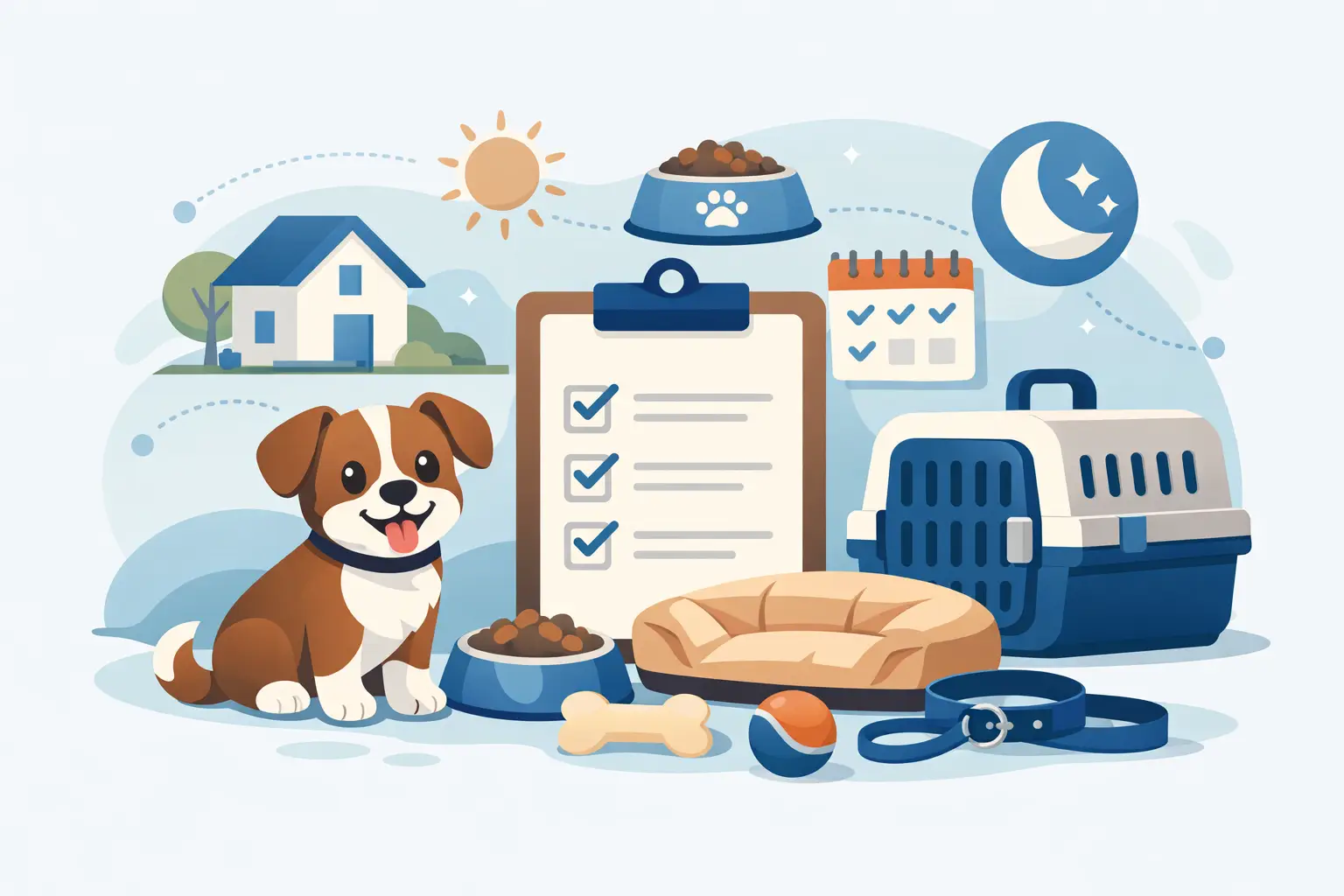
A practical new puppy routine checklist should cover the same needs every day: potty trips, meals, water, naps, short training sessions, age-appropriate play, crate time, and a little handling for grooming and body awareness. It should also include supervision.
That last piece gets overlooked. Puppies should either be actively supervised, safely confined, or resting. Too much freedom too early often leads to accidents, chewing, and habits families then have to undo. Freedom is something puppies earn gradually as they show readiness.
Your checklist should also be realistic for your household. A family with young children may need a more structured evening plan. A couple working hybrid schedules may rotate morning and midday responsibilities. A first-time owner may want to keep a written log for the first few weeks to track potty success, meals, and sleep. That is not overdoing it. It is often the fastest path to seeing patterns.
When to adjust the routine
No schedule stays exactly the same. As puppies grow, their bladder control improves, meal frequency changes, and their stamina increases. A very young puppy may need more frequent potty trips and more daytime sleep, while an older puppy may be ready for longer walks, fewer meals, and more training engagement.
It is also normal to make adjustments after the first week home. Some puppies need an earlier bedtime. Some need shorter play sessions. Some do better with more crate rest during busy family hours. A routine should support the puppy in front of you, not an idealized version of puppy life.
If something is not working, look first at timing. Too many accidents usually mean potty breaks are too far apart or supervision is too loose. Excessive evening biting often points to overtiredness. Trouble settling can mean the day has been either too stimulating or not structured enough. Small changes often make a big difference.
A routine builds trust before it builds obedience
Families often focus first on commands, but puppies learn security before they learn manners. When meals happen reliably, potty trips happen on time, naps are protected, and expectations stay clear, your puppy begins to relax. That is when training gets easier.
At Providence Hill Australian Labradoodles, we have seen how much a calm, consistent home routine shapes a puppy’s transition. Puppies do not need a perfect family. They need a dependable one.
If you keep your days simple, steady, and kind, your puppy will show you progress in small ways first – a dry floor, a quicker potty trip, a calmer evening, a softer response to the crate. Those little wins are how a confident family companion is built.