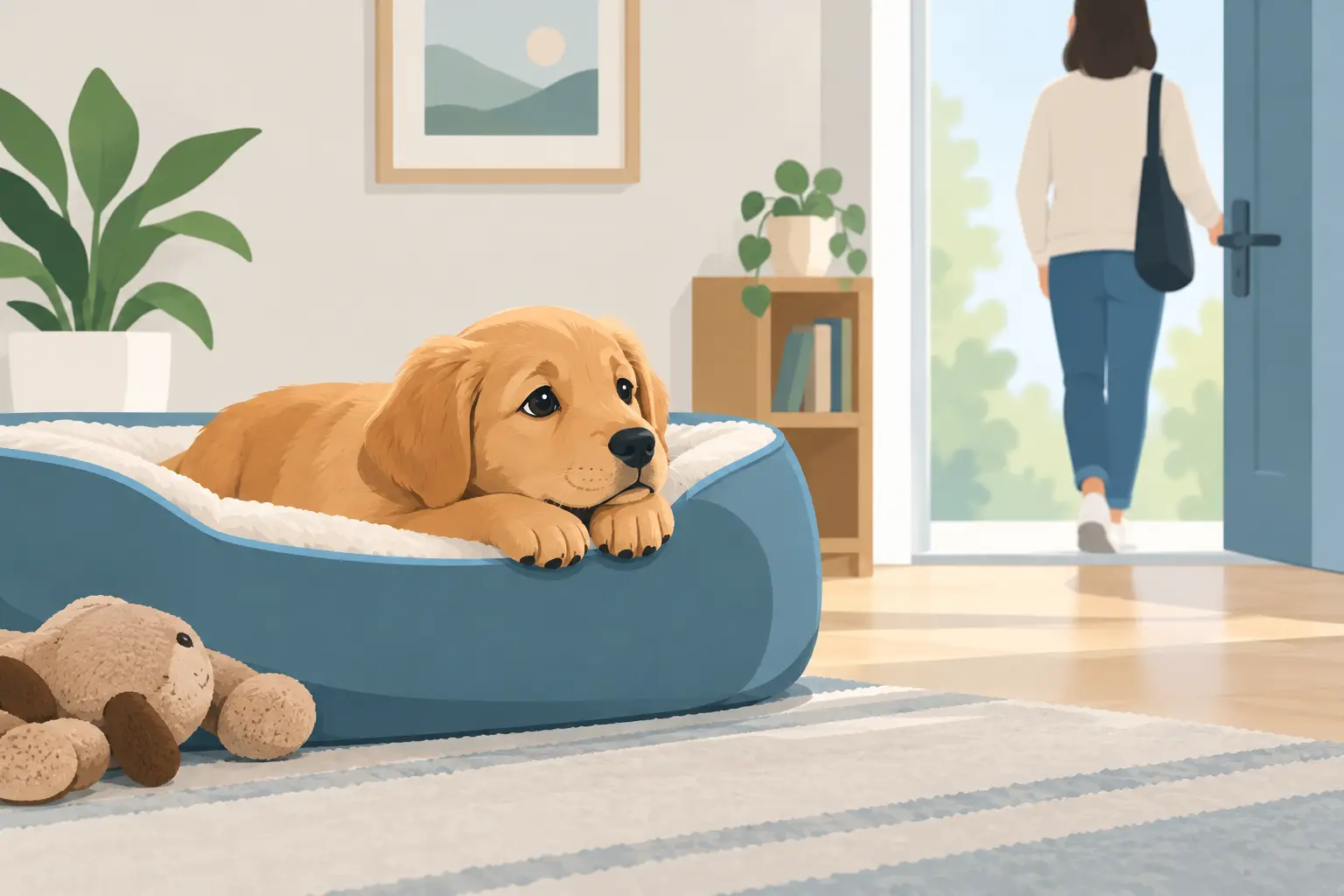
A puppy who follows you from room to room, cries when you step outside, or protests a closed bathroom door is not being stubborn. Puppy separation anxiety can feel heartbreaking, especially when you have just welcomed a loving, people-oriented companion into your family. The good news is that early, patient practice can help most puppies learn that being alone is safe and temporary.
For a young puppy, the transition into a new home is a major change. They have left their mother, littermates, familiar sounds, and established routine. Wanting closeness during those first days is normal. The goal is not to make your puppy independent overnight. It is to build confidence in small, successful moments so they can rest comfortably while you work, run an errand, or simply move through your day.
Is It Puppy Separation Anxiety or Normal Adjustment?
Many new owners worry at the first whimper, but not every complaint means a puppy has true separation anxiety. A puppy may cry briefly because they need a potty break, are overtired, hear household activity, or are still learning how to settle in a crate or puppy pen. Young puppies also have limited bladder control and should not be expected to stay alone for long stretches.
More concerning behavior tends to be intense, persistent, and connected specifically to separation. Your puppy may panic as soon as you pick up keys or put on shoes, even before you leave. They may be unable to settle, refuse a favorite food when alone, or show distress that continues rather than fading after a few minutes.
Signs worth discussing with your veterinarian or a qualified positive-reinforcement trainer include:
- Repeated frantic barking, howling, or crying that does not ease with short absences
- Attempts to escape a crate, pen, or room that could cause injury
- Drooling, trembling, pacing, or heavy panting when left alone in a comfortable temperature
- Destructive behavior or indoor accidents that happen only during absences
A camera can be very helpful here. What sounds like a long period of distress from the driveway may be two minutes of protest followed by a nap. On the other hand, video can reveal that a puppy remains upset after you leave. Clear information helps you respond to the behavior in front of you rather than guessing.
Why Some Puppies Struggle More Than Others
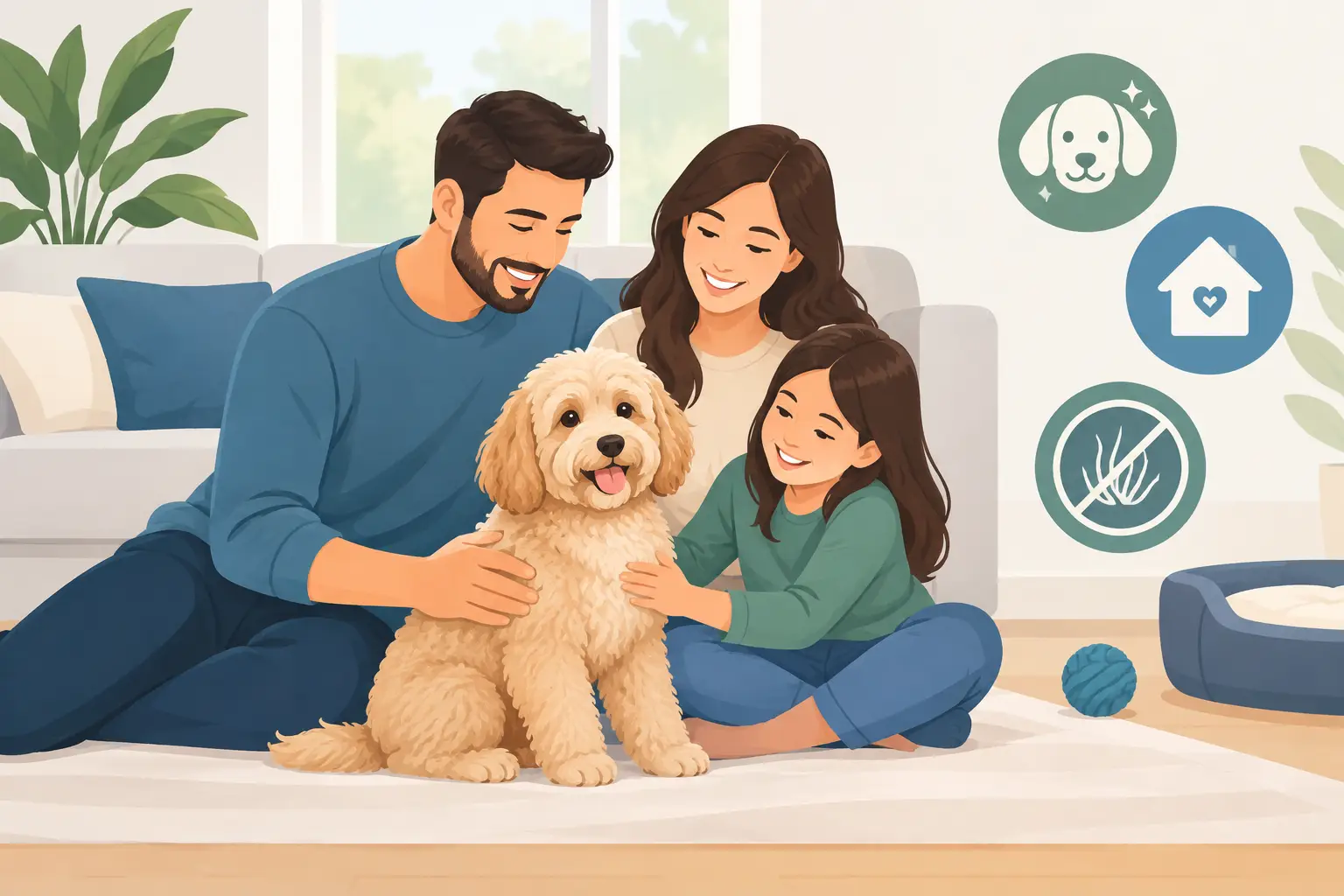
Temperament, early experiences, age, routine, and household changes all play a role. Australian Labradoodles are often chosen for their affectionate, highly social nature, which can make them wonderful family companions. That same desire to be near their people means they benefit from thoughtful practice with alone time from the beginning.
A well-socialized puppy has a valuable foundation, but no breeder can promise that a puppy will never struggle with separation. Moving into a new family is still an adjustment. Puppies may also have a harder time when a family’s schedule changes suddenly, such as after a vacation, a school break, or a period when everyone has been home.
There is a balance to aim for. Puppies need connection, comfort, and plenty of time with their new family. They also need gradual opportunities to learn that a quiet moment apart is not a problem to solve.
Start Alone-Time Training in Tiny Steps
The most effective approach is usually slower than families expect. Begin while you are home, when your puppy is fed, has recently gone potty, and is ready to rest. Set them up in a safe, comfortable space with an appropriate chew or food-stuffed toy, then step a few feet away for a brief moment.
Return before your puppy becomes highly upset. At first, that may mean sitting on the other side of a baby gate for 10 seconds. Then try 30 seconds, a minute, or a brief walk into another room. If your puppy stays calm, you can gradually increase the time. If they begin to panic, make the next session easier.
This process teaches a simple lesson: people leave, and people come back. It also keeps your puppy from practicing fear repeatedly. Letting a puppy cry intensely for long periods in the hope that they will “get used to it” can make some puppies more distressed, not less.
Keep departures and arrivals low-key. You do not need to ignore your puppy, but avoid turning every exit into a big emotional event. A calm “back soon,” followed by a quiet return, makes coming and going feel ordinary.
Choose a Safe Resting Space
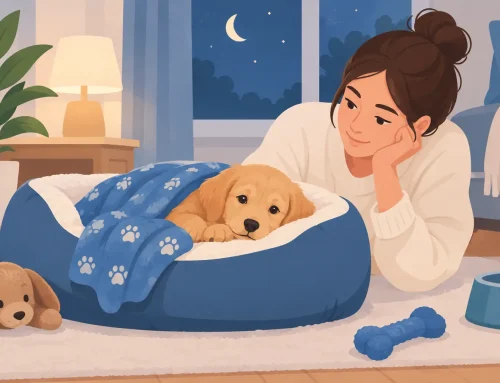
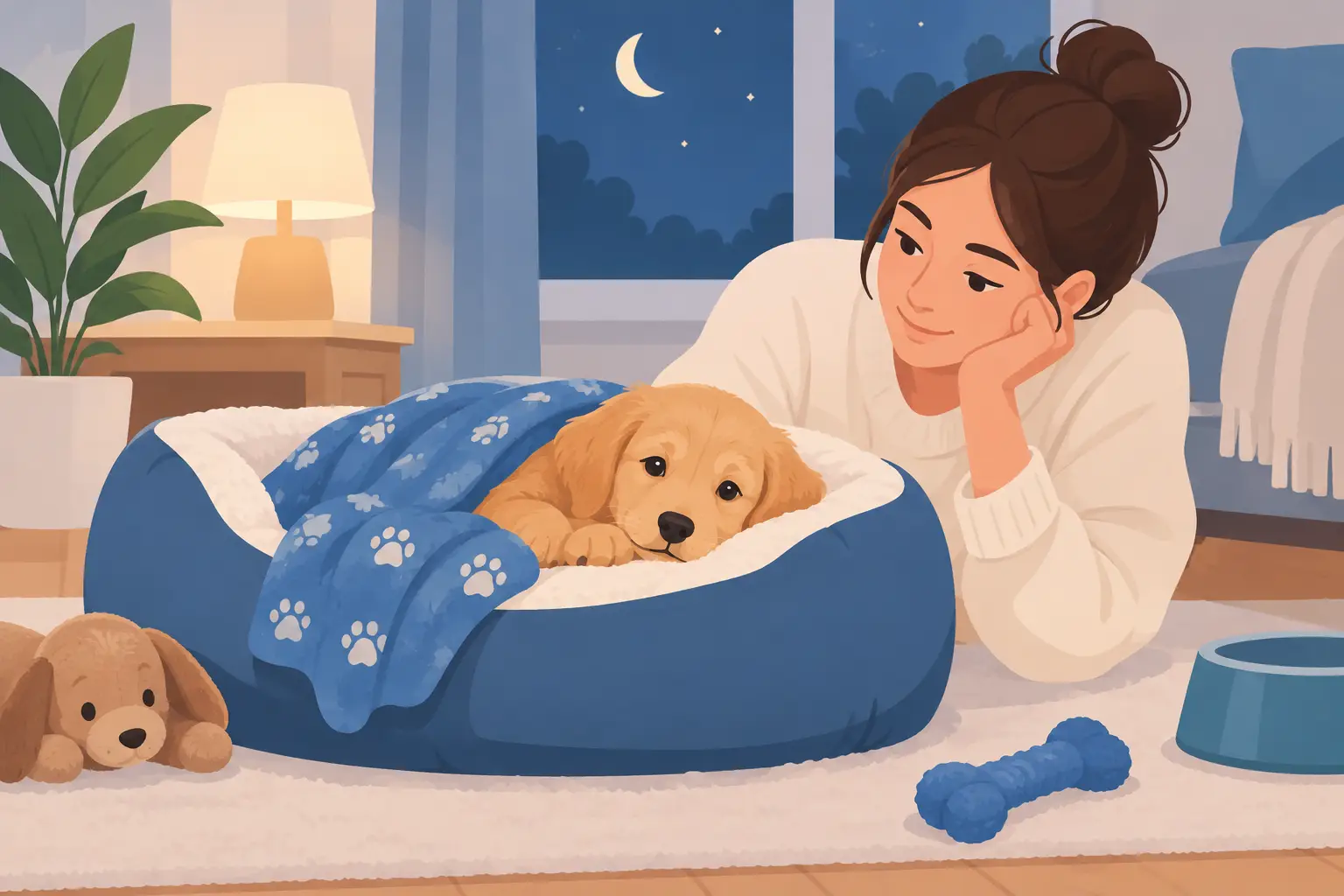
A crate can be an excellent tool when introduced positively and used for appropriate lengths of time. Some puppies settle more easily in an exercise pen or a puppy-proofed small room, particularly if they have not yet learned to relax in a crate. The right choice depends on your puppy and the situation.
Never use the crate as punishment. Feed meals near or inside it, offer safe enrichment, and allow your puppy to enter voluntarily. If your puppy becomes frantic when confined, avoid forcing longer crate sessions. A trainer can help you determine whether the issue is separation, confinement, or both.
Before leaving your puppy in any space, remove hazards such as electrical cords, small chewable objects, unsafe furniture access, and toys that could break apart. Select chews based on your puppy’s age, chewing style, and your veterinarian’s guidance.
Build a Routine That Supports Confidence
Predictability is reassuring for puppies. A consistent rhythm of potty breaks, meals, play, training, naps, and calm family time helps them understand what comes next. An overtired puppy often has a harder time settling, so regular daytime rest is not a luxury. It is part of good behavior support.
A short, age-appropriate walk or play session before alone time can help, but avoid trying to exhaust a worried puppy. High-energy activity does not resolve anxiety. What helps more is a calm transition: potty break, a few minutes of sniffing or gentle play, then a chance to settle with something enjoyable.
Practice departure cues separately from actual departures. Pick up your keys, put them down, and sit on the couch. Put on your shoes, then make a cup of coffee. Open and close the front door without leaving. When these cues stop predicting a long separation every time, they become less stressful.
Families should also make a realistic plan for the puppy’s first few weeks. A young puppy cannot be expected to handle a full workday alone. Arrange staggered schedules, a trusted family member, a pet sitter, or a midday visit as needed. This is not spoiling your puppy. It is meeting their developmental needs while training gradually.
Common Mistakes That Can Slow Progress
The desire to fix puppy separation anxiety quickly is understandable, but a few well-meant habits can make training harder. One is increasing alone time too fast after a single good session. Puppies do not learn in a straight line. A busy weekend, teething discomfort, or a change in household noise can affect their ability to settle.
Another is responding only after the puppy is already overwhelmed. Try to notice the earliest signs of discomfort, such as pacing, watching the door, or stopping a chew. Adjust the exercise before distress grows.
Avoid punishment for barking, chewing, or accidents that occurred while you were away. Your puppy will not connect a correction given later with the earlier behavior. Punishment can also make your return feel less safe, which works against the confidence you are trying to build.
Finally, do not assume that every puppy needs the same setup. One puppy may sleep peacefully in a covered crate beside a quiet fan. Another may relax best behind a gate where they can stretch out and see part of the room. Observe your puppy and make changes thoughtfully rather than following a rigid rule.
When to Ask for Professional Help
Reach out early if your puppy’s distress is severe, escalating, or creating a safety concern. Start with your veterinarian to rule out medical issues that can contribute to restlessness, accidents, or discomfort. A credentialed trainer or behavior professional who uses reward-based methods can create a tailored plan for your home and schedule.
At Providence Hill Australian Labradoodles, we encourage families to view early training as part of the transition home, alongside nutrition, potty training, and safe socialization. A puppy does not need perfect behavior in the first week. They need patient guidance, manageable expectations, and many chances to succeed.
Your puppy’s confidence will grow one calm separation at a time. Keep the steps small, celebrate quiet progress, and remember that teaching your puppy to rest peacefully alone is one of the kindest gifts you can give them.