
The first night home can feel surprisingly big. Your new puppy has left the familiar sounds, scents, and littermates they have known since birth, and your family is learning their cues in real time. Knowing how to manage puppy first night expectations helps everyone begin with patience rather than panic. A little crying, wakefulness, and uncertainty are normal. Your job is not to create a perfect night. It is to help your puppy feel safe while beginning the routines that will serve your family for years.
Prepare the sleep space before your puppy arrives
Decide where your puppy will sleep before they walk through the door. For most young puppies, a properly sized crate or a secure puppy pen with a crate inside is the safest choice overnight. It limits access to household hazards, supports early potty training, and gives a tired puppy a defined place to settle.
Place the crate close to your bed for the first several nights. Your puppy does not need to sleep in your bed to feel connected, but they will be reassured by hearing and smelling their new people nearby. A bedroom location also makes it much easier for you to notice when they need a potty break rather than waiting until they are fully upset.
Keep the space simple. Add a washable crate pad or bedding if your puppy is not likely to chew it, along with a safe comfort item. Avoid filling the crate with toys, blankets, and loose objects just because it looks cozy. A young puppy needs a secure space, not a crowded one. If your breeder has sent home a familiar-smelling blanket or soft item, that can be especially comforting during the transition.
The crate should be large enough for your puppy to stand, turn around, and lie down comfortably, but not so large that one end becomes a bathroom. If you purchased a full-size crate for your Australian Labradoodle to grow into, use the divider panel to create an appropriately sized sleeping area.
How to manage puppy first night without creating confusion
Bring your puppy home with enough time for a quiet introduction, a potty break, a small meal if it fits their established schedule, and gentle family time. Avoid turning the first evening into a welcome party. Even a social, family-oriented puppy can become overtired and overwhelmed by a parade of visitors, children, new rooms, and constant handling.
Let your puppy explore one puppy-proofed area at a time under supervision. Offer calm affection, but do not expect them to play for hours. Travel, new smells, and a major change in routine are exhausting. Many puppies become extra lively right before they crash, which can look like boundless energy but is often simple overtiredness.
Keep your breeder’s feeding schedule and food consistent at first unless you have been advised otherwise by your veterinarian. A sudden food change on top of travel and transition can lead to an upset stomach, and that makes the first night harder for everyone. Fresh water should be available through the evening, but avoid encouraging a big drink right before bedtime.
Before bed, take your puppy outside on leash to the same potty area you plan to use each time. Stand quietly and give them time to sniff. When they go, offer soft praise right away. This is not the moment for an exciting celebration or a long backyard adventure. You are teaching a clear pattern: outside is for potty, then we return to rest.
Expect a few overnight potty trips
Young puppies cannot reliably hold their bladder through the night. The exact schedule depends on age, size, activity level, and how much they drank, but many puppies need at least one or two overnight trips at first. Set an alarm before you expect your puppy to wake in distress. Taking them out proactively helps prevent accidents and teaches the rhythm of nighttime potty breaks.
Keep these trips quiet and boring. Carry your puppy outside if necessary, especially if your route includes stairs or a long walk through the house. Use your chosen potty cue, wait patiently, praise when they finish, and return directly to the crate. No games, bright lights, treats scattered on the floor, or family greetings. The goal is to help your puppy learn that nighttime is for sleeping, not social time.
If an accident happens, clean it thoroughly with an enzymatic pet-safe cleaner and move on. Do not scold your puppy or rub their nose near the mess. Puppies do not connect punishment with an earlier accident, and fear can make potty training less clear. An accident is useful information: the break came too late, the puppy had too much freedom, or the routine needs adjustment.
What to do when your puppy cries
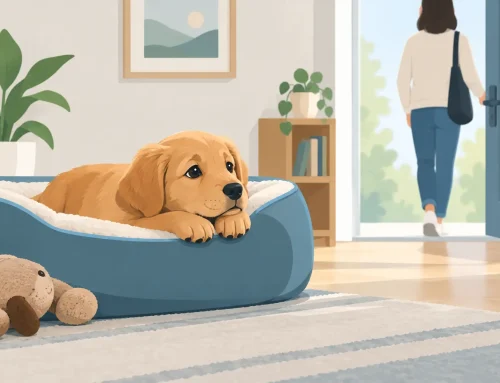
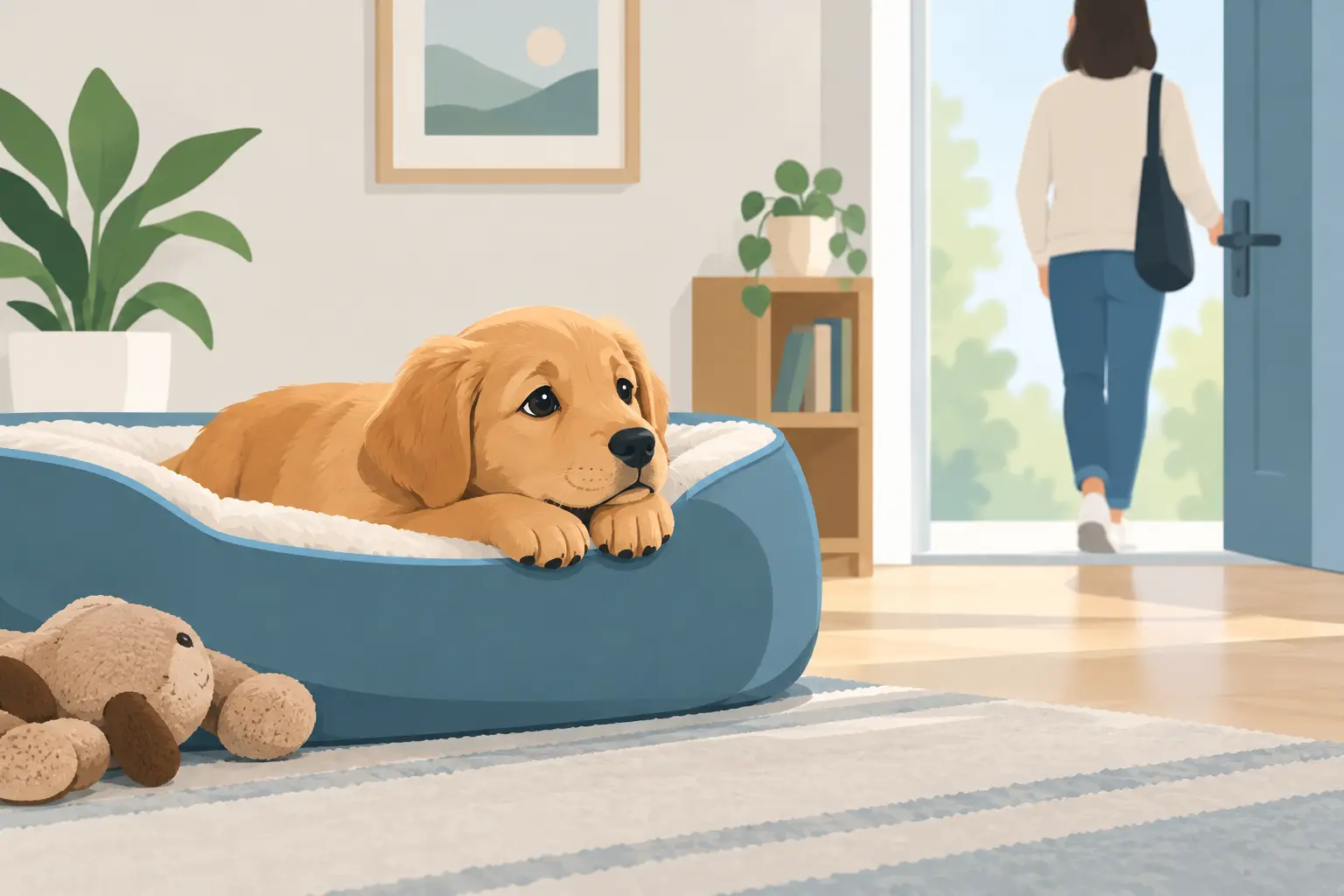
A puppy’s first-night cries can tug at every family member. Some vocalizing is a normal response to being alone in a new place. Before opening the crate, pause and listen. A brief whimper that fades may be your puppy settling. Escalating crying, restless movement, or repeated waking may mean they need to potty or need reassurance that you are near.
Start with the least disruptive response. Speak softly from your bed, place your fingers near the crate if it is safe to do so, or sit beside the crate for a few minutes. If it has been long enough since the last potty trip, take your puppy out calmly. Then return them to the crate once they have gone.
Try not to begin a pattern of bringing your puppy into bed every time they protest if that is not your long-term plan. There is nothing wrong with families who choose to share a bed with an adult dog, but the first night is not the best time to make a sleepy decision that conflicts with the boundaries you want later. Consistency feels reassuring to puppies.
At the same time, avoid the idea that a puppy must simply “cry it out” for hours. A very young puppy has just experienced a major separation. Brief settling sounds are one thing; prolonged distress deserves a calm check-in, a potty opportunity, and thoughtful support.
Help children participate in a calm first evening
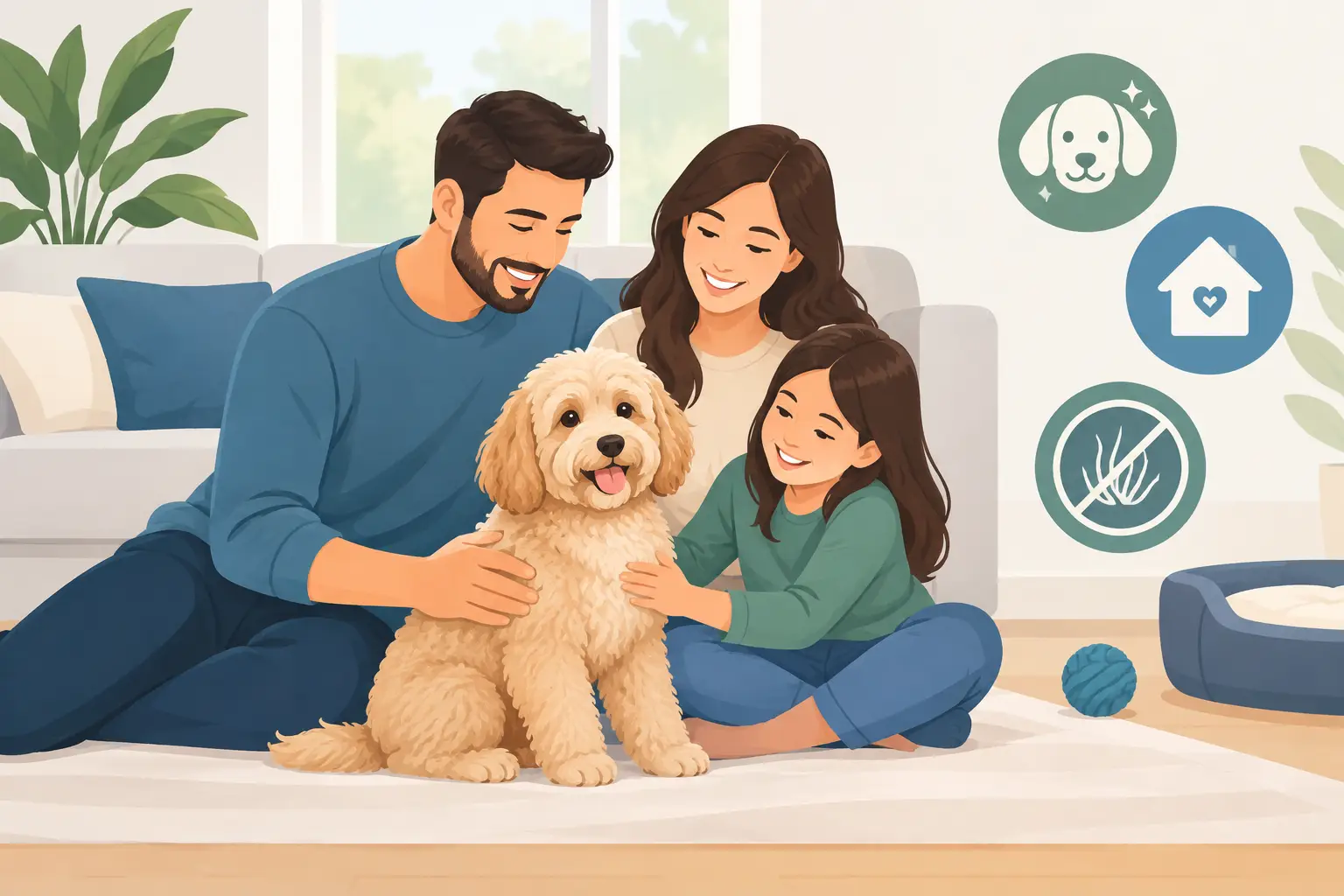
For children, puppy pickup day can feel like a holiday. Give them a meaningful role before the puppy arrives: help fill the water bowl, choose a quiet bedtime book to read nearby, or learn the family’s potty cue. Then set a clear expectation that resting is part of welcoming the puppy.
Teach children not to reach into the crate or wake a sleeping puppy. The crate should become a place where your puppy can relax without being touched, hugged, or followed. This protects both the child and the puppy, especially as your new companion learns the rhythms of family life.
A calm first evening also gives parents a chance to observe. Notice when your puppy gets sleepy, when they need to potty, what startles them, and what helps them settle. Those small observations are far more useful than trying to make every moment picture-perfect.
Set the next morning up for success
The first morning may begin earlier than your household prefers. Take your puppy straight outside, offer praise for pottying, and then begin the day with breakfast and a little supervised play. This is a good time to introduce the household’s routine without asking too much of your puppy.
Resist the urge to make up for a restless night with a busy day. Your puppy will need plenty of naps, and young puppies often become mouthy, wild, or fussy when they are overtired. Short play sessions, frequent potty breaks, gentle handling, and quiet rest are more valuable than a full day of new experiences.
If your puppy has persistent diarrhea, vomiting, extreme lethargy, refusal to drink, or distress that feels unusual, contact your veterinarian promptly. Otherwise, remember that the first night is only the beginning of an adjustment period. Most puppies settle more comfortably as familiar routines, patient guidance, and your family’s steady presence begin to feel like home.
At Providence Hill Australian Labradoodles, we believe the transition home should be supported with realistic expectations and caring preparation. Keep the first night quiet, stay consistent with your routine, and let trust grow one calm bedtime at a time.