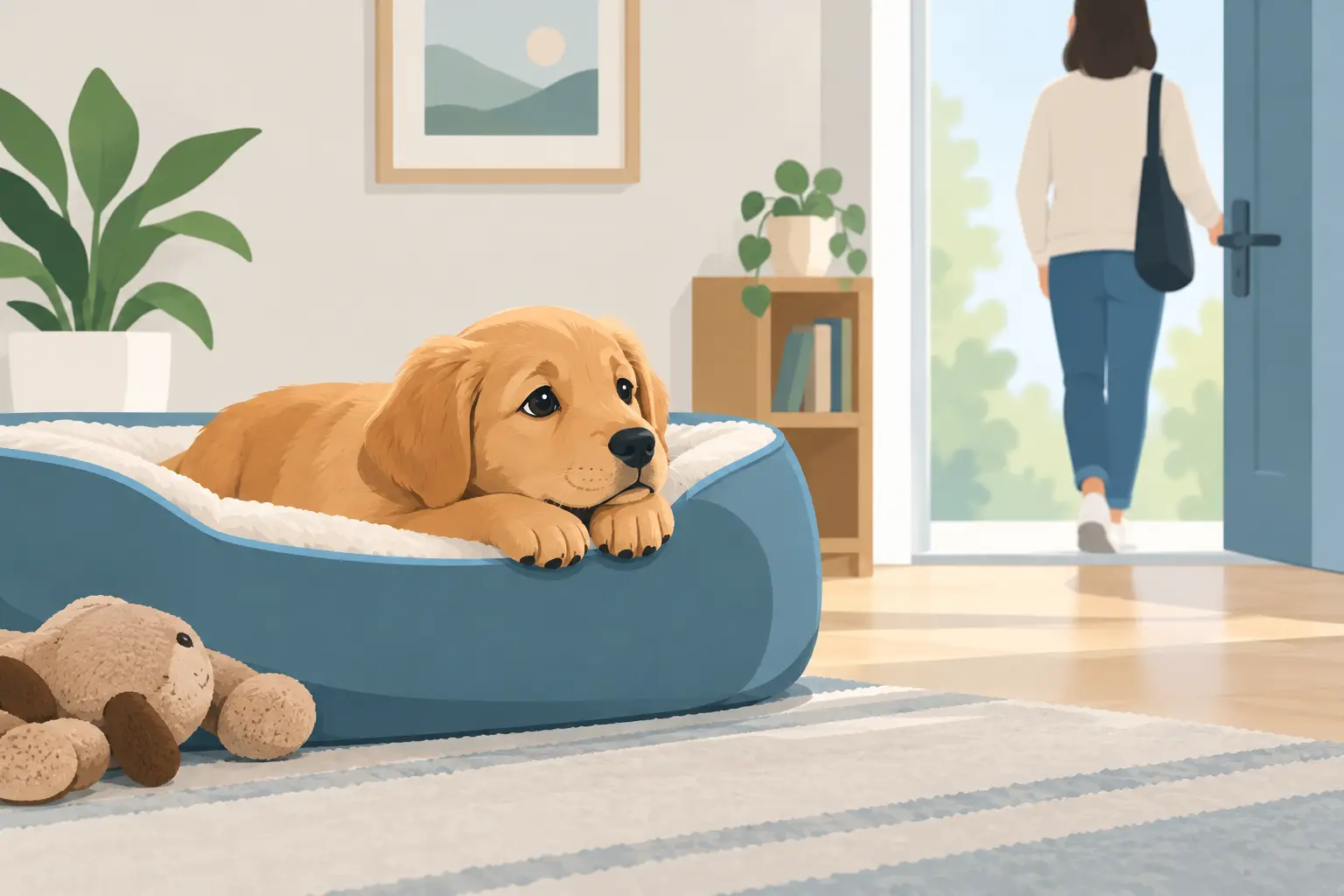
The first few nights with a new puppy can feel surprisingly long. You may have prepared the crate, chosen the food, and set up a cozy sleep space, only to hear crying as soon as the lights go out. Learning how to calm puppy crying starts with recognizing what your puppy is communicating, then responding in a way that builds security without teaching them that every sound brings a big event.
Puppies are leaving their mother, littermates, familiar scents, and daily rhythm all at once. A little crying is a normal part of that adjustment. Your goal is not to expect instant independence. It is to help your puppy learn, in small and steady steps, that their new home is safe and that you will meet their needs.
Why puppies cry in a new home
A puppy’s cry is not usually stubbornness or an attempt to manipulate you. Young puppies have limited experience being alone and little ability to regulate big feelings. At first, crying commonly means, “I am lonely,” “I need to potty,” “I am uncomfortable,” or simply, “This is new.”
Nighttime is especially difficult because puppies are used to sleeping near their litter. Even a confident, well-socialized puppy may protest when placed in a crate for the first time. Australian Labradoodles are known for their people-focused, affectionate nature, so a sudden separation from the family can feel particularly unfamiliar during those early days.
Before trying to soothe the sound itself, pause and consider the timing. A puppy who has just napped, eaten, played, and gone potty may be asking for reassurance. A puppy who wakes after two or three hours overnight may genuinely need a quick bathroom trip. Those situations need different responses.
How to calm puppy crying at night
The most effective nighttime approach is calm, predictable, and a little boring. Put your puppy to bed after a final potty break, ideally at a time when the house is already settling down. Avoid an exciting game right before bedtime. A short, calm cuddle or gentle chew is a better bridge into sleep.
For the first several nights, place the crate close to your bed or in a nearby room where your puppy can hear and smell you. This is not spoiling them. It is a practical transition from sleeping in a litter to sleeping alone. Once your puppy is sleeping more comfortably, you can gradually move the crate toward its long-term location if that is your preference.
Make the crate inviting but safe. A properly sized crate should give your puppy room to stand, turn around, and lie down comfortably, without so much extra space that one end becomes a bathroom. Add appropriate bedding only if your puppy will not chew or soil it. Some puppies settle with a safe comfort item or a shirt that carries your scent, while others do better with a simple, uncluttered space.
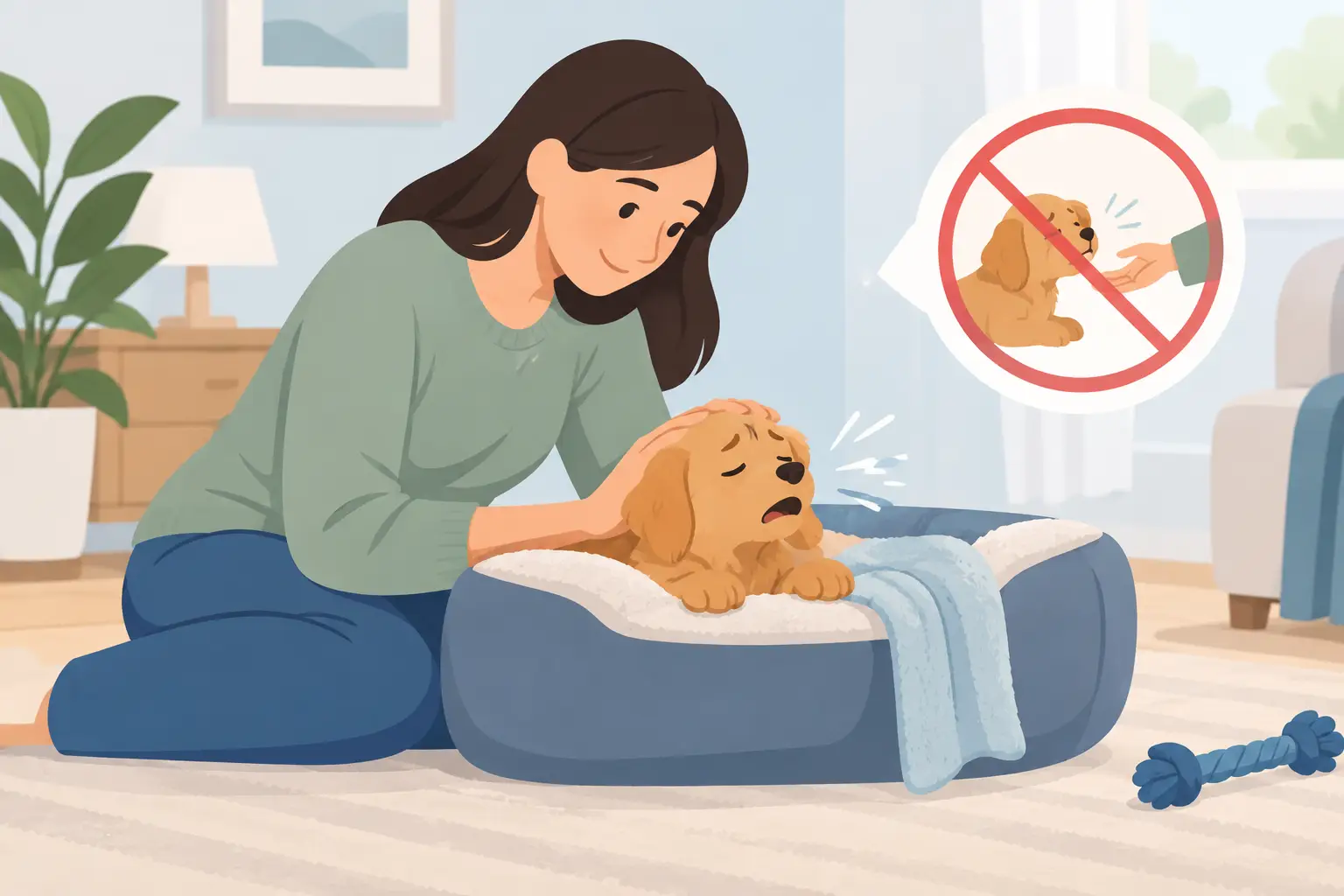
If your puppy starts to cry, listen before reacting. A brief whimper as they get comfortable may pass within a minute or two. If the crying continues, use a quiet voice from nearby. You can offer a soft verbal reassurance, but resist turning on bright lights, starting a conversation, or bringing your puppy into bed every time they fuss. A big response can accidentally make crying more rewarding.
When you suspect a potty need, take your puppy out calmly on leash. Keep the trip all business: no playing, no wandering around the yard, and very little talking. Give them a few minutes to relieve themselves, offer gentle praise if they go, then return directly to the crate. This teaches a valuable lesson: nighttime waking is for potty breaks, not playtime.
Meet needs before asking for quiet
Many crying episodes are easier to prevent than to stop. A puppy who has had enough daytime connection, age-appropriate activity, and opportunities to potty is more prepared to rest. That does not mean wearing your puppy out with nonstop stimulation. Overtired puppies can become fussier, mouthier, and less able to settle.
Build a simple rhythm around meals, naps, potty trips, brief training, play, and calm family time. Young puppies often need to go outside after waking, eating, drinking, playing, or becoming excited. Taking them out proactively reduces the chance that crate crying is really a bathroom emergency.
During the day, help your puppy practice short periods of comfortable separation. Offer a safe chew in the crate while you sit nearby, then step away for a few seconds and return before your puppy becomes distressed. Gradually extend the time as they succeed. This creates positive crate associations before you ever need your puppy to sleep there overnight or stay home briefly during the day.
Comfort your puppy without teaching dependence
There is a healthy middle ground between ignoring a frightened puppy and responding to every tiny sound. Consistency matters more than perfection. If one person lets the puppy sleep in bed after crying for 20 minutes, while another insists on the crate the next night, the puppy receives mixed information and may cry longer to test what will work.
Try to respond to patterns rather than panic. If your puppy settles after a calm voice, use that same low-key reassurance. If they cry at nearly the same interval each night and promptly potty when taken outside, set an alarm just before that time for a few nights. You can then slowly lengthen the interval as your puppy gains bladder control.
Avoid using the crate only when you leave or when your puppy has done something wrong. The crate should become a familiar resting place, not a place of isolation. Feed occasional meals near it, toss treats inside during the day, and let your puppy choose to nap there with the door open when supervised.
Common mistakes that can make crying worse
A few well-meant habits can stretch out the adjustment period. The first is waiting too long to take a young puppy out overnight because you do not want to reinforce crying. Very young puppies cannot always hold it until morning, and repeated accidents can slow potty training. It is better to plan quiet, scheduled outings based on your puppy’s age and individual pattern.
Another is repeatedly opening the crate to comfort a puppy who has already pottied and is simply protesting. If every whine leads to cuddles, play, or a new place to sleep, your puppy learns that settling is optional. Offer reassurance, but keep the bedtime routine calm and consistent.
Finally, do not expect a puppy to remain in a crate for long daytime stretches. Their bladder capacity, social needs, and ability to settle are still developing. Arrange your schedule, family support, or a trusted caregiver around what a young puppy can reasonably manage.
When crying may signal a health concern
Normal adjustment crying should gradually become less frequent as your puppy learns the household routine. Call your veterinarian promptly if crying is paired with vomiting, diarrhea, refusal to eat or drink, a swollen belly, labored breathing, limping, extreme lethargy, repeated straining to urinate, or signs of pain when handled.
Also seek guidance if your puppy suddenly begins crying after previously settling well. A change in behavior can be caused by discomfort, illness, a disrupted routine, or a new stressor. Trust your observations. You know what is normal for your puppy better with each passing week.
Give the routine time to work
The first week is often the loudest, and progress rarely happens in a perfectly straight line. One calm night may be followed by a restless one after a busy day, a growth spurt, or a change in routine. Keep bedtime predictable, meet genuine needs, and let your puppy build confidence at a pace they can handle.
A puppy who learns that their family is dependable and that their crate is safe is not being taught to be needy. They are being given the foundation to become a relaxed, secure companion. With patient guidance, those early cries make room for the quiet sound every new puppy family hopes to hear: deep, contented sleep.