A puppy who has spent 15 focused minutes working through a safe food puzzle is often far more settled than a puppy who has spent an hour racing around the living room. That is why the top puppy enrichment toys are not simply cute extras for the toy basket. They give a growing puppy an appropriate outlet for chewing, sniffing, problem-solving, and learning to settle.
For families bringing home an Australian Labradoodle puppy, enrichment can be especially helpful. These bright, people-oriented dogs enjoy having a job to do, even when that job is as simple as finding a few pieces of kibble or licking a frozen treat from a toy. The goal is not to keep your puppy busy every minute. It is to build healthy habits, prevent boredom, and make quiet time feel rewarding.
What Enrichment Really Does for a Puppy
Puppies learn through their mouths, noses, paws, and curiosity. When those needs are not met, a puppy may create their own entertainment by chewing table legs, grabbing socks, barking at movement outside, or pestering the family cat. Those behaviors are not signs of a bad puppy. They are often signs that a normal puppy needs more guidance and an appropriate activity.
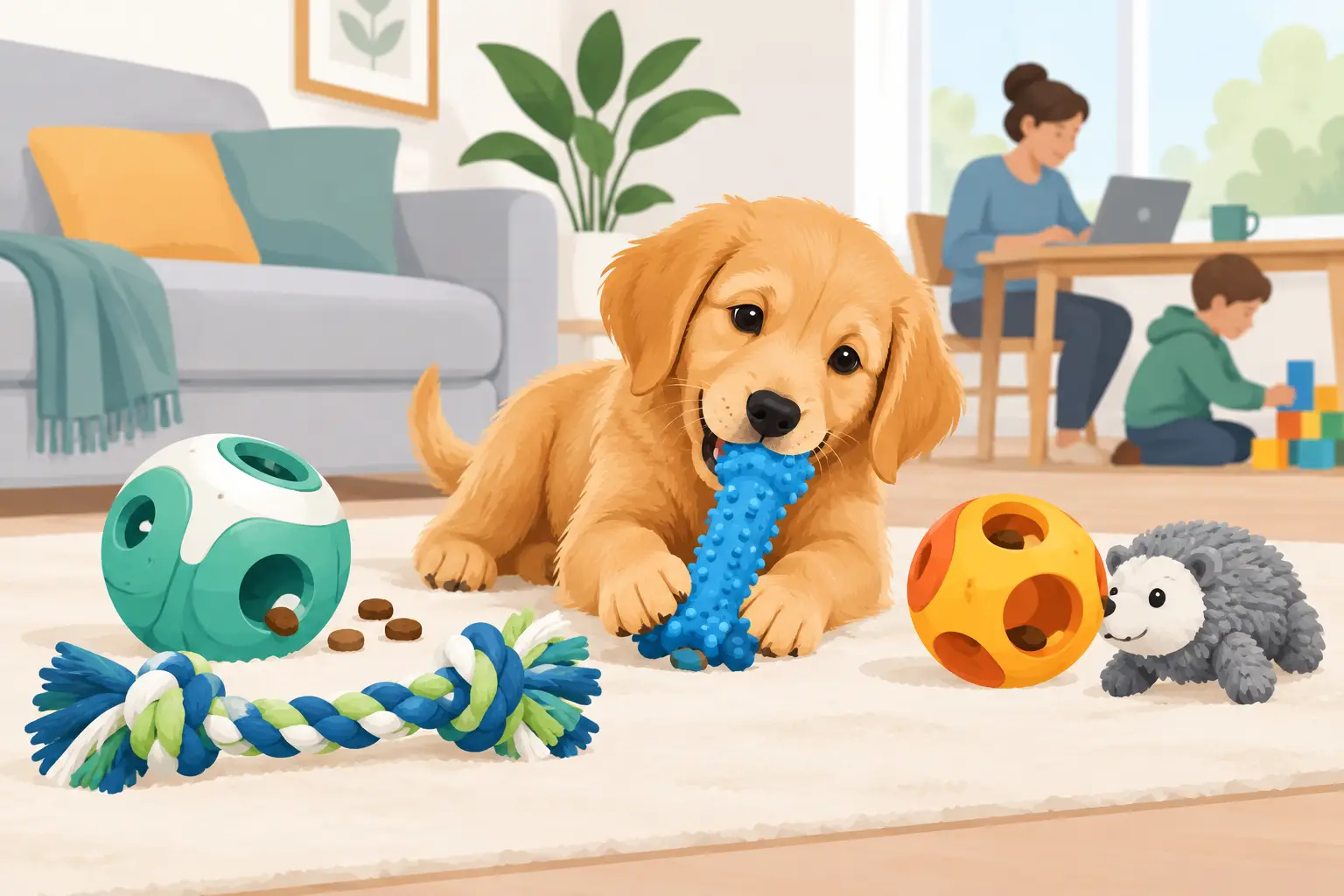
Well-chosen enrichment toys can help channel that energy into something productive. Food-based toys encourage puppies to slow down and work for part of a meal. Chew toys provide relief during teething while teaching them what belongs in their mouth. Sniffing games support a puppy’s natural desire to investigate the world.
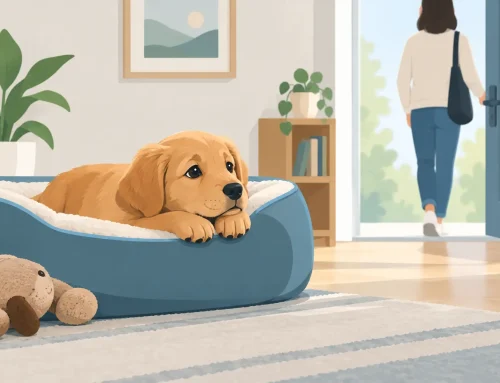
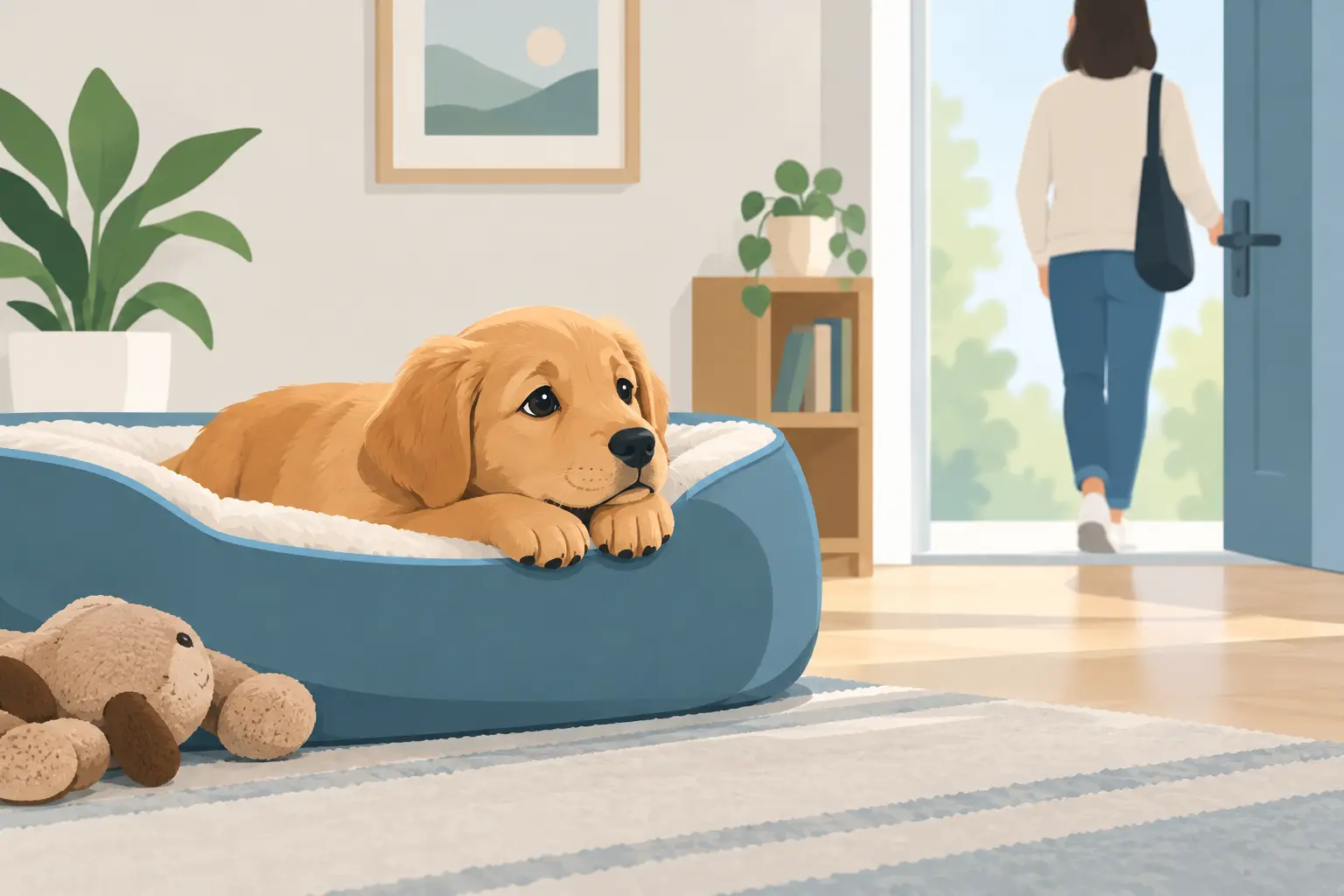
Enrichment also has a valuable emotional benefit. A puppy who learns to enjoy a chew or puzzle in their crate, pen, or bed begins to practice being content without constant interaction. For families, that can make work calls, school pickups, dinner preparation, and afternoon rest much more manageable.
Top Puppy Enrichment Toys to Start With
The best starter collection does not need to be large. A few versatile options, rotated through the week, are more interesting than a room full of toys that are always available. Choose toys made for puppies, match the size to your dog’s current mouth, and supervise every new item until you know how your puppy uses it.
Stuffable rubber food toys
A durable, puppy-sized rubber toy with a hollow center is one of the most useful enrichment tools a new family can own. Begin with something easy: a portion of your puppy’s regular kibble mixed with a little water, softened food, or plain canned pumpkin. As your puppy gains experience, you can freeze the filled toy for a longer-lasting activity.
Keep the first few fillings simple. A puzzle that is too difficult can frustrate a young puppy, while one that is too easy may be finished in seconds. The right level gives them a small challenge and a satisfying payoff.
Puppy-safe lick mats
Licking is naturally calming for many dogs. A lick mat spread with a thin layer of puppy-appropriate food can be useful during quiet crate time, grooming practice, or the busy evening hour when everyone is getting settled.
Use modest portions, especially with a young puppy whose diet is still carefully measured. Their normal puppy food, moistened and pressed into the mat, is often all you need. Avoid ingredients that are unsafe for dogs, including chocolate, xylitol, grapes, raisins, and heavily sweetened foods.
Soft puzzle feeders
Beginner puzzle feeders allow a puppy to nudge, lift, or slide pieces to uncover food. They are excellent for supervised daytime play, but they are not always the best choice for enthusiastic chewers. If your puppy starts chewing the plastic pieces instead of searching for food, remove the puzzle and offer a safer chew alternative.
A simple puzzle can also turn a rushed breakfast into a thoughtful activity. Rather than placing the entire meal in a bowl, reserve a small portion for the puzzle. This keeps enrichment from becoming extra calories.
Snuffle mats and scatter-feeding options
Sniffing is meaningful work for a puppy. A snuffle mat lets them use their nose to locate pieces of kibble tucked between fabric folds. For a lower-cost option, scatter a measured portion of kibble across a clean towel that has been loosely rolled or in a puppy-safe cardboard box filled with large paper scraps.
These activities should always be supervised. Some puppies enjoy searching; others decide to eat the fabric, towel, or cardboard. Know your puppy’s habits and choose the setup accordingly.
Teething chews with purpose
During teething, a puppy’s need to chew can feel constant. A puppy-rated chew toy, particularly one that can be chilled, gives sore gums a better option than furniture or hands. Look for a product that is flexible enough for puppy teeth but not so soft that pieces break off easily.
There is no universal “best” chew. Stronger chewers may need a more durable option, while a very young puppy may prefer something gentler. Inspect chews frequently and replace any toy that becomes cracked, splintered, or small enough to swallow.
How to Choose Toys Safely
Toy safety matters more than novelty. Puppies do not understand the difference between playing with an object and consuming it, so adult supervision is part of enrichment, not an optional extra. A toy that works beautifully for one puppy may be a poor fit for another.
Choose an appropriate size. Toys that are too small create a choking risk, while oversized toys can be frustrating or hard for a little puppy to carry. Skip toys with easily detached squeakers, ribbons, hard plastic eyes, loose rope strands, or stuffing that can be pulled out and swallowed.
It is also wise to separate interactive toys from alone-time toys. A hard puzzle, snuffle mat, or cardboard activity is generally for supervised use. A durable, well-tested stuffed rubber toy may be appropriate for short quiet periods, but only after you have watched your puppy use it safely several times. When in doubt, put the toy away until you can supervise.
Make Enrichment Part of Your Daily Routine
The most successful enrichment plan fits real family life. It does not require elaborate homemade projects every day. Think in small, repeatable moments: breakfast in a food toy, a sniffing activity after a nap, and a chew while the family eats dinner.
Young puppies still need plenty of sleep, often far more than new owners expect. Enrichment should not become a constant effort to tire a puppy out. An overtired puppy can become mouthy, wild, and unable to settle. Pair short activities with calm rest in a safe crate or puppy pen.
Rotation helps preserve interest. Keep two or three toys available and store the rest. When an older toy returns after a few days away, it often feels new again. You can also adjust the challenge gradually by packing food more firmly, freezing a filling, or placing a few treats in a folded towel rather than making every activity complicated at once.
Use Enrichment to Build Confidence
A thoughtful toy routine can support training without replacing it. Offer a lick mat while you gently touch paws or brush a few strokes of coat, then stop before your puppy becomes uncomfortable. Give a stuffed toy in the crate for a short, positive practice session. Place a few treats in a snuffle mat when visitors arrive so your puppy has a calm, rewarding task instead of becoming overwhelmed by excitement.
For a social, trainable breed like the Australian Labradoodle, these small experiences add up. Your puppy learns that new textures, brief separation, handling, and settling can be safe and pleasant. Keep sessions easy enough that success is common, especially during the first weeks at home.
At Providence Hill Australian Labradoodles, we encourage families to see enrichment as one part of raising a confident companion, alongside consistent routines, patient training, quality nutrition, socialization, and plenty of rest. The right toy will not raise a puppy for you, but it can give both your puppy and your family a calmer place to begin.
Start with one safe food toy and one appropriate chew, observe what your puppy enjoys, and let their response guide the next choice. A puppy who feels safely occupied is learning a skill that will serve your home for years: how to be happily, peacefully at ease.