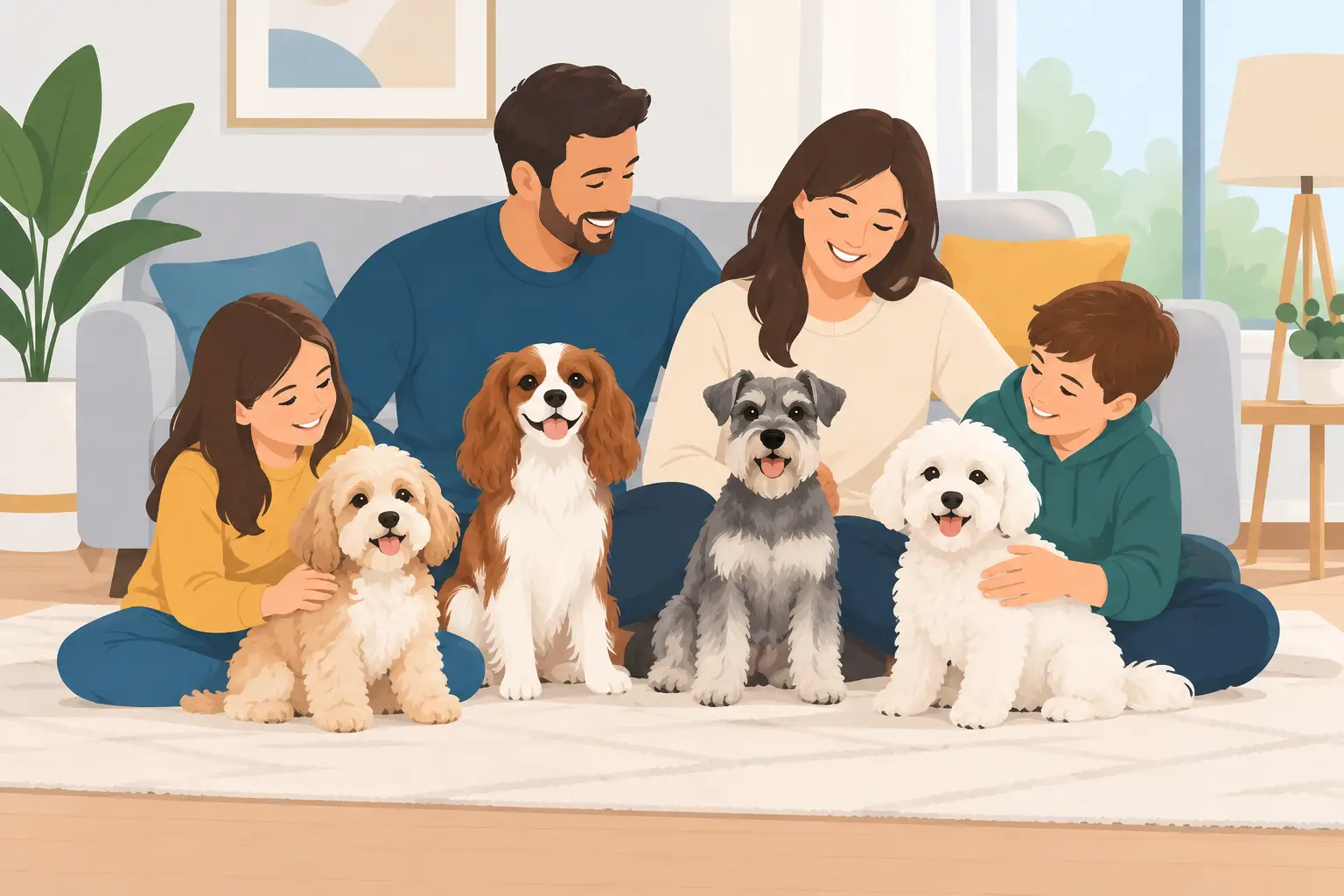
A puppy’s first few months bring plenty of happy surprises. Fur covering every black sweater should not have to be one of them. Families researching low shedding puppy breeds are often looking for more than a tidier house. They want a loving companion that fits comfortably into family routines, may be better tolerated by some allergy-sensitive relatives, and has a coat they can realistically care for.
That is a sensible goal, but low shedding is only one part of choosing the right puppy. A puppy’s temperament, early socialization, health background, adult size, grooming needs, and energy level will shape daily life far more than a label ever can. The best choice is a dog whose coat and character both work for your household.
What Low Shedding Actually Means
Every dog loses some hair. Low-shedding dogs simply tend to release less loose hair around the home than heavy-shedding breeds. Their coats may hold onto loose hair until it is brushed out or removed during grooming, rather than dropping it onto floors, furniture, and clothing.
Low shedding does not mean no maintenance. In fact, many low-shedding coats need more consistent care because loose hair can become trapped in the coat. Without regular brushing, that hair can form mats close to the skin. Mats can be uncomfortable and may lead to irritation, especially behind the ears, under the collar, around the legs, and in areas where a harness rubs.
It is also helpful to separate shedding from allergies. Pet allergies are commonly triggered by proteins found in dander, saliva, and urine, not simply by dog hair. A low-shedding dog may reduce the amount of hair and dander moving through a home, but no dog can be honestly guaranteed to be completely hypoallergenic. If someone in your family has allergies, spend meaningful time around the breed or individual dog before making a commitment.
Why Families Look for Low Shedding Puppy Breeds
For a busy household, a lower-shedding coat can make everyday cleanup more manageable. Parents may appreciate less fur on baby blankets and school clothes. Couples in apartments may prefer a dog that leaves less hair in shared spaces. Families with frequent visitors may simply want a home that is easier to keep guest-ready.
Still, the right puppy should not be chosen by coat alone. A dog that sheds very little but needs more exercise, training, or grooming than your family can provide will not feel like an easy fit. Consider the full picture: how much time you spend at home, whether young children are present, how active your weekends are, and who will handle brushing and professional grooming.
A thoughtful breeder can help families understand those trade-offs before a puppy goes home. Coat type, adult size, and personality can vary even within the same breed, which is why responsible matching matters.
Popular Low-Shedding Breeds and Their Trade-Offs
Several breeds are often considered by families seeking less shedding. Each has qualities worth considering, along with needs that should be taken seriously.
Poodles
Poodles are well known for their intelligent, curly coats and low-shedding reputation. They come in toy, miniature, and standard sizes, giving families options based on their space and lifestyle. They are highly trainable and often enjoy learning, but they need regular mental engagement, exercise, and professional grooming.
A Poodle can be an excellent match for an active, committed household. For families hoping for a more relaxed companion, it is important to ask about the individual puppy’s energy level and temperament rather than relying on breed reputation alone.
Bichon Frises and Havanese
Small companion breeds such as Bichon Frises and Havanese are affectionate, social, and generally low shedding. Their smaller size can work well for apartment living or homes where a large dog would be impractical.
Their coats require regular brushing and scheduled grooming, and some small dogs can be sensitive to inconsistent routines. Families with very young children should also consider whether a smaller, more delicate dog is the best fit for the way their household plays and moves.
Schnauzers
Miniature Schnauzers have wiry, low-shedding coats and lively personalities. They can be devoted family dogs and enjoy being involved in daily activity. Their alert nature can also mean they are more vocal than some families expect.
As with any breed, early training makes a difference. A puppy that learns calm greetings, appropriate barking habits, and positive social skills from an early age has a stronger foundation for family life.
Australian Labradoodles
Australian Labradoodles are often a wonderful option for families who want a medium-sized, affectionate companion with a low-shedding coat. When thoughtfully bred, they are known for their friendly, people-focused nature, intelligence, and eagerness to participate in family life.
Their fleece or wool coats can vary in texture and curl, but they generally require a reliable home grooming routine and regular appointments with a professional groomer. The reward is a soft-coated dog that is often well suited to cuddles, neighborhood walks, training sessions, and time with children.
It is worth understanding that Australian Labradoodles are not simply a first-generation cross between a Labrador Retriever and a Poodle. Established Australian Labradoodle lines are developed over generations with attention to coat consistency, temperament, structure, and health. That distinction matters when families are looking for greater predictability in a puppy.
The Coat Is Only Part of the Match
Families sometimes focus so closely on shedding that they overlook the qualities that create a truly enjoyable companion. A puppy should be prepared to live in a home, not simply selected for a certain look.
Ask how the puppies are raised and what experiences they have before going home. Have they been gently introduced to normal household sounds, handling, different surfaces, crate time, and age-appropriate play? Have they had positive interactions with caring adults and, where appropriate, children? Those early experiences help build confidence during the important transition from breeder to family.
Health transparency matters just as much. Responsible breeders use appropriate genetic screening and health testing for their breeding dogs, then share clear information about their program. They should welcome thoughtful questions about parent dogs, puppy care, socialization, veterinary protocols, and support after pickup day.
A reputable breeder will also care about where each puppy is placed. The goal should be a lasting match, not a quick transaction. At Providence Hill Australian Labradoodles, that family-centered approach includes raising puppies in a home environment and helping future owners prepare for training, grooming, nutrition, and the first weeks at home.
Preparing for a Low-Shedding Coat
Before bringing home a low-shedding puppy, make grooming part of the family plan. This does not need to be complicated, but it does need to be consistent. Start gentle brushing early, using short, positive sessions and plenty of praise. Puppies that learn grooming is calm and normal are usually easier to care for as adults.
Most low-shedding, coat-care-intensive breeds benefit from brushing several times each week. The exact schedule depends on coat type, length, activity level, and whether the dog enjoys mud puddles or woodland walks. A longer coat is beautiful, but it takes more time. A shorter practical trim can be a better choice for busy families.
Professional grooming appointments are also part of the financial commitment. Depending on the coat and desired length, many families schedule grooming every six to eight weeks. Ask your groomer for a schedule tailored to your dog rather than waiting until tangles become a problem.
Teach children how to participate safely. They can help by offering treats during brushing or practicing gentle touches, but an adult should manage combing, nail care, bathing, and any grooming around sensitive areas. This protects both the puppy and the child while building respectful habits.
Questions to Ask Before Choosing a Puppy
A good conversation with a breeder should leave you feeling informed, not pressured. Ask about the parents’ temperaments and health testing, the puppy’s expected adult size, coat type, grooming requirements, and socialization experiences. If allergies are a concern, be open about that early so expectations stay realistic.
It is also wise to ask what support is available after your puppy comes home. First-time owners often need reassurance about crate training, potty routines, feeding schedules, early vet visits, and normal puppy behavior. Ongoing guidance can make the adjustment period feel much more manageable.
Finally, be honest about your lifestyle. If you travel often, work long hours, have toddlers, or prefer quiet weekends, share that information. The right breeder wants to understand your home so they can help identify a puppy with a temperament likely to thrive there.
A low-shedding puppy can be a wonderful addition to a family, but the best match is the one whose needs you are ready to meet with patience, structure, grooming, and affection. When a puppy is healthy, thoughtfully raised, and chosen with your real life in mind, the hair on the sofa becomes a very small part of the story.