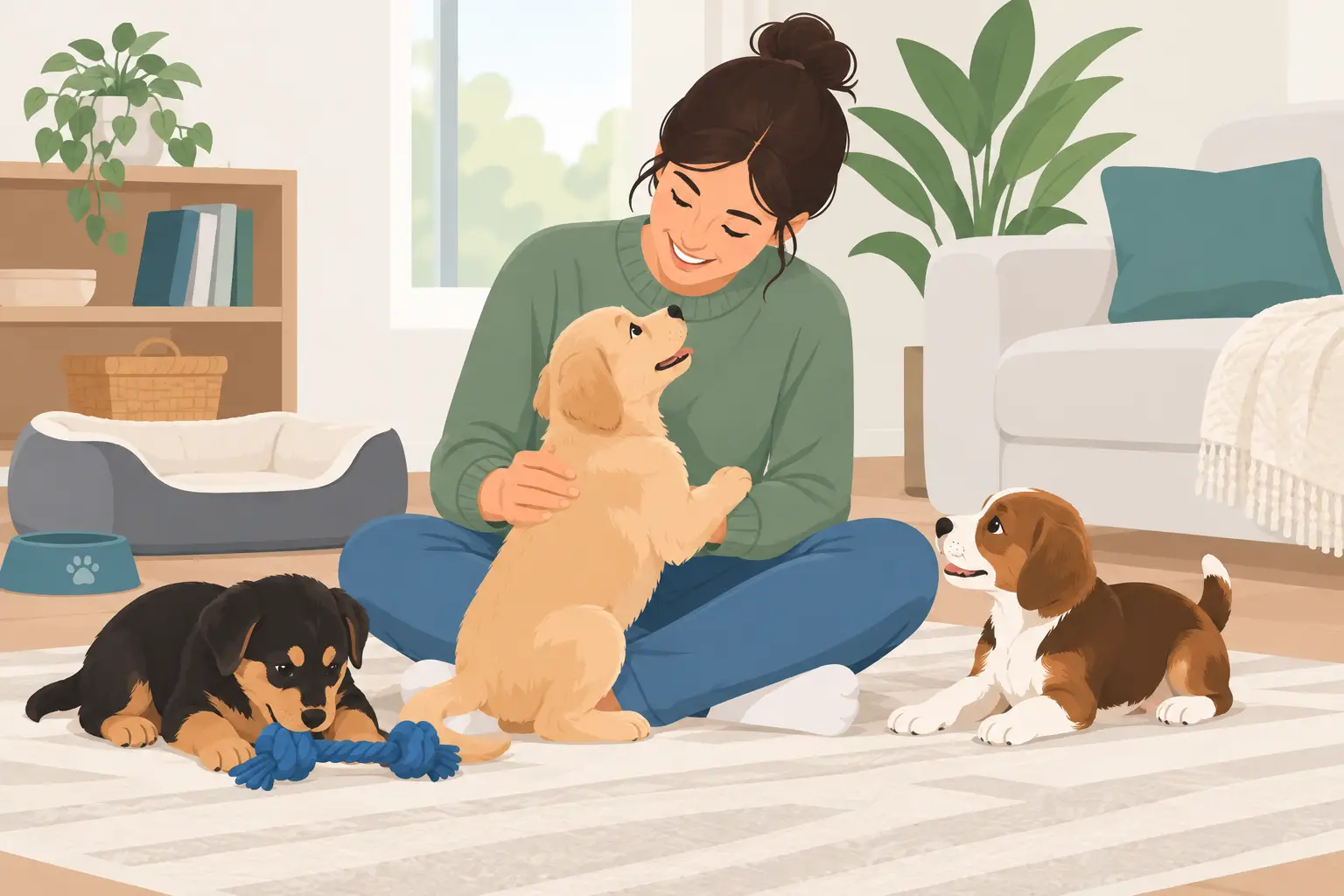
The first few days can feel wonderfully busy: a puppy asleep on a child’s lap, a new crate waiting in the corner, and a family learning every signal behind a whine, wag, or sudden burst of energy. Raising puppies in the home is not about creating a perfect schedule from day one. It is about giving a young dog enough consistency, safety, and patient guidance to understand that your home is their secure place.
For families welcoming an Australian Labradoodle or another companion breed, early home life has lasting value. Puppies are learning how people move, sound, rest, eat, greet visitors, and recover from everyday surprises. A thoughtful start supports the friendly, confident temperament families hope to see as their puppy grows.
Prepare the Space Before Your Puppy Arrives
A puppy does not need free access to every room right away. Too much space can be overwhelming, and it makes house training harder because accidents may happen out of sight. Start with one easy-to-clean area near the family, then gradually expand access as your puppy shows they can settle, chew appropriate items, and signal when they need to go outside.
Set up a crate or puppy pen as a calm resting place, not a punishment. Include comfortable bedding only if your puppy is not likely to shred or swallow it, along with a safe chew item appropriate for their age. The crate should be large enough for standing, turning around, and lying down comfortably, but not so large that one end becomes a bathroom.
Puppy-proofing is less glamorous than choosing toys, but it prevents many stressful moments. Move electrical cords, medications, cleaning products, children’s small toys, laundry, and houseplants out of reach. Get down at puppy level and look for what a curious mouth can reach. Puppies investigate their world with their noses and teeth, especially when they are tired, teething, or seeking attention.
Build a Predictable Daily Rhythm
A young puppy cannot follow a household calendar, but they can learn patterns. Consistent meal times, potty trips, naps, play sessions, and quiet evenings help them anticipate what comes next. That predictability lowers stress and makes training clearer for everyone in the home.
Take your puppy outside after waking, eating, drinking, playing, and spending time in the crate. Many puppies need more frequent potty breaks than new owners expect. Rather than waiting for signs of urgency, take them out proactively and reward them immediately after they finish in the right spot. A warm voice, praise, and a small treat create a clear connection between the behavior and the reward.
Accidents will happen. When they do, clean the area thoroughly and adjust the schedule rather than scolding your puppy. Punishment after an accident can make a puppy hide when they need to eliminate, which slows the learning process. Calm consistency works better than frustration.
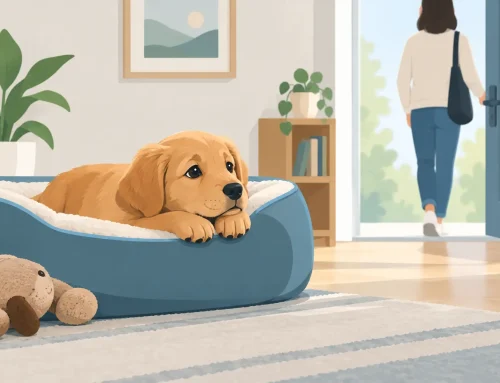
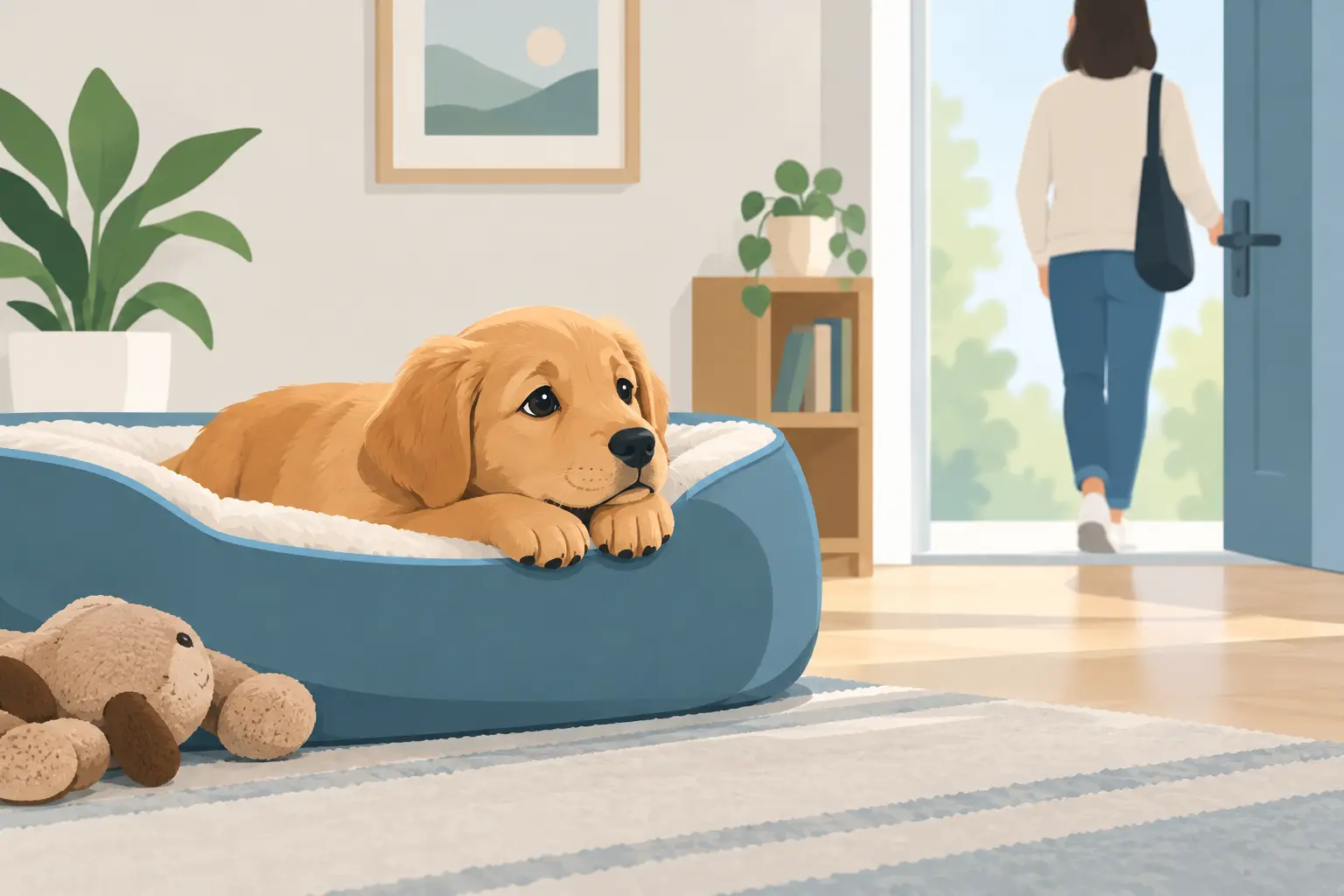
Sleep also deserves protection. Puppies often need 18 to 20 hours of sleep a day, even though they may resist settling down when the family is active. Overtired puppies can look wild, mouthy, or unable to listen. A planned nap in a quiet crate or pen is not isolating your puppy. It is helping their developing brain and body rest.
Make Gentle Training Part of Everyday Life
Formal training sessions can be brief, especially during the first weeks home. Several one- or two-minute sessions throughout the day are often more effective than a long lesson. Practice simple skills such as responding to their name, coming when called indoors, sitting before meals, and touching a hand target.
Use rewards your puppy truly values. For some, that is a piece of kibble. For others, it may be a higher-value treat, a favorite toy, or the chance to greet a family member. The goal is not to bribe your puppy forever. The goal is to teach them that listening to people leads to good outcomes.
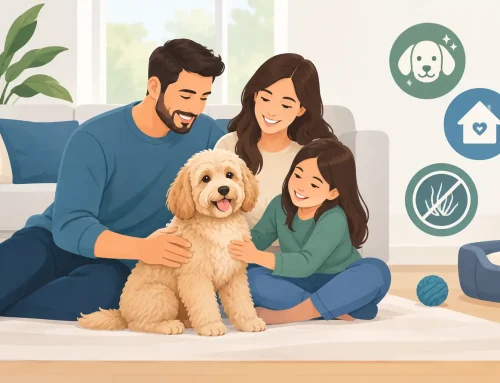
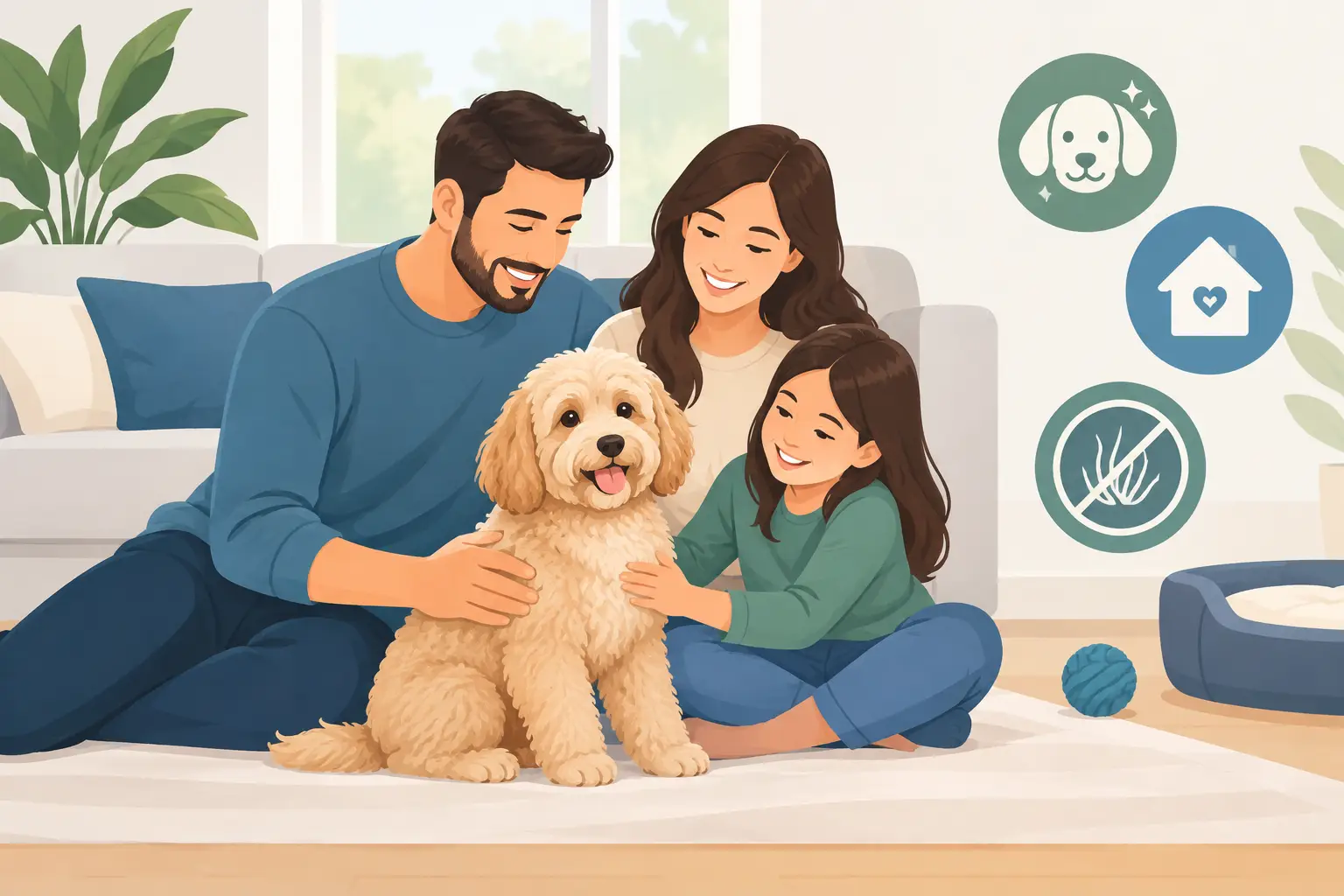
Mouthing is a common concern when raising a puppy around children. Puppies use their mouths during play, particularly while teething. Adults should supervise interactions and show children how to redirect the puppy to an appropriate toy instead of waving hands or running away. If play becomes too intense, calmly pause the interaction and give the puppy a chance to settle. This teaches boundaries without creating fear.
Every family member should use the same cues and expectations. If one person allows jumping on the sofa while another corrects it, the puppy receives mixed information. Decide early which household rules matter most, then make them simple enough for children and guests to follow.
Socialization Means Positive Experiences, Not Constant Activity
The socialization period is a valuable opportunity, but it does not mean introducing your puppy to every person, dog, and busy environment possible in a single week. A puppy who is overwhelmed is not being well socialized. They are being asked to cope with more than they can process.
Instead, introduce new experiences in small, positive doses. Let your puppy observe the vacuum from a comfortable distance before it is turned on nearby. Offer treats while they hear the doorbell, see a stroller, walk on a new surface, or meet a calm, healthy, vaccinated dog. Watch their body language. A loose body, curious sniffing, and willingness to take treats suggest your puppy feels safe enough to learn.
For puppies who seem hesitant, create more distance and let them choose the pace. Confidence grows when a puppy discovers that unfamiliar things are manageable. For a naturally outgoing puppy, the trade-off is different: they may need help learning that not every person or dog is an invitation to leap forward and greet.
Thoughtful early socialization is one reason in-home raising matters so much. Puppies become familiar with normal household sights and sounds before they join their new families. At Providence Hill Australian Labradoodles, that early foundation is paired with careful attention to health and temperament, but continued socialization in the new home remains essential.
Create Healthy Boundaries Around Food, Play, and Rest
Children and puppies can become wonderful companions, yet both need clear guidance. Teach children to leave a puppy alone while eating, sleeping, or resting in the crate. They should never take food or chews directly from a puppy’s mouth. Instead, an adult can trade the item for something better, which helps the puppy learn that people approaching does not mean something valuable will disappear.
Supervised play should be calm enough that the puppy can stay regulated. Short games of gentle fetch, simple training, sniffing walks, and food puzzles can offer satisfying mental exercise without overworking growing joints. The right amount of activity depends on age, breed, personality, and the puppy’s ability to settle afterward.
A puppy who has had too much excitement may not look tired at first. They may race through the house, bark, chew furniture, or nip more than usual. When that happens, reduce stimulation and offer a quiet nap rather than adding another activity.
Know When to Ask for Support
Most early challenges are normal, but you do not have to solve them alone. Contact your veterinarian promptly for changes in appetite, vomiting, diarrhea, unusual lethargy, or any concern about your puppy’s health. For behavior concerns such as intense fear, frequent resource guarding, or escalating reactivity, seek help from a qualified, reward-based trainer early.
Early guidance can prevent a small habit from becoming a difficult pattern. It also gives first-time owners reassurance that they are reading their puppy accurately. The goal is not a puppy who never makes mistakes. It is a puppy who trusts their people, understands the household routine, and has repeated opportunities to succeed.
Your puppy will not remember whether every day ran on schedule. They will remember the feeling of being safe, gently guided, and welcomed into family life. Give them that steady beginning, one ordinary home moment at a time.