
The first vet visit with a new puppy can feel like a whirlwind: a tiny patient, a lot of excitement, and paperwork that may seem far less urgent than puppy kisses. But those papers tell the story of your dog’s care. This puppy health records guide will help you understand what belongs in that story, what to bring to each appointment, and how organized records can support a healthy start.
For families welcoming an Australian Labradoodle or any carefully bred companion puppy, health records are more than a folder to store in a drawer. They give your veterinarian the information needed to make thoughtful recommendations, help boarding and grooming providers confirm required vaccines, and create a reliable history that follows your dog through every life stage.
What Puppy Health Records Should Include
Your puppy’s records should begin before pickup day. A responsible breeder provides clear documentation of the puppy’s early care, including dates and details that your veterinarian can use when planning the next steps.
At minimum, keep records of vaccinations, deworming, wellness exams, medications, diagnostic tests, microchip information, and spay or neuter documentation if applicable. Save invoices and written visit summaries, too. An invoice alone is not always enough for a boarding facility or new veterinarian, but it can be useful when you need to confirm a date, medication, or clinic.
For a puppy from health-focused lines, you may also receive information about the parents’ genetic screening and health clearances. These records are different from your puppy’s routine veterinary records, but they still matter. They offer helpful context about the care and planning behind your puppy’s breeding.
A complete file commonly includes:
- A breeder health record listing early vaccinations, deworming, and any wellness checks
- A vaccination certificate with the product used, date given, and veterinarian or clinic information
- Fecal test results and parasite prevention history
- Notes from wellness exams, including weight, heart and lung findings, and any concerns to monitor
- Microchip number and registration details
- Genetic testing or parental health-clearance documentation provided by the breeder
- Medication records, including flea, tick, and heartworm prevention
Keep original documents in a labeled folder and take clear photos or scans for a digital backup. A simple folder on your phone or computer works well, especially when you need a record quickly while traveling, boarding your puppy, or visiting an emergency clinic.
Your Puppy Health Records Guide for the First Year
The first year brings more veterinary appointments than any other period of your dog’s life. Puppies grow quickly, their immune systems are still developing, and their care plan changes as they move from early vaccinations to ongoing prevention.
Start with the breeder’s paperwork
Bring every document you received at pickup to your first veterinary appointment. Do not rely on memory for dates, even if you are confident you remember them. Your veterinarian needs to know exactly which vaccines and deworming treatments your puppy has received, when they were given, and whether the timing supports the next recommended dose.
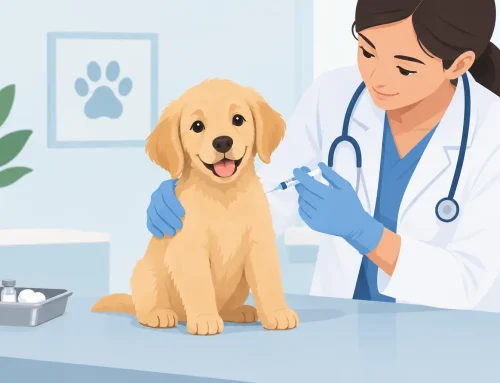
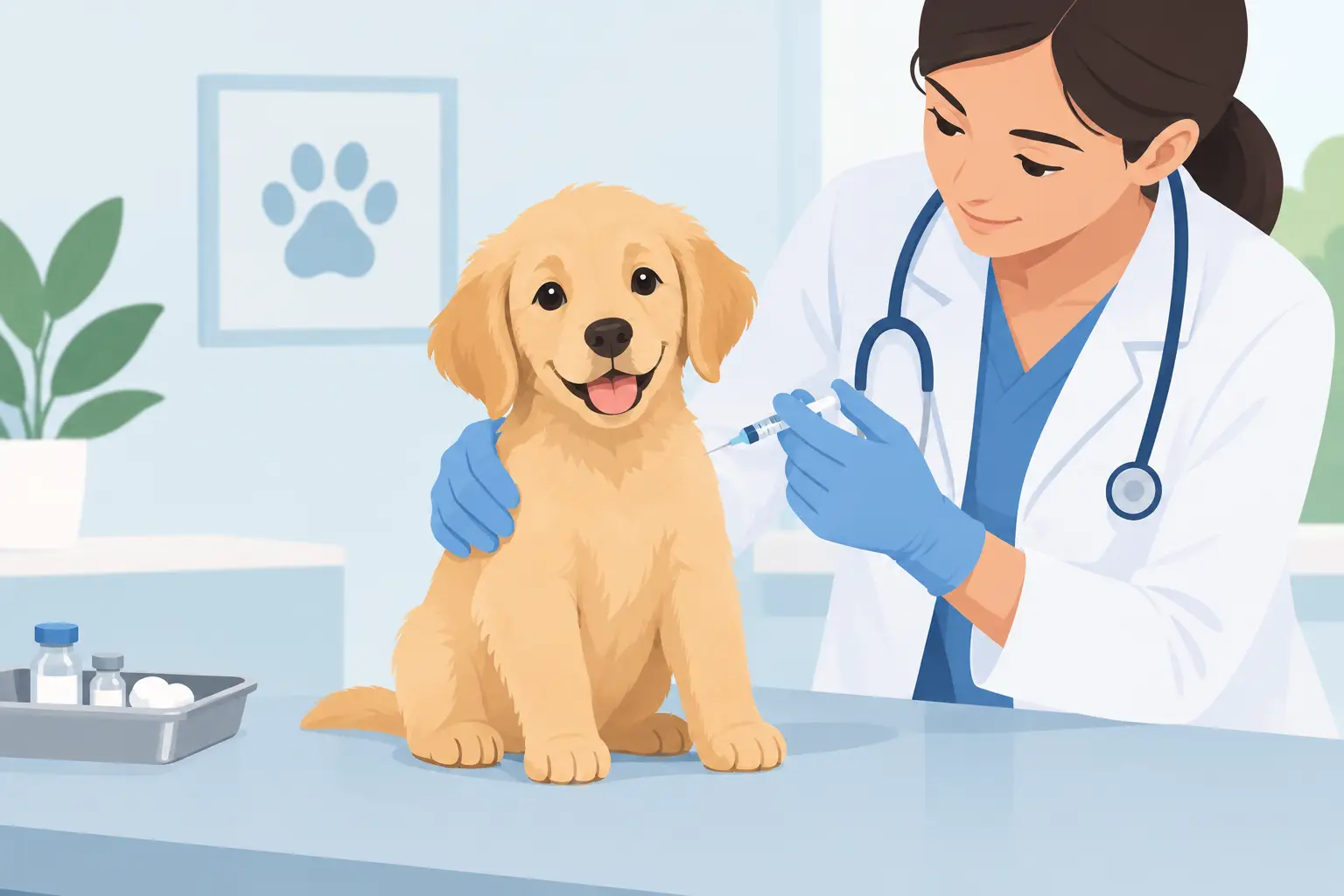
Vaccines are often given as a series because maternal antibodies can interfere with early protection. Your veterinarian will create a schedule based on your puppy’s age, prior records, lifestyle, regional risks, and the products already administered. A puppy should not be considered fully protected after one vaccine visit, so follow your veterinarian’s guidance about public spaces, dog parks, and contact with unfamiliar dogs during this period.
Record every wellness exam
A wellness exam is not only a vaccine appointment. It is a chance for your veterinarian to monitor growth, listen to the heart and lungs, check eyes and ears, evaluate skin and coat, discuss digestion, and answer questions about behavior or training.
Ask for a copy of the visit summary or make a note of the key findings. Record your puppy’s weight, body condition, any diet recommendations, and the next appointment date. If your puppy has a minor concern, such as soft stool after a food change or mild ear irritation, note what your veterinarian advised and whether it resolved. Small details can become useful patterns over time.
Track parasite prevention carefully
Puppies commonly receive deworming treatments early in life, but that does not mean parasite prevention ends after coming home. Your veterinarian may recommend fecal testing and a monthly preventive plan based on your location and puppy’s lifestyle.
Write down the name of each preventive, the dose, and the date it was given. This is especially helpful in busy family households where more than one person shares puppy care. If a dose is missed or a puppy vomits shortly after receiving medication, your records help you have a more precise conversation with the veterinary team.
Keep vaccine records accessible
Vaccination certificates are among the most frequently requested documents during your dog’s life. Groomers, trainers, boarding facilities, daycares, landlords, and travel providers may ask for them. Requirements vary, so it depends on the service and location, but rabies documentation is particularly important to keep readily available once your puppy is old enough to receive it.
A photo album labeled “Puppy Records” on your phone can be practical for quick requests. Still, maintain the original certificate in your main file. If a provider needs a current copy, you will know exactly where to find it.
Understanding Genetic and Breeder Health Documentation
Routine puppy records show the care your puppy has received. Breeder health documentation helps explain the thoughtful decisions made before your puppy was born.
For Australian Labradoodles, families often ask about genetic testing, parent health clearances, coat traits, and temperament. These questions are reasonable. Responsible breeding is not about making a broad promise that a puppy will never have a health concern. No breeder or veterinarian can guarantee that. It is about reducing avoidable risk through careful selection, health screening, honest documentation, and attentive early care.
Ask your breeder what paperwork is available and what it means in plain language. You do not need to become an expert in every genetic term. Your goal is to understand that health screening was part of the breeding program and to preserve those records with your puppy’s file.
At Providence Hill Australian Labradoodles, we encourage families to keep both breeder-provided documentation and their veterinarian’s records together. That complete picture supports clear communication as a puppy settles into family life.
Create a System You Will Actually Use
The best recordkeeping method is the one you will maintain during busy weeks. Some families prefer a paper binder with dividers for vaccines, medications, lab work, and insurance. Others use a digital folder with files named by date, such as “2026-05-14 Wellness Exam.” Many find that a combination of both works best.
Keep a short running note for everyday observations. You can record food brand and amount, monthly preventives, weight changes, grooming dates, and any symptoms that deserve monitoring. Avoid turning normal puppy moments into a medical diary. A single sneezing fit after investigating a dusty corner usually does not need a formal record. Repeated symptoms, appetite changes, vomiting, diarrhea, limping, itching, or unusual behavior do.
When you call the veterinarian, write down the date, the concern, and the advice you received. This is valuable if another family member needs to follow the care plan or if the same issue returns weeks later.
When Records Can Help You Act Faster
Health records become especially valuable when something unexpected happens. If your puppy gets into food that may be unsafe, has a reaction after a new medication, or needs urgent care while you are away from home, accurate information saves time. An emergency veterinarian may need to know your puppy’s age, current weight, vaccine status, medications, allergies, and recent treatments.
Bring your record folder when you travel for extended periods, or keep a digital copy available offline. If you use pet insurance, save claim forms, invoices, and medical notes together from the beginning. Coverage rules vary by policy, and organized documentation can make the claims process less stressful.
It also helps to update the microchip registry whenever you move or change phone numbers. A microchip only works as well as the contact information connected to it.
Questions to Ask at Each Puppy Appointment
You do not need a long list of questions to be a prepared puppy parent. Focus on what is changing now. Ask when your puppy’s next vaccine is due, which activities are safe before the vaccine series is complete, what parasite prevention fits your area, and what signs would warrant a call before the next scheduled visit.
As your puppy grows, ask about nutrition, healthy weight, dental care, grooming needs, and the timing of any future procedures. If something in your records is unclear, ask the clinic to clarify it before you leave. It is much easier to confirm a date or medication name in the moment than to sort it out later.
Your puppy’s file will grow right alongside your puppy. Keep it simple, keep it current, and let it be one more way you care confidently for the loving companion who has become part of your family.