A puppy’s coat color may catch your eye first, but daily life is what should guide your decision. When comparing a labradoodle vs bernedoodle, families are usually weighing more than appearance. They want to know which dog will fit their home, their children, their grooming routine, and the kind of companionship they hope to enjoy for years.
Both can be loving, intelligent doodle companions. However, they come from different breed influences, and those influences can affect size, energy, coat maintenance, confidence, and the amount of structure each dog needs. The best choice is not about which breed is better overall. It is about which puppy is the better match for your family’s lifestyle and expectations.
Labradoodle vs Bernedoodle: The Key Difference
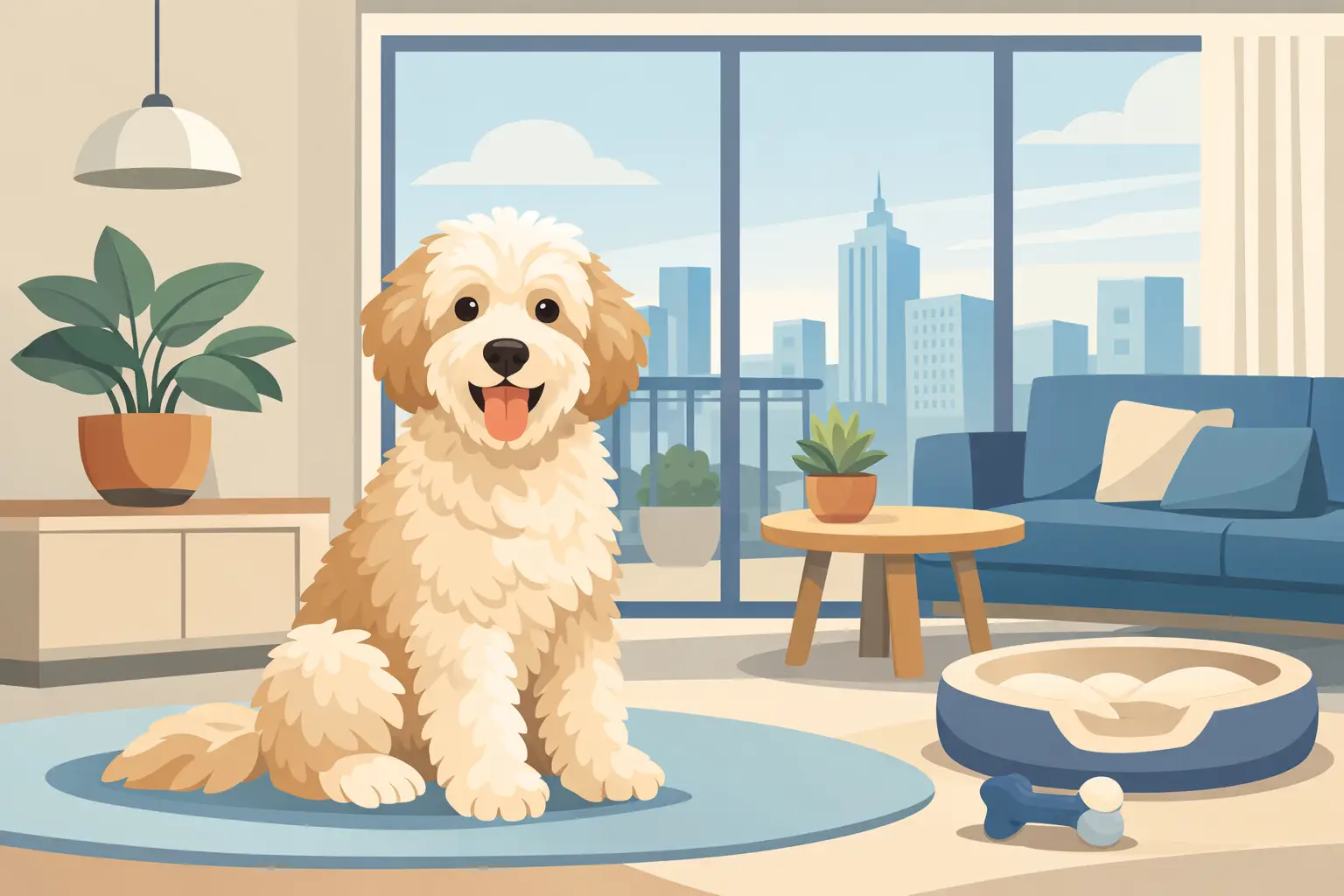
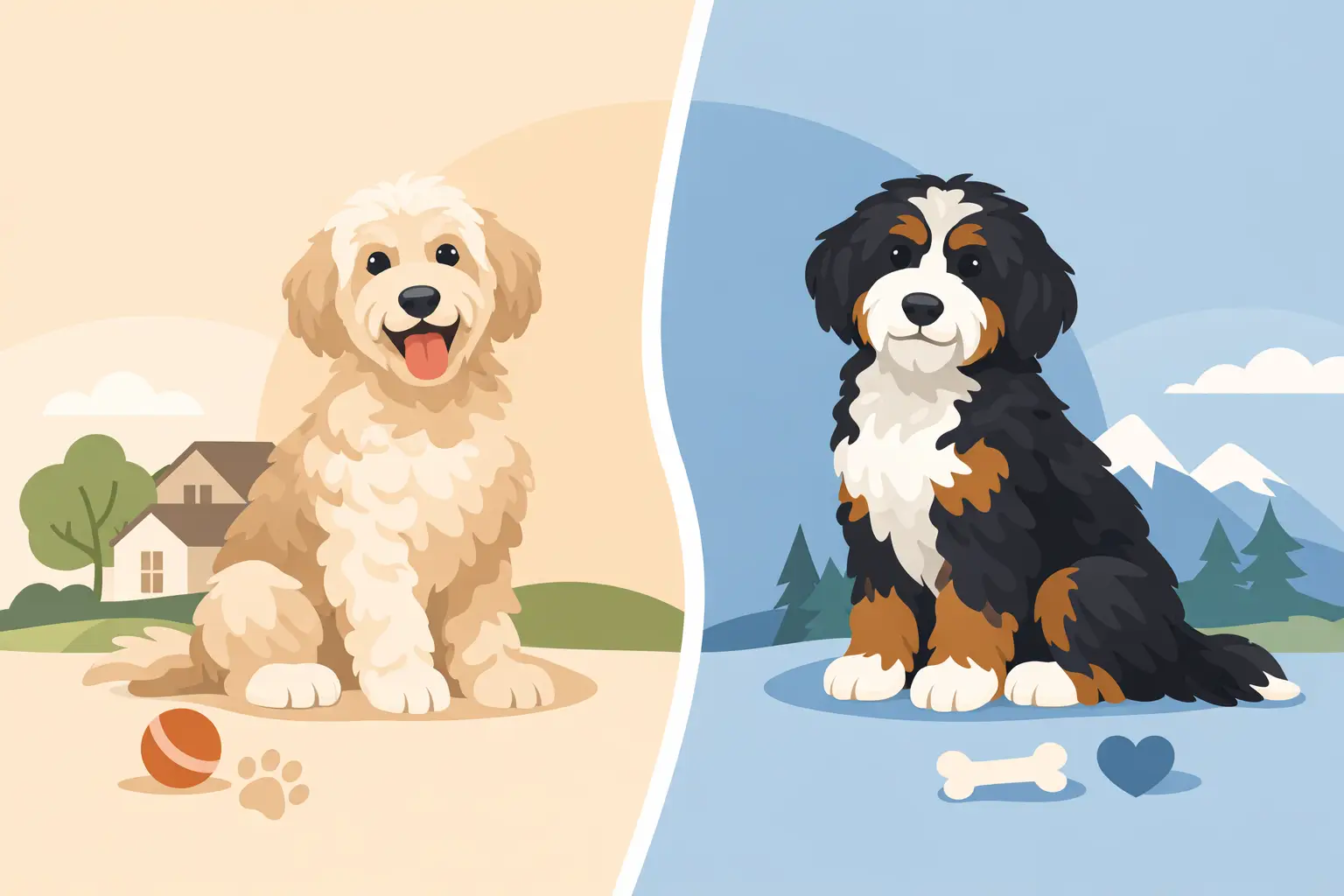
A Labradoodle is traditionally a cross between a Labrador Retriever and a Poodle. An Australian Labradoodle is more established than a first-generation cross and is purposefully developed over generations with carefully selected lines that may include Labrador Retriever, Poodle, and Cocker Spaniel heritage. Responsible Australian Labradoodle breeding focuses on a consistent companion temperament, trainability, coat quality, and sound health.
A Bernedoodle is a cross between a Bernese Mountain Dog and a Poodle. The Bernese influence often contributes a sturdy build, a striking tri-color appearance, and a sweet, devoted nature. The Poodle influence can add intelligence and may reduce shedding compared with a purebred Bernese Mountain Dog.
Because both are mixed breeds, there is no single guaranteed outcome. A puppy’s individual genetics, generation, parents, early socialization, and breeder practices all matter. That is why a conversation about the specific puppy and its family line is far more useful than relying on a breed label alone.
Size and Space Needs
Size can be one of the clearest practical differences in the labradoodle vs bernedoodle decision.
Australian Labradoodles are commonly available in miniature, medium, and standard sizes. This range gives families more flexibility. A smaller dog may be a comfortable fit for a townhouse, apartment, or home with limited space, while a medium or standard dog can suit an active family that wants a larger companion.
Bernedoodles are often medium to large dogs, especially when bred from a Standard Poodle and Bernese Mountain Dog. Mini Bernedoodles do exist, but prospective owners should ask detailed questions about the parents, expected adult size, and the breeding program’s experience producing smaller dogs. A full-sized Bernedoodle may be a wonderful fit for a home with room to spread out, but its size can be more demanding during puppyhood and adolescence.
Neither breed needs a mansion to be happy. Both need consistent exercise, training, attention, and a place to rest near their people. Still, a family with young children, limited vehicle space, or a smaller home may appreciate the more predictable size options available in a well-established Australian Labradoodle program.
Temperament and Family Life
Both doodles can be affectionate, people-oriented dogs. Their personalities often show up in slightly different ways.
Australian Labradoodles are widely valued as companion dogs because they tend to be social, responsive, and eager to participate in family life. With thoughtful breeding and early socialization, they are often well suited to homes with children, first-time dog owners, and families looking for a dog that enjoys connection without being overly intense. Many have the gentle, intuitive qualities families appreciate in therapy-dog-type companions.
Bernedoodles are often described as loyal, affectionate, and sometimes a little more laid-back. The Bernese Mountain Dog influence can bring a calm, gentle presence, but it can also bring sensitivity or occasional stubbornness. Some Bernedoodles are playful comedians who love attention; others may be more reserved around unfamiliar people until they feel secure.
For homes with children, either breed can thrive when the puppy is well raised and the children are taught respectful handling. No breed should be expected to tolerate rough play, constant interruption, or missed rest. Adult supervision, quiet nap time, and early boundaries help any puppy grow into a confident family dog.
Training: Eager Learner or Independent Thinker?
Poodles, Labradors, and Bernese Mountain Dogs are all intelligent breeds, but intelligence does not always look the same in training.
Australian Labradoodles are often highly motivated by praise, food, play, and close interaction with their people. They typically respond well to kind, consistent training that starts early. Families who build short training sessions into daily routines often find that their puppy quickly learns household manners, leash skills, recall foundations, and polite greetings.
Bernedoodles can also be very trainable, but some may have a more independent streak. A Bernedoodle puppy may decide that a command is worth considering before responding, especially if training feels repetitive or confusing. This is not a flaw. It simply means patient, positive guidance matters. Harsh corrections can undermine trust in sensitive dogs of either type.
The breeder’s early work is part of the picture, too. Puppies benefit from safe handling, exposure to normal household sounds, positive human interaction, and age-appropriate routines before they ever go home. At Providence Hill Australian Labradoodles, early preparation is approached as the beginning of a puppy’s lifelong transition, not a task that ends at pickup day.
Coat, Shedding, and Grooming Expectations
Many families begin their search hoping for a low-shedding dog. It is reasonable to want less hair around the house, but it is also important to understand the trade-off: lower-shedding coats usually require more regular grooming.
Australian Labradoodles may have fleece, wool, or hair-type coats, with fleece and wool coats often being preferred by families seeking a low-shedding companion. Even so, no dog is completely hypoallergenic. Allergies are caused by proteins in dander, saliva, and urine, not just loose fur. Spending time with dogs from the breeder’s lines can be helpful for a family with allergy concerns.
Bernedoodles can have curly, wavy, or straighter coats. Their coat and shedding level can vary significantly, particularly in early-generation litters. A curlier coat may shed less but require frequent brushing and professional grooming. A straighter or wavier coat may be easier to brush in some ways, but it may shed more than a family expects.
For either breed, plan on brushing several times each week, learning how to check behind the ears and around the collar area for tangles, and scheduling professional grooming roughly every six to eight weeks depending on coat length and texture. A well-maintained coat is not just about appearance. It helps prevent uncomfortable matting against the skin.
Energy Level and Exercise
Neither a Labradoodle nor a Bernedoodle is a decorative dog that will be content with a quick walk around the block every day. Both need age-appropriate activity, mental engagement, and time with their families.
Australian Labradoodles are often playful and adaptable. A daily walk, backyard play, training games, sniffing opportunities, and family interaction can meet the needs of many adult dogs. Puppies need shorter, more frequent activity periods rather than long runs or forced exercise, which can be hard on developing joints.
Bernedoodles may appear calmer at home, but they still benefit from regular exercise and enrichment. Their larger size can make gentle leash training especially important from the start. A big, friendly dog that pulls toward every person or squirrel can become difficult to manage, even if the dog has the best intentions.
The right dog is one whose exercise needs fit your real schedule. Be honest about weekdays, travel, school activities, and who will handle walks in bad weather. A puppy deserves a routine that works after the excitement of bringing them home has settled.
Health and Responsible Breeding Matter More Than the Label
A Labradoodle or Bernedoodle should never be chosen solely because a photo is adorable or a puppy is available quickly. Responsible breeding requires careful attention to health testing, temperament, pedigree knowledge, puppy raising practices, and long-term support for families.
Ask a breeder which health screenings are completed on parent dogs and why those tests are relevant to the breed. Ask about the parents’ temperaments, the expected adult size and coat, socialization practices, feeding guidance, and what support is available after your puppy comes home. A trustworthy breeder welcomes thoughtful questions because placing puppies in prepared homes is part of responsible care.
Avoid promises that any doodle puppy will be perfectly non-shedding, automatically calm, or ideal for every family. Good breeders can offer informed expectations, but they should also be honest about the normal variation that comes with living dogs.
Which Doodle May Be Right for You?
An Australian Labradoodle may be an especially strong fit if you want a family-centered, trainable companion with size options and a thoughtfully developed low-shedding coat. A Bernedoodle may appeal to you if you are drawn to the Bernese Mountain Dog’s distinctive look, do not mind a potentially larger dog, and are prepared for coat variability and patient training.
Before choosing, picture an ordinary Tuesday six months from now: the morning routine, muddy paws, grooming appointments, school pickup, evening walks, and a dog curled at your feet. The puppy who fits that picture with warmth and realism is the one worth waiting for.