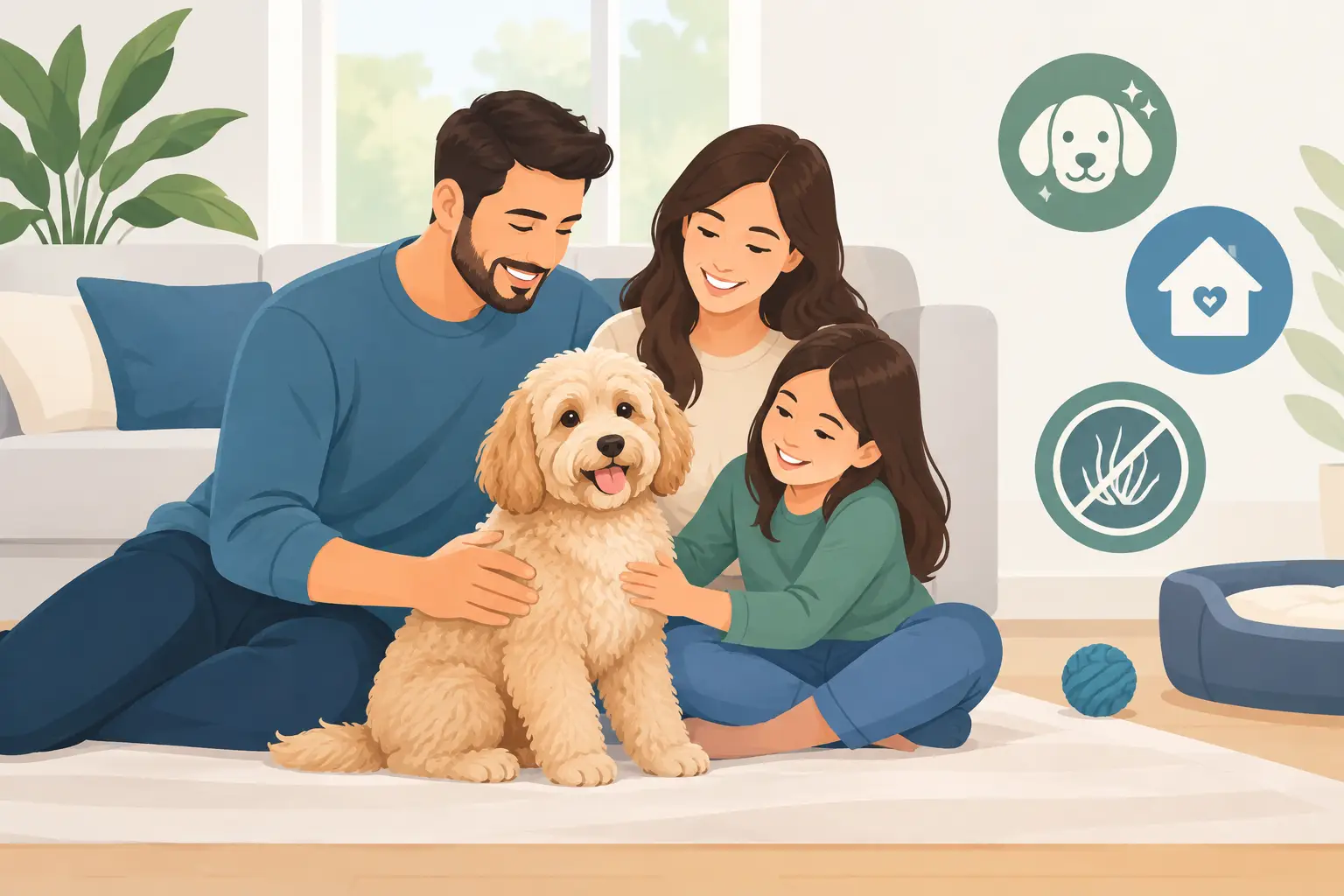
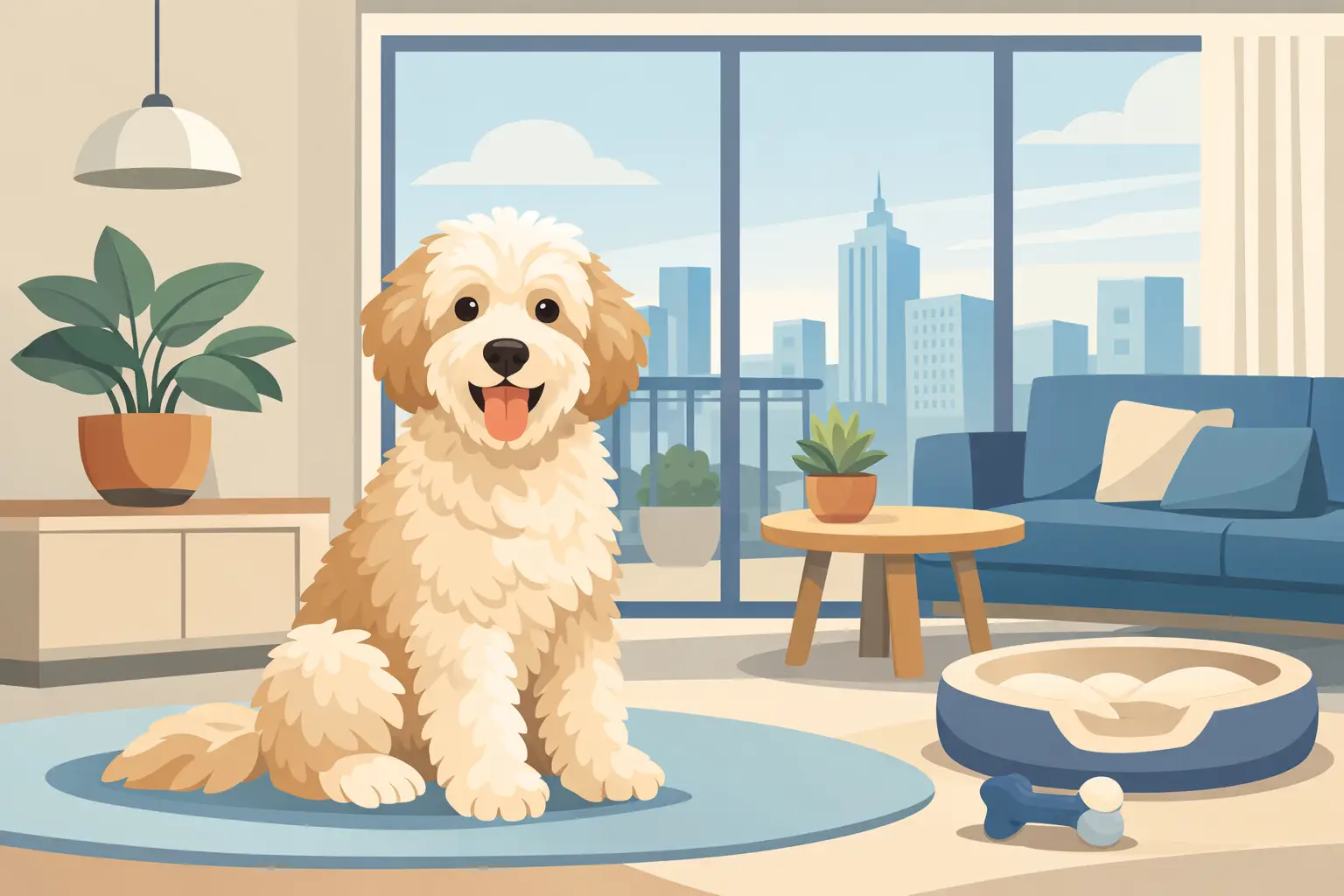
A spacious backyard is wonderful, but it is not the only path to a happy dog. Families often ask, can Labradoodles live in apartments? Yes, many can thrive in an apartment when their home provides what matters most: daily activity, patient training, companionship, and a predictable routine. The apartment itself is only one part of the picture.
Australian Labradoodles are people-oriented companion dogs. They generally want to be where their family is, whether that is a house with a fenced yard or a third-floor apartment near a great walking trail. Still, apartment life asks more of an owner. You will be responsible for creating the exercise, enrichment, and potty opportunities that a backyard might make easier.
Can Labradoodles Live in Apartments Successfully?
For the right household, absolutely. A well-bred Australian Labradoodle with a stable, friendly temperament can be a lovely apartment companion. Their intelligence and eagerness to work with people often make training rewarding, and their low-shedding coats can be especially appealing for homes with less square footage.
That said, no dog is automatically apartment-ready because of its breed. An energetic puppy with no routine, an adult left alone for long workdays, or a dog that has not learned to settle can struggle in any living situation. The best question is not simply whether you have a yard. It is whether you can meet your dog’s needs every day.
Apartment-friendly Labradoodle ownership usually works best for people who enjoy walking, can provide regular interaction, and are willing to train thoughtfully from the beginning. A couple who takes morning and evening walks may be a better fit than a family with a large yard but little time to engage with their dog.
Size Matters, but Routine Matters More
Australian Labradoodles come in different sizes, including miniature, medium, and standard. A smaller dog may be more physically comfortable in a compact space, especially when navigating elevators, narrow hallways, or busy city sidewalks. But size alone does not decide whether apartment living will go well.
A medium or standard Australian Labradoodle can also live comfortably in an apartment when given enough outdoor time and an indoor place to rest. Most dogs do not need to race around the house all day. They need purposeful outlets for their energy, then guidance on how to relax indoors.
Before bringing home a puppy, consider the practical details of your building. Are there stairs or an elevator? Is there a safe, well-lit route for late-night potty breaks? Is there a nearby green space? Are dogs allowed in common areas, and are there weight or breed restrictions? These details shape your daily routine far more than the number of rooms in your apartment.
Exercise Is Your Apartment Dog’s Backyard
A Labradoodle living in an apartment needs consistent physical activity, not one long outing on the weekend. Most adult dogs do well with a morning walk, an evening walk, and shorter potty trips throughout the day. The appropriate amount depends on the dog’s age, size, health, and individual energy level.
Puppies need a different approach. Their growing bodies and short attention spans are not suited for forced long-distance exercise. Instead, offer several brief, age-appropriate outings, gentle play, and plenty of opportunities to explore safely. Short training sessions can be surprisingly tiring for a bright puppy.
A good walk is not only about mileage. Letting your Labradoodle sniff, observe, and move at a comfortable pace provides important mental stimulation. A quick trip outside only to potty is necessary sometimes, but it should not replace regular walks that allow your dog to experience the world.
On rainy days or during a busy week, indoor enrichment helps fill the gaps. Food puzzles, a stuffed frozen toy, scent games, basic obedience practice, and a game of hide-and-seek with treats all give your dog something constructive to do. These activities are especially helpful in apartments because they encourage calm focus without requiring a large indoor play area.
Teach Calm Before You Need It
One of the most valuable skills for apartment living is not a flashy trick. It is the ability to settle quietly. Puppies do not automatically understand that a hallway noise, a neighbor’s door, or footsteps overhead are not invitations to bark or investigate.
Start by rewarding calm behavior at home. When your puppy lies down peacefully while you prepare dinner, answer an email, or watch television, quietly offer praise or a treat. Provide a comfortable crate or designated bed where your dog can rest without feeling isolated. Crate training, introduced positively and at your puppy’s pace, can also support house training and help your dog feel secure when you are away for short periods.
Gentle exposure to normal apartment sounds is equally useful. Let your puppy hear elevators, doors closing, people talking in the hall, and city traffic while you pair the experience with calm reassurance. Socialization is not about introducing your dog to every person and dog you see. It is about helping them learn that the world can pass by without requiring a big reaction.
Barking and Neighbor Consideration
Labradoodles are often chosen for their affectionate, social nature, but any dog can bark when bored, anxious, startled, or undertrained. In an apartment, barking can quickly become stressful for both your family and your neighbors.
Avoid punishing a dog simply for making noise. First, identify what is causing it. Is your dog watching the hallway from the front window? Are they spending too much time alone? Do they need more exercise before you leave for work? A white-noise machine, a change in furniture placement, or closing visual access to busy areas can reduce trigger barking.
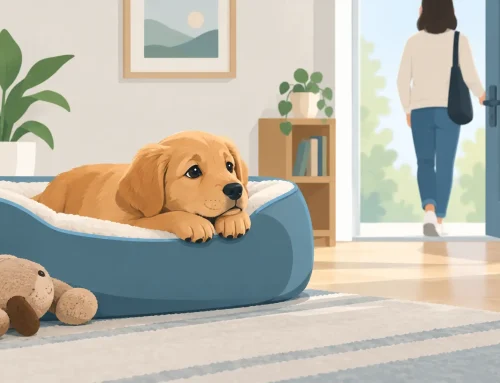
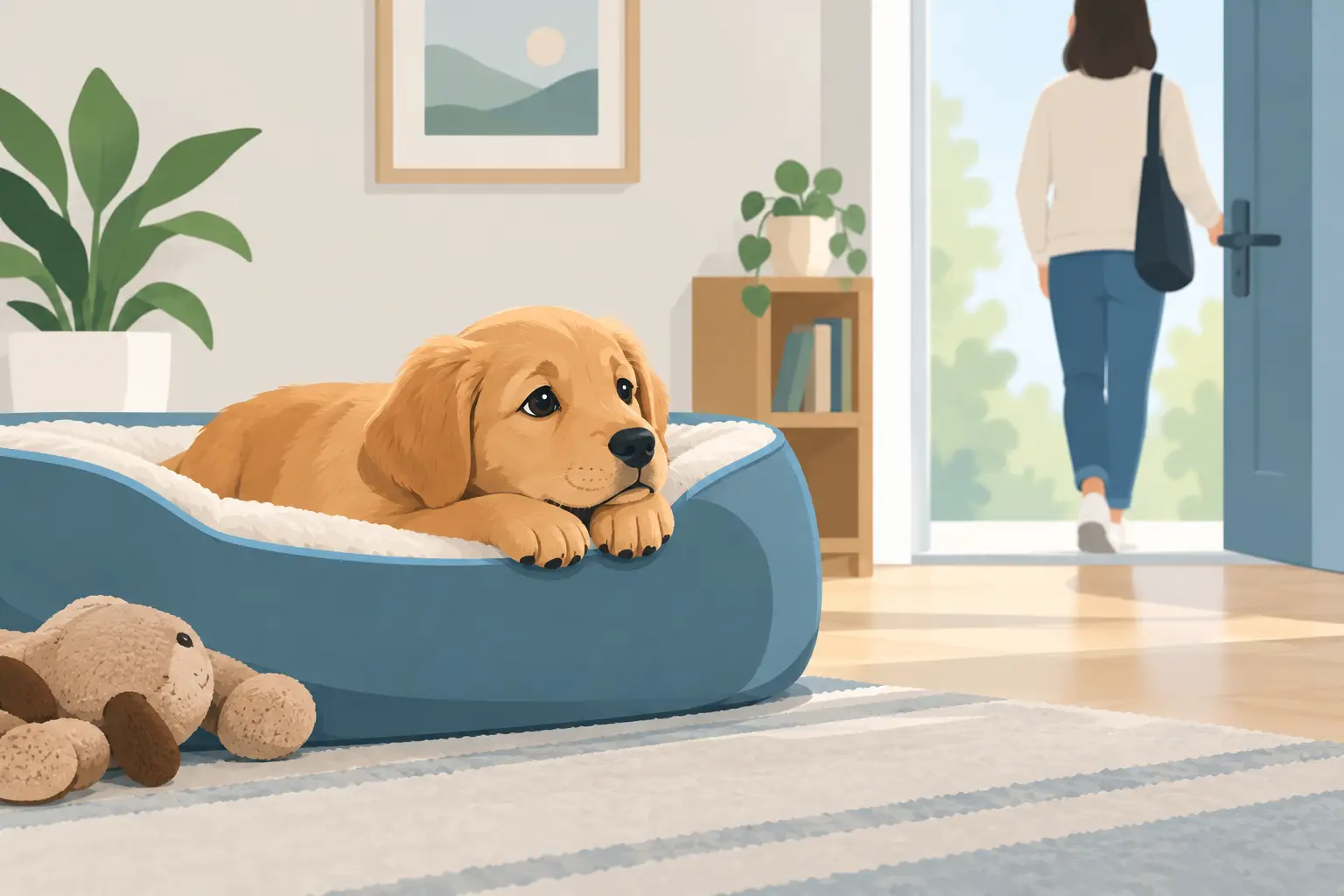
Separation training deserves special attention. Practice leaving your puppy alone for very short, successful periods before expecting them to manage a full workday. Build up gradually, and make departures and returns calm and ordinary. If your schedule regularly keeps you away for long stretches, arrange a trusted walker, family member, or daycare option when appropriate.
Potty Training Takes Planning
Apartment potty training is very achievable, but it requires consistency. Young puppies cannot wait long, and reaching an outdoor area may take more time than opening a back door. Plan ahead by carrying your puppy if needed, particularly before vaccinations are complete or if you must cross common areas.
Take your puppy out after waking, eating, drinking, playing, and napping. Use the same outdoor potty location whenever possible, and reward immediately when they go in the right place. The trip downstairs may feel repetitive in the early weeks, but that routine creates the foundation for a reliably house-trained dog.
Some families choose temporary indoor grass systems or pads, especially in high-rise buildings. These can be useful in certain situations, but they may slow the transition to outdoor-only potty habits. If your goal is outdoor elimination, establish that pattern as early and consistently as your circumstances allow.
Grooming Has a Small-Space Advantage
A low-shedding Australian Labradoodle coat can be a meaningful advantage in an apartment, where fur on floors and furniture is harder to ignore. Low shedding does not mean low maintenance, however. Regular brushing helps prevent mats, keeps the coat comfortable, and makes grooming appointments easier.
Create a simple grooming routine from puppyhood. Handle paws, ears, face, and body gently while offering praise so your dog learns that brushing and basic care are normal parts of family life. In a smaller home, keeping a towel by the door and brushing regularly can make a noticeable difference after muddy walks.
Is an Apartment Right for Your Family and a Labradoodle?
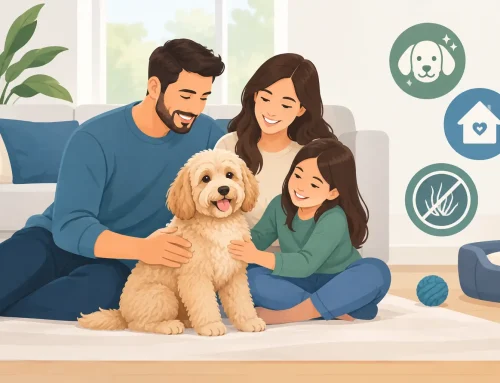
The best apartment homes for Labradoodles are not necessarily the biggest. They are homes where the dog is included, exercised, trained, and loved as part of the daily rhythm. A calm adult household, an active young couple, or a family with children can all be a wonderful fit when expectations are realistic.
Be honest about your schedule before choosing a puppy. If frequent outdoor trips, ongoing training, grooming, and companionship sound manageable and joyful, apartment life can work very well. If your current season leaves little time for a dog, waiting may be the kindest choice.
At Providence Hill Australian Labradoodles, we believe a puppy’s success starts with a thoughtful match between temperament, family lifestyle, and preparation. A backyard is a bonus, but a committed family is the real foundation. With daily care and a steady routine, an apartment can become exactly what your Labradoodle needs most: home.