A puppy’s sweet face can make any family want to decide quickly. But the most meaningful signs of responsible breeding usually appear before you ever meet a litter. An ethical breeder transparency example is not a polished promise or a perfect social media feed. It is a breeder openly showing how they make decisions about health, temperament, early care, and the lifelong placement of every puppy.
For families seeking an Australian Labradoodle, transparency creates the confidence to move forward thoughtfully. It helps you understand what has been done to give your puppy a healthy start, what cannot be guaranteed, and what support will be available as your new companion settles into family life.
What Ethical Breeder Transparency Looks Like
Ethical breeders welcome reasonable questions because their work is built around careful planning, not secrecy. They should be able to explain why a particular pair was selected, what health testing was completed, and what they hope to preserve or improve through that pairing. With Australian Labradoodles, that conversation often includes temperament, coat characteristics, size, structure, and genetic health.
Transparency also means using plain language. Health information should not be buried behind vague statements such as “vet checked” or “healthy lines.” A responsible breeder can tell you which screenings were performed on the parents, what the results mean, and how those results informed their breeding choices.
No breeder can promise that a puppy will never face a health concern. Dogs are living beings, and genetics is only one part of lifelong well-being. What an ethical breeder can provide is evidence of responsible planning, appropriate veterinary care, and honest communication when a question or concern arises.
Health records should be specific
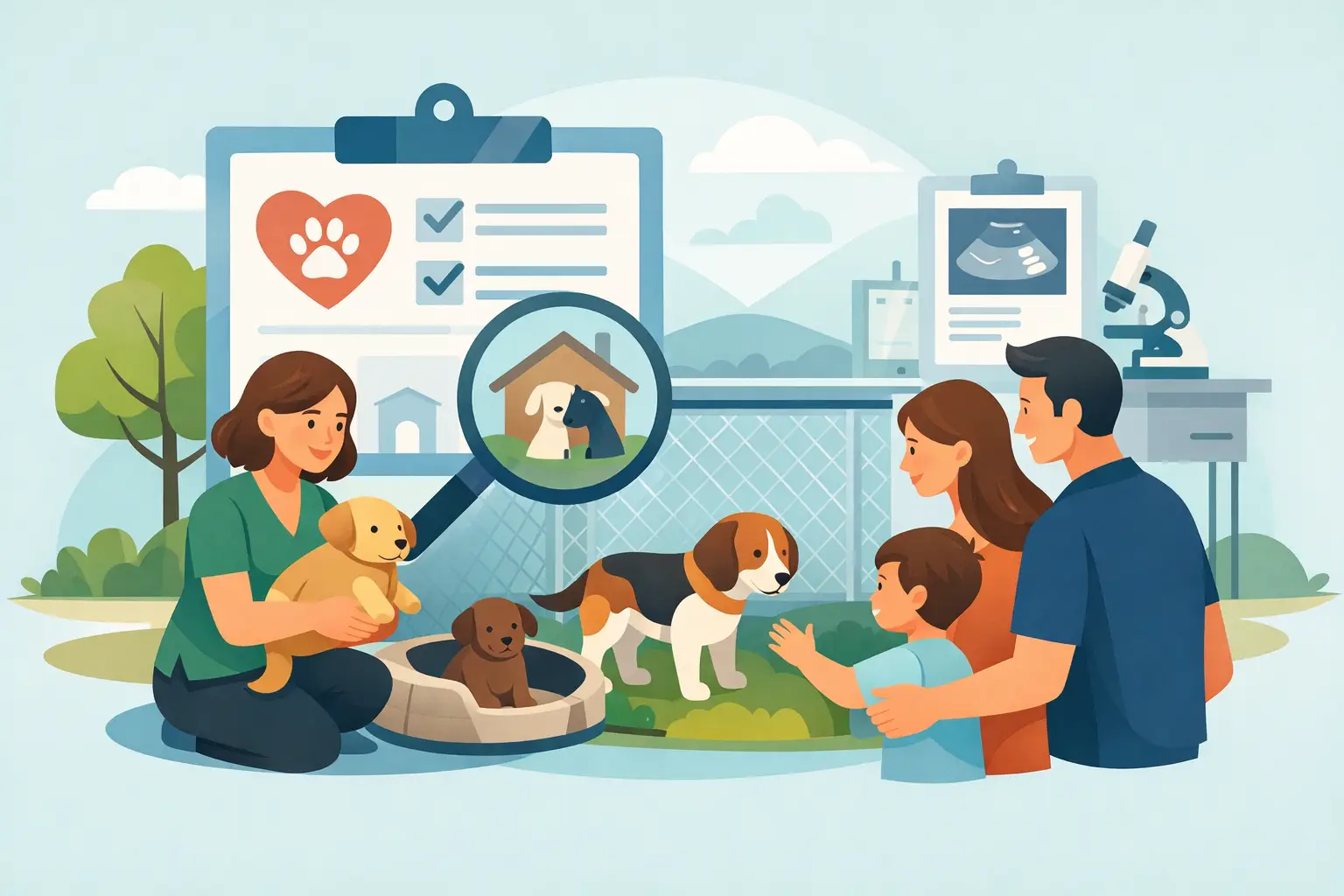
Ask what testing is completed on the breeding dogs and whether documentation is available for review. The appropriate screenings may vary by breed, bloodline, and veterinary guidance, but the breeder should be prepared to discuss the areas they monitor, such as hips, elbows, eyes, heart health, and relevant genetic conditions.
For a family, the goal is not to become an expert in every medical abbreviation. The goal is to see that the breeder takes health seriously enough to test, evaluate results, and make informed decisions instead of relying on assumptions. A responsible breeder will also explain the puppy’s vaccination and deworming schedule, veterinary exams, and the health guarantee or contract in clear terms.
The home environment matters as much as paperwork
A puppy’s first weeks shape how they experience people, sounds, handling, rest, and change. An in-home breeder should be willing to describe where puppies are raised and how they are introduced to ordinary household life. Families should hear about age-appropriate socialization, gentle handling, grooming exposure, crate introduction, and early routines that support a smoother transition home.
This does not mean puppies need constant activity or should be passed from person to person all day. Young puppies also need quiet, cleanliness, sleep, and a consistent routine. Good early socialization is thoughtful and measured. It helps puppies build positive associations without overwhelming them.
An Ethical Breeder Transparency Example in Practice
Imagine you are speaking with a breeder about an upcoming Australian Labradoodle litter. Instead of simply telling you the puppies will be “hypoallergenic” and “great with kids,” the breeder explains the strengths and limits of those descriptions.
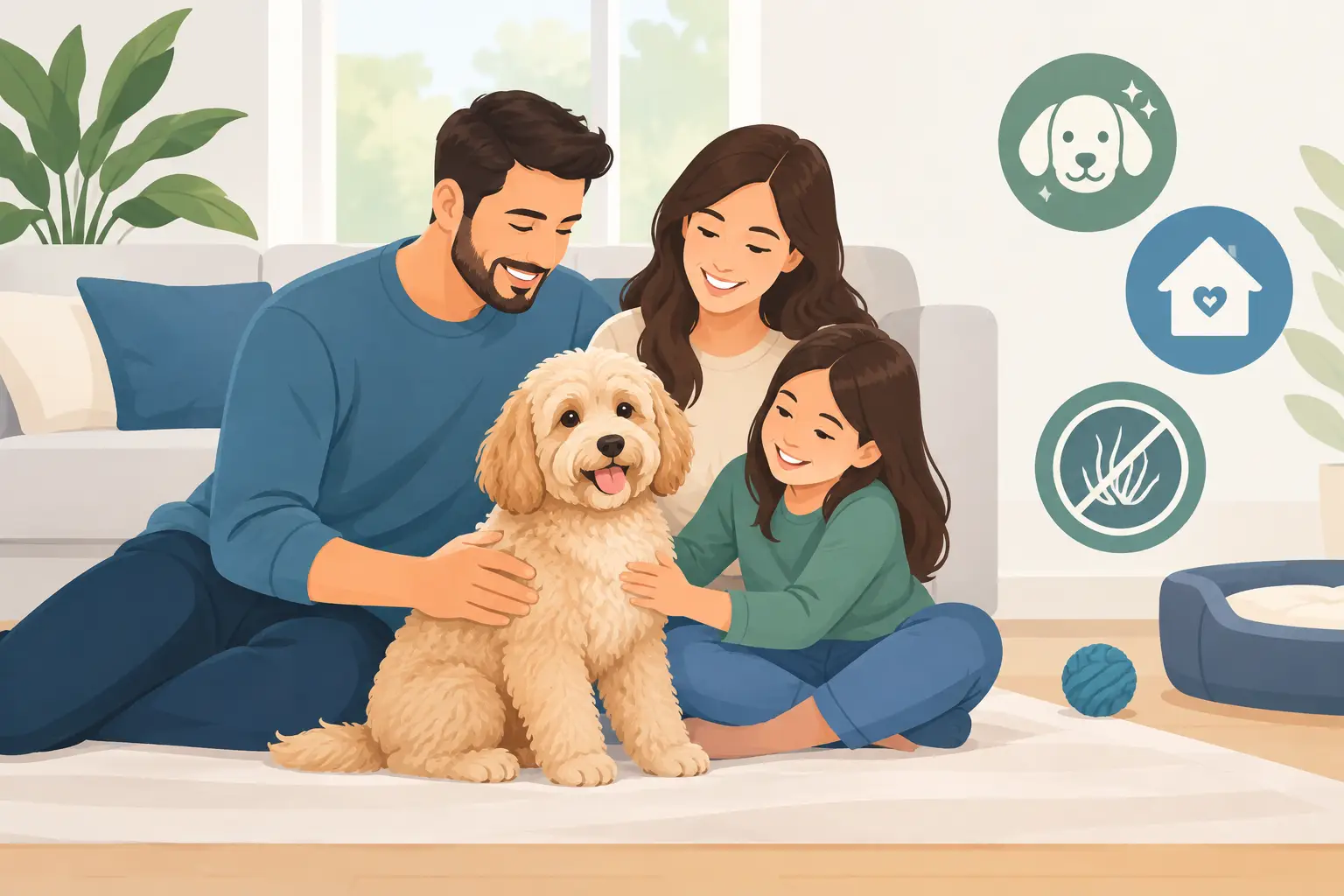
They may share that Australian Labradoodles are often sought after for their low-shedding coats and affectionate, trainable nature, while also clarifying that no dog is completely allergen-free. They can discuss the coat types expected from the pairing, what grooming will require, and why a family with significant allergies should spend time around dogs before making a commitment.
The breeder also introduces the parents as individuals. You learn about their energy level, confidence, affection for people, and everyday behavior, not just their appearance. You may see health testing information, hear why the pairing was chosen, and receive realistic guidance about the size range and coat traits the puppies may inherit.
As the litter grows, transparency continues. A responsible breeder may share developmental updates, photos, and information about milestones, while avoiding premature promises about a puppy’s final personality. At eight weeks old, a puppy’s emerging temperament can be assessed thoughtfully, but it is not possible to guarantee that every puppy will grow into a specific role, such as a therapy dog or an ideal jogging partner.
When placement time comes, an ethical breeder learns about your household. They ask about children, other pets, work schedules, activity level, travel plans, and prior dog experience. This is not an obstacle course designed to make families feel judged. It is how a breeder works to match each puppy with a home where that puppy can thrive.
At Providence Hill Australian Labradoodles, that family-centered approach includes helping future owners prepare for the transition, from early routines and nutrition to grooming and training guidance. The relationship should not end the moment a puppy goes home.
Questions That Reveal a Breeder’s Standards
The answers matter, but so does the way a breeder responds. A good breeder does not need to have an instant answer to every question. They should, however, be comfortable explaining their process, providing records when appropriate, and acknowledging what they do not know.
Consider asking how they choose breeding pairs, which health tests are completed, and how puppies are socialized before going home. Ask how they handle a health concern in a breeding dog or puppy, what is included in their contract, and whether they will take a dog back if a family can no longer provide care.
It is also reasonable to ask how they help families choose a puppy. Color and markings are fun to consider, but a thoughtful placement process gives real attention to temperament, household needs, and each puppy’s developing personality.
A breeder who encourages questions is demonstrating more than good customer service. They are showing that the puppy’s long-term welfare is part of the plan.
Transparency Is Not the Same as Perfection
Families sometimes expect a responsible breeder to have no challenges, no waiting list changes, and no unexpected decisions. Real ethical breeding does not work that way. A breeder may decide not to proceed with a planned pairing because a health result, timing issue, or concern about a dog’s well-being makes it unwise. They may keep a puppy longer for additional observation or determine that a particular home is not the right match.
Those moments can be disappointing, especially when your family is eager to welcome a puppy. Yet they are often signs of good judgment. The better question is not, “Can this breeder guarantee every detail?” It is, “Will this breeder communicate honestly and put the dogs first when circumstances change?”
Transparency should also go both ways. Families should be candid about allergies, housing restrictions, financial readiness, time for training, and the realities of their daily routine. A successful match depends on accurate information from everyone involved.
Red Flags Worth Taking Seriously
A single issue may deserve a conversation rather than an immediate conclusion. Still, families should pause when several warning signs appear together:
- Health testing is mentioned but records or clear explanations are never provided.
- The breeder promises every puppy will be allergy-free, perfectly calm, or suited for a specific service role.
- Puppies are available at all times, with little discussion of parent dogs, planning, or placement.
- The breeder shows no interest in your home, lifestyle, or ability to care for a dog long term.
- Communication becomes evasive when you ask about contracts, veterinary care, or what happens if you can no longer keep the dog.
Price alone does not determine ethics. Responsible breeding requires meaningful investment in health screening, veterinary care, quality nutrition, safe housing, socialization, and ongoing support, so well-bred puppies are rarely the least expensive option. At the same time, a high price is not proof of responsible practices. Clear evidence and consistent care matter more than a price tag.
Choosing a puppy is an emotional decision, and it should feel joyful. The right breeder makes that joy feel steadier by giving you honest information, realistic expectations, and a clear picture of how your puppy was raised. When you can see the care behind the puppy, you can focus on what comes next: building a loving, prepared home for the companion who is about to become part of your family.