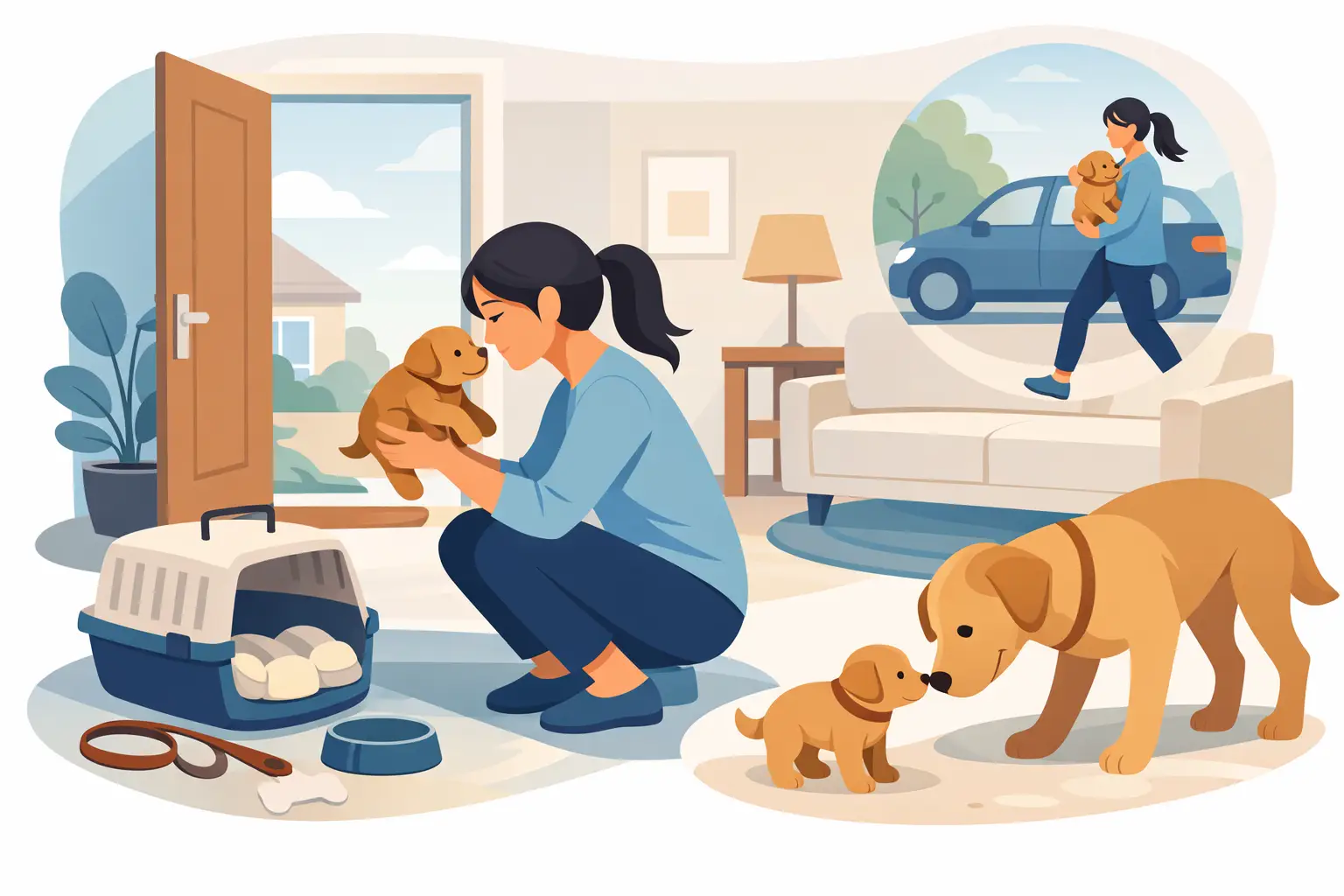
The car ride home is a big moment, but it is only the beginning. Knowing how to transition a puppy home thoughtfully helps your new companion feel secure before the new sights, sounds, people, and routines become overwhelming. Your puppy does not need a perfect first day. They need a calm family, a safe place to rest, and a predictable rhythm they can begin to trust.
For a puppy leaving the familiar comfort of littermates, even a loving home can feel like a major change. Australian Labradoodles are known for their affectionate, people-focused nature, and that connection starts with the way you handle these first few days. A gentle, steady approach builds confidence that will support training, bonding, and family life for years to come.
Prepare Before Your Puppy Comes Home
The best transition begins before pickup day. Choose one area of your home where your puppy can settle without being surrounded by activity. A crate or puppy pen in a family space often works well because your puppy can see and hear you without having access to the entire house.
Set up the crate with safe bedding if your puppy is not likely to chew or shred it, along with a familiar-smelling blanket if one was sent home with you. Keep water nearby, but not inside the sleeping area where spills can make the crate uncomfortable. Have a few age-appropriate toys ready, but resist the urge to fill the space with too many new items at once.
Before your puppy arrives, decide where potty trips will happen and who will handle them. Young puppies need frequent opportunities to go outside, especially after waking, eating, drinking, playing, or being carried out of the crate. Consistency matters more than finding the perfect spot in the yard.
It also helps to have these essentials in place:
- The food your puppy has already been eating, plus clear feeding instructions
- A properly fitted collar or harness, lightweight leash, and ID tag
- Enzyme cleaner for accidents, paper towels, and a plan to clean without scolding
- A crate or pen, chew-safe toys, and a designated bed or resting area
Avoid changing food during the first week unless your veterinarian directs you to do so. Travel, a new schedule, and separation from littermates can all affect a puppy’s digestion. Keeping meals familiar reduces one unnecessary source of stress.
Set Expectations With the Family
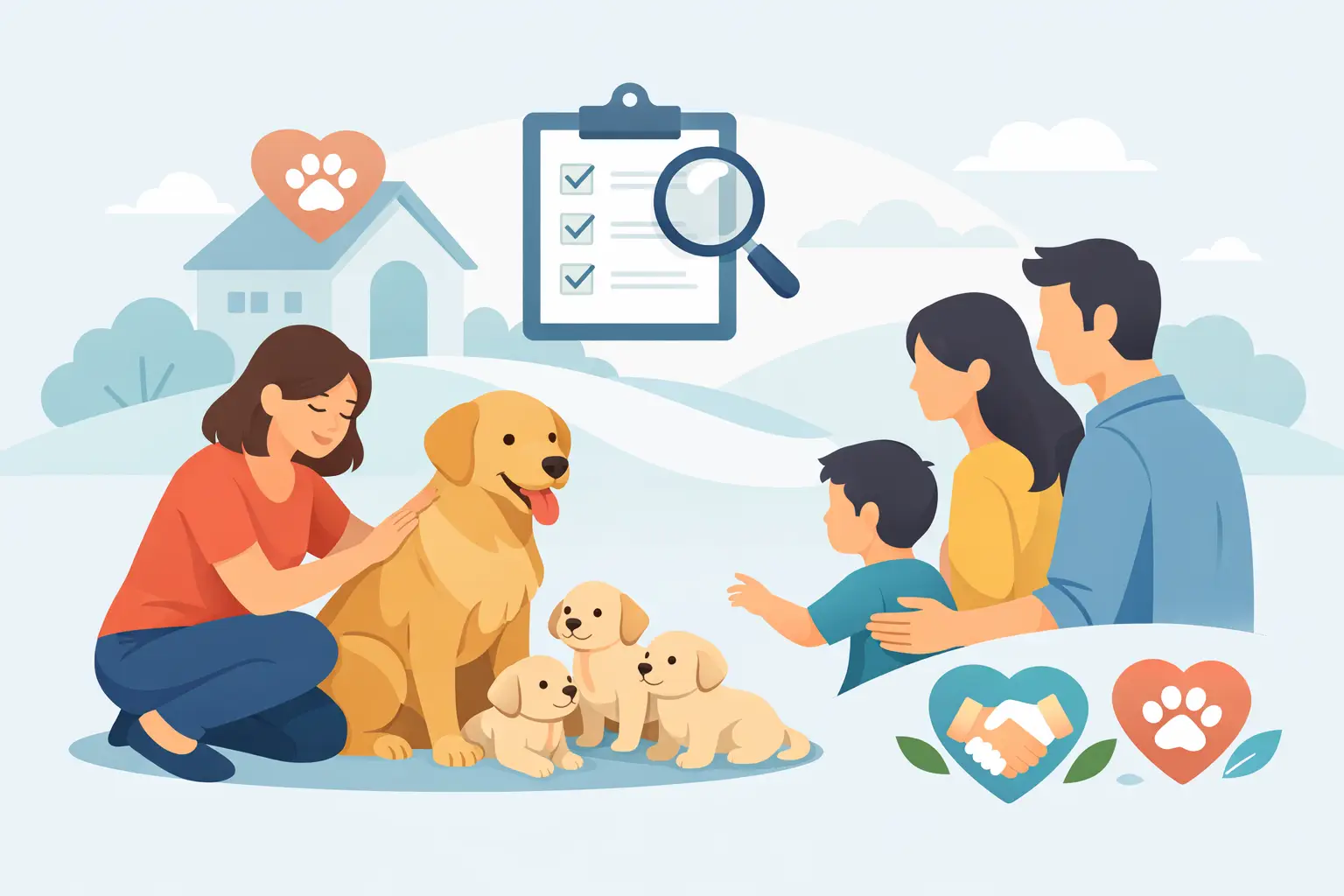
Everyone will be excited, particularly children. Before the puppy comes through the door, explain that a puppy is not a stuffed animal or a constant playmate. They need sleep, quiet breaks, and gentle handling. Overtired puppies can become mouthy, wild, or fussy, which is usually a sign that they need a nap rather than more attention.
Choose simple house rules together: let the puppy approach when possible, no waking them from sleep, hands stay gentle, and an adult supervises interactions with young children. These boundaries protect both children and puppies while creating a calmer home.
The First Hours: Keep the Welcome Small
When you arrive home, take your puppy directly to the potty area before introducing the house. Stand quietly and give them time to sniff. If they go potty outside, offer calm praise right away. If they do not, that is okay. Bring them inside for close supervision and try again soon.
Let your puppy see only one or two rooms at first. A full-house tour may seem fun, but a large, unfamiliar space can make it harder for a puppy to settle and easier for them to have an accident out of sight. Carry or guide them through the areas they need most: their sleep space, water, and the route to the door.
Keep the homecoming quiet. This is not the ideal time for neighbors, relatives, or friends to stop by. Your puppy has already had a full day, and too many new faces can create overstimulation. There will be plenty of time for positive social experiences once your puppy has had a chance to rest and learn that home is safe.
Make the First Car Ride Easier
If your pickup involves a longer drive, bring towels, water, and cleaning supplies. Many families use a secured crate for safe travel, while others have one adult sit with the puppy in a properly restrained travel setup. Do not allow a puppy to roam freely in the vehicle.
Some puppies sleep through the ride, while others cry, pant, drool, or become carsick. Speak softly, keep the temperature comfortable, and make brief potty stops if the trip is long. A nervous puppy does not need constant entertainment. Your calm presence is often the most reassuring thing in the car.
Create a Predictable First-Week Routine
Puppies learn quickly when life follows a pattern. During the first week, focus less on formal obedience and more on helping your puppy understand what happens next. Wake up, potty, eat, play briefly, potty again, then rest. Repeating this rhythm makes house training easier and helps prevent the overtired behavior that can feel challenging for new owners.
Most young puppies sleep a great deal, often 18 to 20 hours in a day. That can surprise families who expected a constant bundle of energy. Protect those naps. If your puppy falls asleep near the family, gently move them to their crate or pen when practical so they learn that their own space is a comfortable place to rest.
Feed meals at consistent times and take your puppy outside shortly afterward. During active periods, take them out frequently rather than waiting for them to signal. Every successful potty trip outdoors is a learning opportunity. If an accident happens inside, clean it thoroughly and make a note of what preceded it. Accidents usually mean the puppy had too much freedom, was not taken out soon enough, or was still learning the routine.
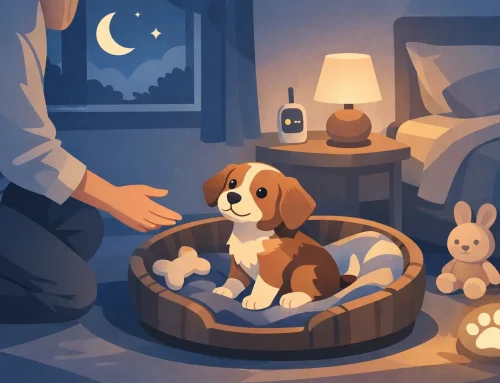
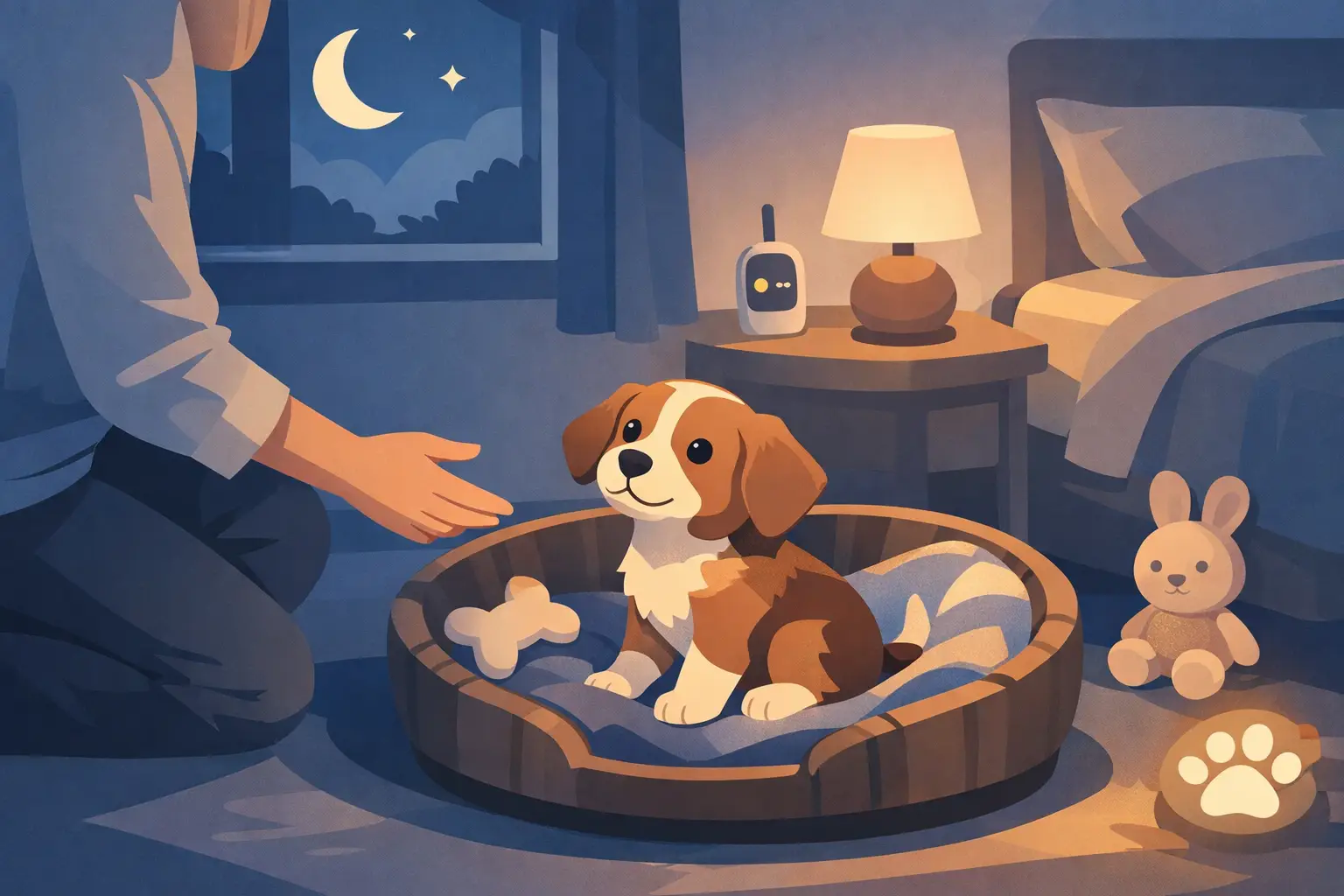
Nighttime takes patience. Many puppies need a potty break during the night at first. Keeping the crate near your bed can make it easier to hear when your puppy needs to go out and helps them feel less alone. Keep nighttime trips quiet and boring: no play, bright lights, or long conversations. Go out, offer a chance to potty, then return to bed.
How to Transition a Puppy Home With Children or Pets
A puppy should never be expected to figure out relationships with children or resident pets on their own. Slow introductions create safer, more positive associations.
With children, keep interactions short and supervised. Invite kids to sit on the floor, offer a toy, or help scatter a few pieces of kibble during a calm training moment. Teach them to avoid hugging, chasing, picking up, or taking food and toys away from the puppy. Your goal is for the puppy to see children as gentle and predictable.
With an adult dog, begin in a neutral outdoor space when possible. Keep leashes loose, allow brief sniffing, and watch body language closely. Then bring both dogs inside for short, supervised sessions. Pick up high-value toys and food bowls at first to prevent tension. Even a friendly resident dog may need time to adjust to sharing attention and space.
Cats and small pets require extra care. Use barriers, leashes, and controlled distance. Do not allow a puppy to chase, even if the puppy appears playful. Calm observation and rewards for settling are far more useful than forcing a close introduction.
Build Confidence Without Overdoing Socialization
Early socialization is valuable, but it does not mean exposing your puppy to every person, dog, store, and sound within a few days. Quality matters more than quantity. A puppy who meets one calm visitor, hears the vacuum from a comfortable distance, walks on a new surface, and receives a treat for relaxed behavior is learning far more than a puppy who is pushed past their comfort level.
Follow your veterinarian’s guidance on vaccine safety before visiting public dog areas or places where many unknown dogs have been. You can still introduce the world safely through car rides, being carried in appropriate places, visits with healthy vaccinated dogs you know, and gentle exposure around your neighborhood.
At Providence Hill Australian Labradoodles, we believe a well-prepared puppy and a well-prepared family make a meaningful difference. Continue the positive handling your puppy has already experienced by touching paws gently, brushing briefly, rewarding calm crate time, and pairing new experiences with patience.
Know When Your Puppy Needs More Support
A little whining, temporary appetite changes, and a few accidents can be normal during a transition. However, contact your veterinarian promptly if your puppy has repeated vomiting, diarrhea, severe lethargy, difficulty breathing, refusal to drink, or signs of pain. Young puppies can become dehydrated quickly, so it is always better to ask when something feels off.
For behavior, give your puppy time before assuming something is wrong. A shy puppy may need quieter introductions, while a bold puppy may need more help learning to settle. If fear, guarding, or intense distress continues, early guidance from a qualified positive-reinforcement trainer can make a real difference.
Your puppy will not remember whether the first day included a perfect photo or a spotless floor. They will remember the feeling of being fed, protected, gently guided, and welcomed into a family that gave them time to belong.