A freshly groomed Australian Labradoodle feels as soft as a favorite blanket, but that lovely coat does not stay that way by accident. Consistent Australian Labradoodle coat care protects your dog’s comfort, helps prevent painful mats, and keeps the low-shedding coat manageable for busy family life. The good news is that a simple routine, started early and followed consistently, makes grooming a pleasant part of caring for your puppy.
Understand Your Australian Labradoodle’s Coat
Australian Labradoodles can have fleece, wool, or hair coats, and each one has its own texture and grooming needs. Most families are drawn to the soft fleece or curly wool coat because these coat types tend to shed very little. Low shedding is a wonderful quality, but it also means loose hair can stay caught in the coat instead of falling onto the floor. Without brushing, that trapped hair can twist into mats close to the skin.
A fleece coat is usually soft, wavy, and silky. It may look easier to maintain than a curlier coat, but it can mat quickly in high-friction areas. Wool coats are denser and curlier, often requiring particularly thorough brushing and regular professional grooming. Hair coats can vary more from dog to dog and may shed more than fleece or wool coats.
No dog is completely hypoallergenic, since allergies may be triggered by dander and saliva as well as hair. Still, the Australian Labradoodle’s low-shedding coat can be a wonderful fit for many households seeking a cleaner home and a companion with fewer loose hairs on furniture and clothing.
Your puppy’s coat will also change as they grow. The soft puppy coat often begins transitioning into an adult coat between roughly 8 and 14 months of age. During this stage, the developing adult hair and lingering puppy fluff can tangle more easily. Families sometimes feel surprised when a puppy who once needed only light brushing suddenly starts matting. This is normal, and it is the time to become especially consistent.
Australian Labradoodle Coat Care Starts With Brushing
For most Australian Labradoodles, a full brush-out two to three times each week is a good baseline. During coat transition, after swimming, or when your dog has a longer haircut, daily checks may be necessary. A short grooming session now is much easier and kinder than trying to work through a large mat later.
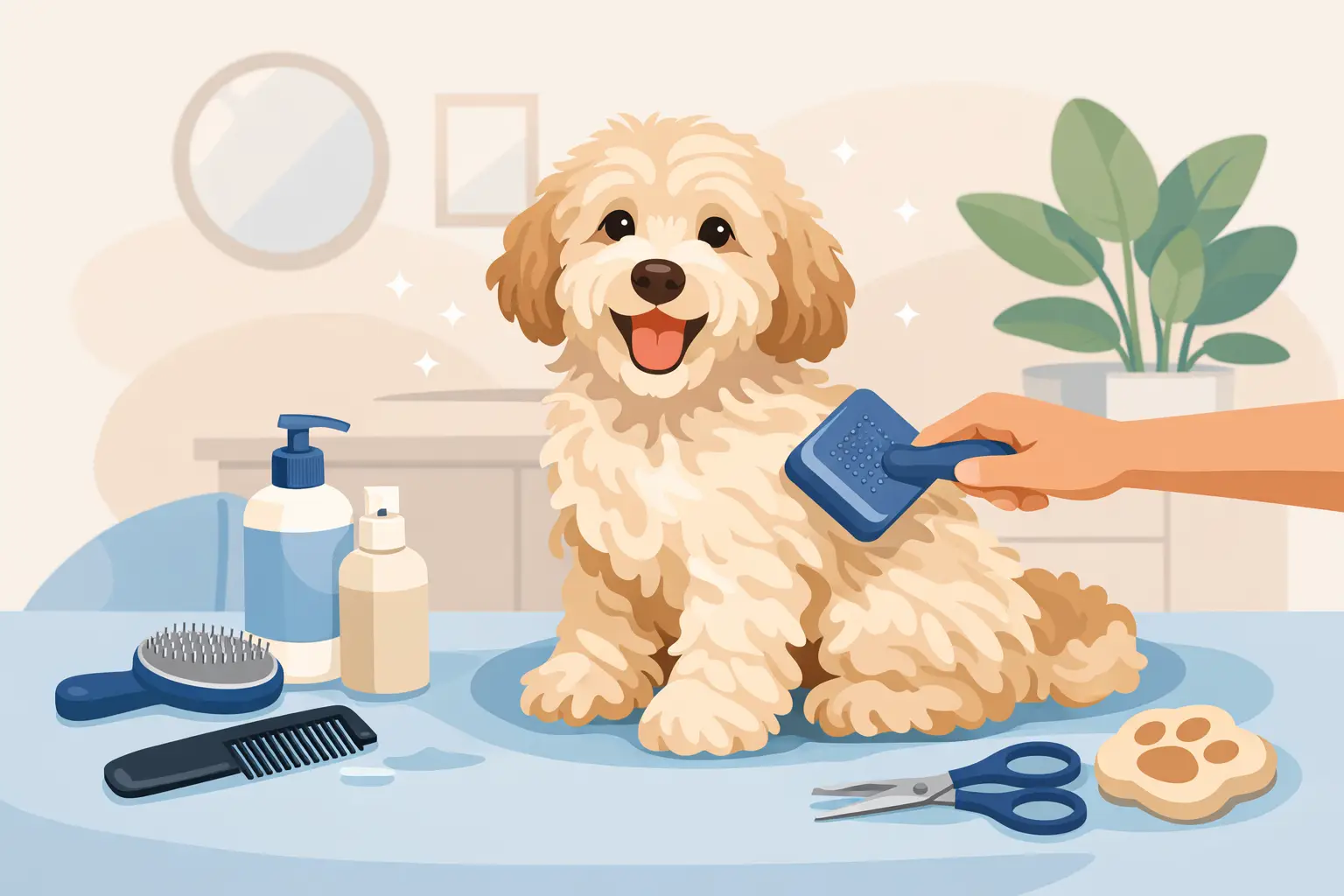
The most useful home tools are a quality slicker brush, a metal comb with both wide and narrow teeth, and a detangling spray made for dogs. The slicker brush helps separate the coat, while the comb confirms that you have brushed all the way down to the skin. A brush can glide over the outer layer of fur and leave hidden tangles underneath, so the comb test matters.
Work in small sections using a method often called line brushing. Part the coat with your hand, brush a thin layer from the skin outward, then move to the next layer. Start in easy areas, such as the shoulders or back, before moving to places that tangle more often. Keep sessions calm, offer praise, and use a small treat when your dog is learning to stand patiently.
Pay close attention behind the ears, under the collar or harness, in the armpits, around the tail, between the back legs, and along the belly. These are the places mats tend to form first because of movement, moisture, and friction. Check them with your fingers even on days when you do not complete a full brush-out.
If you find a small tangle, hold the hair near the skin so you are not pulling on your dog, apply a little detangling spray if needed, and gently work from the ends inward. Never pull, tear, or cut a mat close to the skin with scissors. Mats can hide folds of skin, making accidental cuts more likely. A tight or widespread mat should be handled by a professional groomer, who may recommend clipping it out for your dog’s comfort.
Bathing Without Creating Tangles
Most Australian Labradoodles do well with a bath about every four to six weeks, unless they have rolled in something messy or have a veterinarian-recommended skin-care routine. Bathing too often can dry the skin and coat, while waiting too long can allow dirt, oils, and allergens to build up.
Always brush and comb your dog thoroughly before a bath. Water tightens existing tangles, turning a manageable knot into a more serious mat. Use lukewarm water and a gentle dog shampoo, and rinse longer than you think you need to. Leftover shampoo can cause itchy skin and a dull-looking coat.
Conditioner can be especially helpful for longer fleece coats because it adds slip and makes brushing easier. Choose products formulated for dogs rather than human shampoo or conditioner, which may not suit canine skin. Keep soap out of the eyes and ears, and use a damp washcloth for the face.
Drying is one of the most overlooked parts of coat care. Towel blotting is fine, but rubbing the coat vigorously can create tangles. If your dog tolerates it, use a dog-safe blow dryer on a cool or low setting while brushing in sections. The coat should be completely dry, especially near the skin. Dampness trapped in a dense coat can lead to odor, irritation, and matting.
Keep a Predictable Professional Grooming Schedule
Home brushing and bathing are essential, but most Australian Labradoodles also benefit from professional grooming every six to eight weeks. The ideal timing depends on coat type, haircut length, activity level, and how consistently the coat is brushed at home. A shorter practical trim may let an active family stretch slightly longer between appointments, while a longer, fuller look requires more frequent care.
A professional groomer can bathe, dry, clip, scissor, trim nails, clean up the sanitary areas, and check for early skin concerns. Bring a photo if you have a preferred style, but be open to the groomer’s recommendation. The best haircut is one that suits your family’s ability to maintain it between visits.
For many families, a medium-length puppy cut is a comfortable choice. It preserves the classic Australian Labradoodle look while making daily life easier. A longer coat is beautiful, but it is not a low-maintenance choice. There is no wrong style if it keeps your dog comfortable and matches the time you can realistically devote to brushing.
At Providence Hill Australian Labradoodles, we encourage families to introduce grooming as a normal part of life from puppyhood. Early, positive experiences with handling, brushing, nail care, and dryers can build confidence that lasts well into adulthood.
Help Your Puppy Enjoy Grooming
Puppies do not automatically understand why they need to stand still for a brush or have their paws touched. Start with very short sessions, even just a minute or two, and finish before your puppy becomes frustrated. Gently handle the feet, ears, tail, and muzzle, then reward calm behavior.
Consistency matters more than a perfect long session. Brushing for a few relaxed minutes several times a week teaches your puppy that grooming is safe and predictable. If your puppy is wiggly, try grooming after a walk, training session, or playtime, when they are ready to settle.
A grooming table is not necessary for every home, but a non-slip mat in a quiet, well-lit spot can help. Keep your voice calm, avoid chasing your puppy with the brush, and never use grooming as a correction. The goal is a dog who trusts you with their care.
Watch for Signs Your Dog Needs More Help
A coat that looks fluffy from across the room may still be uncomfortable underneath. Run your hands over your dog regularly and look for bumps, tight spots, redness, odor, flaking, or areas where your dog pulls away when touched. Excessive scratching, licking, head shaking, or rubbing can point to skin or ear concerns that deserve attention.
Contact your veterinarian for persistent itching, sores, hair loss, strong odor, or sudden changes in the skin or coat. Contact your groomer when mats are forming faster than you can safely manage, or when you are unsure which tools and haircut length fit your dog’s coat. Asking early can save your dog discomfort and make the grooming process much simpler.
The best coat-care routine is not the fanciest one. It is the routine your family can keep: regular brushing, complete drying after baths or swims, professional appointments on schedule, and gentle handling from puppyhood. Those small, steady habits help your Australian Labradoodle stay comfortable, clean, and ready for every cuddle, car ride, and family adventure.