
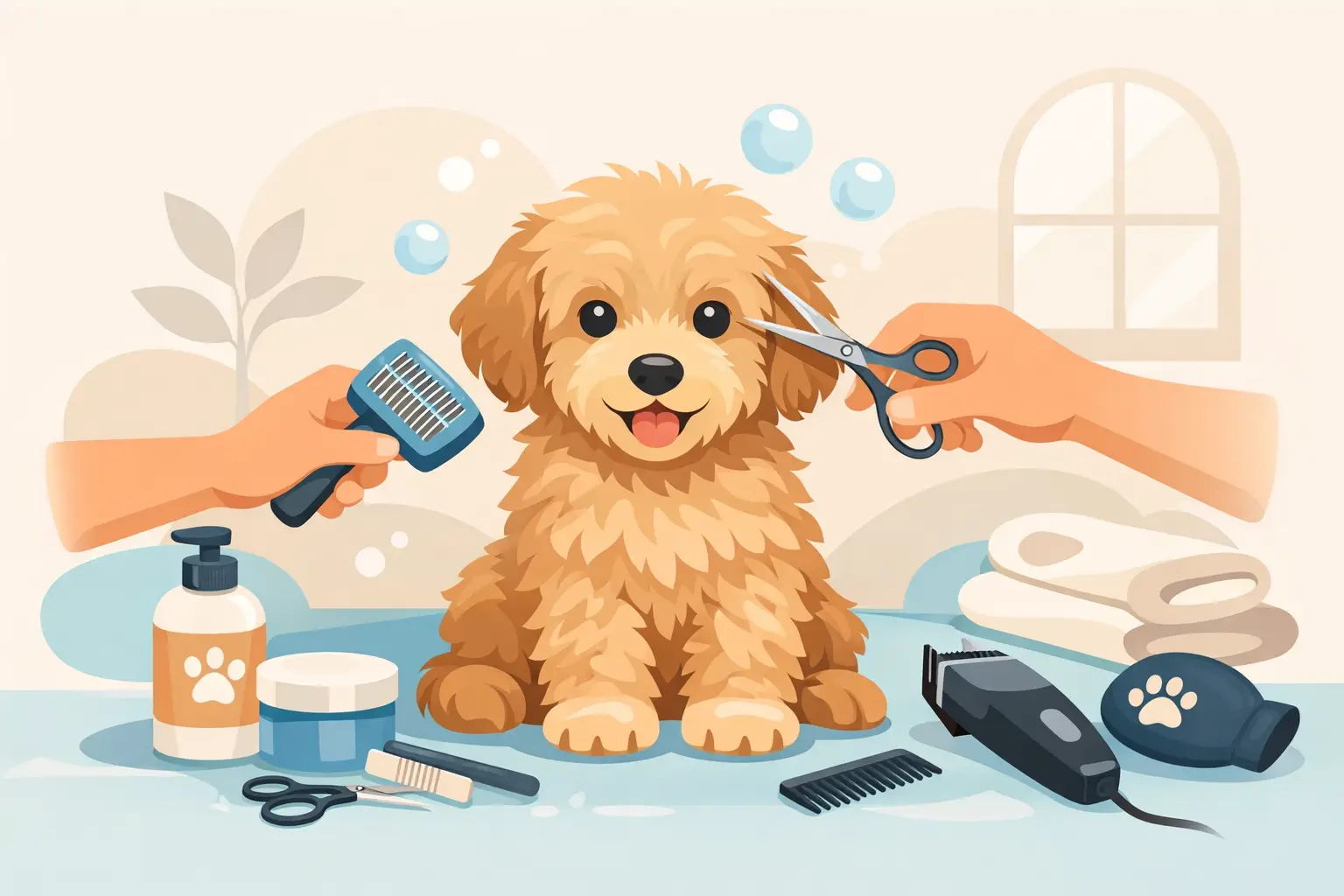
That soft, fluffy Labradoodle puppy coat is part of what makes these dogs so lovable – and part of what surprises new owners the most. If you are learning how to groom labradoodle puppy care into your weekly routine, the good news is that starting early makes everything easier. Grooming is not just about keeping a puppy cute. It helps protect the coat, supports healthy skin, and teaches your puppy to stay calm and cooperative with handling.
For families bringing home an Australian Labradoodle, early grooming habits matter because this breed’s coat can change quite a bit during puppyhood. A young puppy may feel silky and easy to brush at first, then start developing a thicker, more textured coat as they grow. That transition is where mats often begin, especially around the ears, collar area, legs, and behind the tail. A gentle routine now can prevent a lot of frustration later.
How to groom labradoodle puppy the right way
The best approach is to think in terms of training, not just grooming. A Labradoodle puppy does not automatically know how to stand still for brushing, tolerate nail trims, or relax during a bath. Those skills are learned in small, positive sessions.
Start with short handling exercises several times a week. Touch the paws, lift the ears, hold the chin gently, and run your hands down the legs and belly. Offer praise and a small treat so your puppy begins to associate grooming with safety. If you wait until the coat is tangled or the nails are too long, grooming turns into a bigger event than it needs to be.
A calm five-minute session is often more productive than trying to do everything at once. Most puppies do best when grooming happens after some play or a short walk, when they are relaxed but not overtired.
The basic grooming tools you actually need
You do not need a huge grooming kit, but you do need the right few tools. A slicker brush is usually the main brush for a Labradoodle puppy because it helps work through the coat gently. A metal comb is just as important, since it tells you whether you actually removed tangles or only brushed over the top.
You will also want puppy-safe shampoo, nail clippers or a grinder, grooming scissors for careful trimming around the face and paws, and a good dryer if you plan to bathe at home regularly. Some families like detangling spray, especially during coat transition. What matters most is using tools that are comfortable and safe for a young dog.
Brushing your Labradoodle puppy without causing stress
Brushing is the heart of coat care. For most Labradoodle puppies, brushing several times a week is the minimum, and some coats need daily attention during heavier coat changes. The goal is not to make the top look fluffy. The goal is to brush all the way to the skin without scratching or pulling.
Work in small sections. Start low on the body and move upward, gently parting the coat as you go. This is often called line brushing, and it is one of the best ways to prevent hidden mats. Use the slicker brush first, then follow with the comb. If the comb catches, there is still a tangle there.
Pay extra attention to friction spots. Those are the places where movement creates knots quickly, like under the collar, behind the ears, in the armpits, around the chest, and where the back legs meet the body. A puppy can look well groomed from a distance and still have matting in those areas.
If you find a tangle, do not yank at it. Hold the hair close to the skin so you are not pulling the puppy’s body, then work gently from the ends inward. For a tight mat, a little detangling spray and patience usually help more than force.
How often should you bathe a Labradoodle puppy?
Most Labradoodle puppies do not need frequent baths unless they get especially dirty. About every three to four weeks is a reasonable schedule for many families, though it depends on lifestyle, coat type, and how much outdoor exploring your puppy enjoys.
Bathing too often can dry the skin, but waiting too long can leave the coat harder to manage. The biggest mistake is bathing a puppy before thoroughly brushing and combing out the coat. Water tightens tangles. If a puppy goes into the bath with mats, those mats can become much worse afterward.
Use lukewarm water and a gentle puppy shampoo. Rinse very well, because leftover product can irritate the skin and make the coat feel dull. After the bath, towel dry first, then dry the coat fully while brushing. Letting a dense coat air dry sounds simple, but it often leaves damp areas that encourage tangling and skin irritation.
Face, feet, ears, and nails matter just as much
Many new owners focus on the body coat and overlook the smaller areas that affect comfort most. A Labradoodle puppy needs regular attention around the eyes, ears, paws, and nails.
Hair around the eyes should stay neat enough that your puppy can see clearly. If facial hair starts falling into the eyes, trim carefully with grooming scissors designed for pet use, or have a professional groomer handle it. The goal is a clean, open expression, not a dramatic haircut.
Feet can become messy quickly. Trim the hair that grows long around the paw pads and edges of the feet so your puppy has better traction and brings in less dirt. This also helps prevent slipping on hardwood or tile, which is especially useful for growing puppies.
Ears should be checked weekly. Australian Labradoodles can have lovely floppy ears, but that also means less airflow. Look for redness, odor, or excess wax. Ear care should be gentle and never overdone. If your puppy’s ears seem irritated or repeatedly dirty, your veterinarian should evaluate them.
Nails should stay short enough that they do not click loudly across the floor. Long nails change how a puppy stands and walks. Frequent tiny trims are usually easier than waiting too long and trying to remove more at once. For many puppies, weekly nail work is ideal.
When to schedule professional grooming
Even if you plan to do a lot at home, professional grooming is still a big help for many Labradoodle families. A puppy’s first appointments should focus on experience as much as appearance. A kind groomer can introduce the table, dryer, brushing, trimming, and handling in a structured way.
Many owners schedule a first puppy groom once vaccinations allow and before the coat becomes difficult. Often that first visit is light – a bath, brush out, face trim, sanitary trim, and nail care. Full haircuts usually come later, depending on coat development.
There is no single perfect grooming schedule because Labradoodle coats vary. Some families visit every four weeks, while others can stretch a bit longer if they stay very consistent with brushing at home. The trade-off is simple: the longer you wait between appointments, the more coat maintenance you must do yourself.
Common grooming mistakes to avoid
The most common mistake is brushing only the surface. A fluffy top layer can hide matting close to the skin, and by the time you find it, the coat may need to be clipped shorter than you hoped.
Another mistake is waiting until the puppy dislikes grooming before practicing it. Grooming tolerance is built early through repetition and calm handling. It is much easier to teach a 10-week-old puppy to accept paw handling than a strong adolescent dog who has learned to resist.
Owners also sometimes aim for a very long coat without realizing the upkeep involved. A longer puppy cut can be beautiful, but it requires more brushing and more consistency. For busy families, a slightly shorter trim often makes life easier while still keeping the classic soft Labradoodle look.
At Providence Hill Australian Labradoodles, we always encourage families to think of grooming as part of raising a well-adjusted companion dog, not just a cosmetic task. Puppies who learn to be handled with patience and consistency are often easier in every part of care.
Building a grooming routine your puppy can trust
The most successful grooming routine is one your family can actually keep. Pick a few predictable times each week for brushing. Keep tools in one place. Use praise, small rewards, and a calm voice. If your puppy gets wiggly, take a break before frustration builds.
Some days will go smoothly, and some will not. That is normal. A growing Labradoodle puppy is learning about the world, and grooming is one more life skill to practice. What matters is consistency.
When grooming is introduced as a gentle, regular part of home life, most Labradoodle puppies settle into it beautifully. That early effort pays off in a healthier coat, easier appointments, and a dog who feels secure being cared for – which is exactly what every family wants.