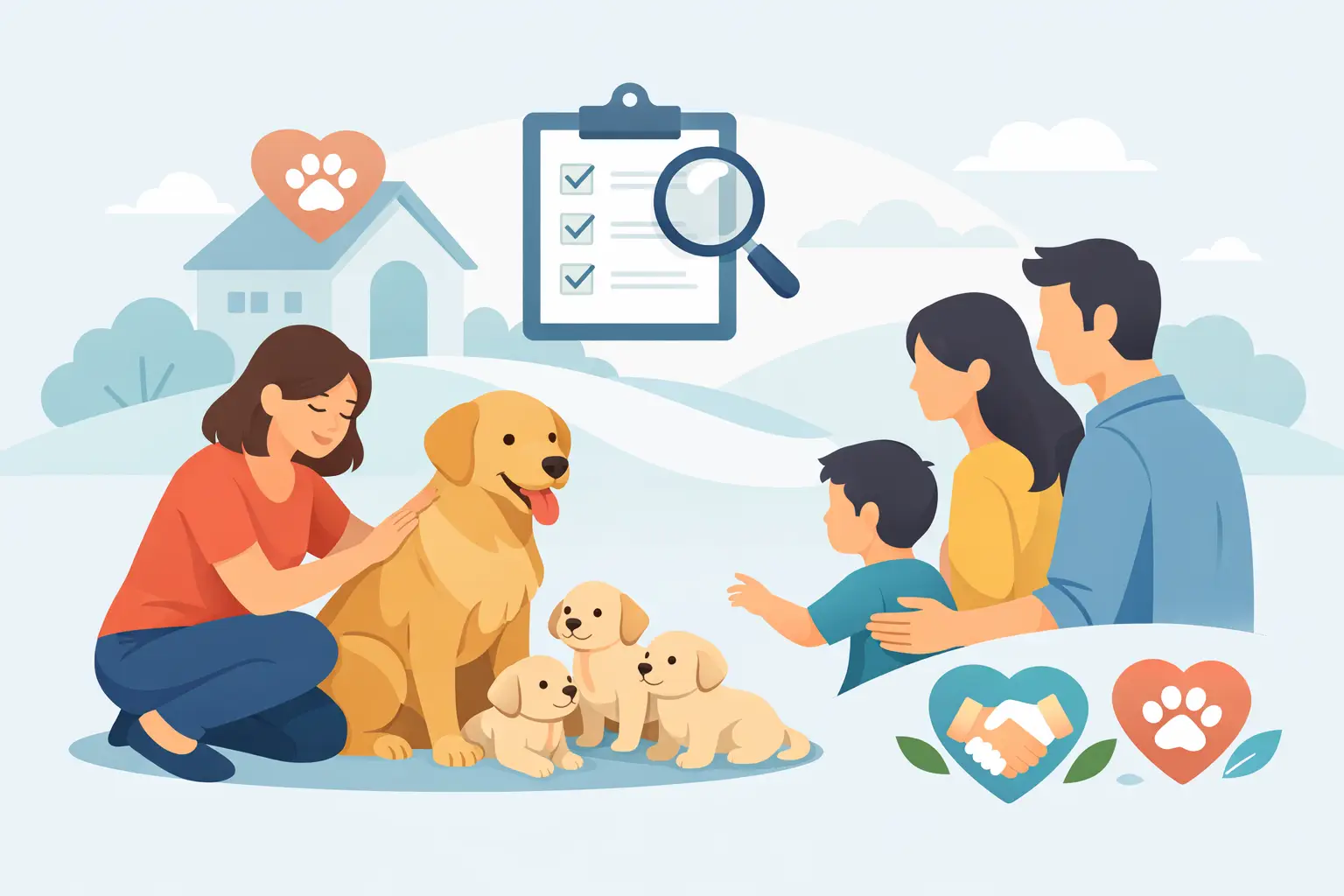

Bringing home a puppy is exciting, but the questions you ask before you commit matter just as much as the puppy you choose. If you are wondering what to ask dog breeder before placing a deposit, start with this simple idea: a good breeder should welcome careful questions. The right conversation will tell you a great deal about how the puppies are raised, how the parents were selected, and what kind of support you can expect after your puppy goes home.
For most families, this is not just about finding an adorable puppy. It is about finding a healthy, stable companion who will fit your home, your children, and your day-to-day life. That is why the breeder relationship matters.
What to ask dog breeder about health
Health should be one of the first topics you cover, not something you save for the end. A responsible breeder should be able to explain what health testing has been done on the parent dogs and why those tests matter for the breed.
Ask which genetic screenings and orthopedic evaluations the parents have completed. You are listening for clear, confident answers, not vague reassurance. A breeder should be able to talk about inherited conditions that can affect their breed and the steps they take to reduce risk in future litters.
It also helps to ask whether puppies receive early veterinary care, age-appropriate vaccinations, deworming, and wellness checks before going home. Good breeders usually have a written process and a health record for each puppy. If the answer feels improvised, incomplete, or dismissive, that is worth paying attention to.
One important nuance is that no breeder can promise a puppy will never face a health issue. Living animals do not come with absolute guarantees. What a responsible breeder can offer is thoughtful pairing, strong testing standards, honest communication, and a clear commitment to doing things the right way.
Ask about temperament, not just appearance
Families often start with coat color, size, or whether a puppy looks especially cute in photos. Those things are understandable, but temperament should carry more weight. A puppy will grow, and daily life with your dog will be shaped far more by personality, confidence, and trainability than by markings.
Ask how the breeder evaluates temperament in both the parent dogs and the puppies. Ask what traits they prioritize in their breeding program. For many families, especially those with children or first-time dog owners, a breeder who focuses on stable, friendly, people-oriented temperaments is often a better fit than one who breeds primarily for looks.
You can also ask how they help match puppies to homes. That is often a revealing question. Experienced breeders do not simply let buyers choose based on the first photo they love. They observe each puppy, learn about your household, and try to place puppies where they are most likely to thrive.
For example, a more easygoing puppy may suit a family with young kids, while a highly energetic or especially driven puppy might do better with an owner who has more training experience. Thoughtful matching shows the breeder is thinking beyond the sale.
How are the puppies being raised?
This is one of the most important parts of what to ask dog breeder because early environment shapes so much. Puppies raised in a home setting with regular human interaction typically get a very different start than puppies raised with limited handling or stimulation.
Ask where the puppies spend their first weeks. Are they raised in the home? Are they exposed to normal household sounds, gentle handling, and age-appropriate new experiences? Are they introduced to basic routines that help prepare them for family life?
Early socialization is not about overwhelming a young puppy. It is about safe, intentional exposure. A good breeder should be able to describe how they help puppies build confidence before they leave for their new homes.
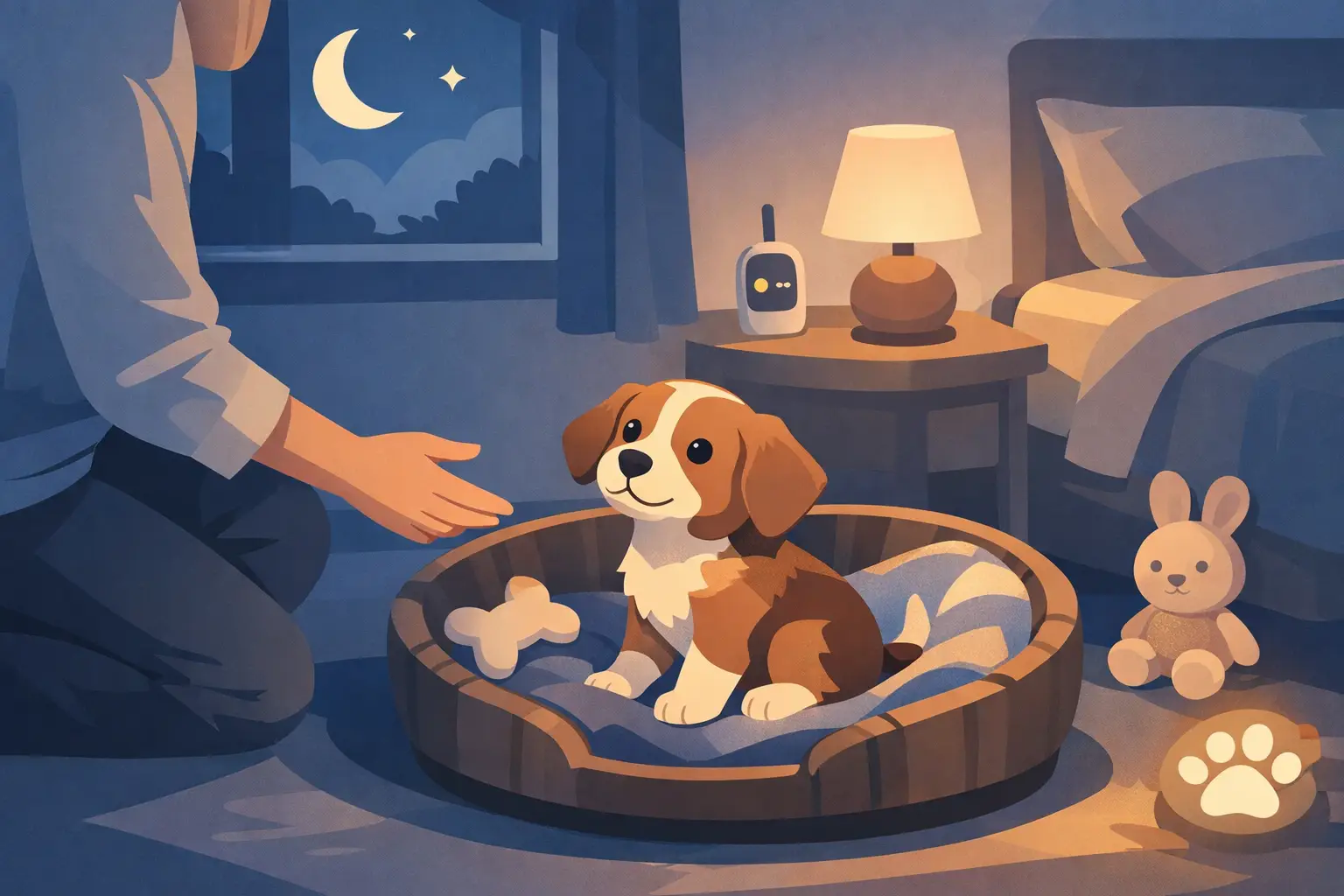
That might include being handled daily, hearing common household noises, beginning crate exposure, working on early potty habits, or meeting a variety of people. These details matter because they often make the transition home smoother for both the puppy and the family.
Ask to learn about the parents
A breeder should be open about the parent dogs, including their health, temperament, and role in the breeding program. Ask what the sire and dam are like in everyday life. Are they affectionate, trainable, social, and comfortable around people?
If one or both parents are on site, ask whether you can meet them if appropriate. If not, ask for information, photos, and a description of their personalities. This is especially useful when you are looking for a companion dog with predictable family-friendly qualities.
It is also fair to ask how often the dam is bred and how the breeder supports her well-being. Responsible breeders are not trying to produce as many litters as possible. They are focused on the health of their dogs and the quality of each litter.
What support do you offer after the puppy goes home?
A breeder’s job should not end at pickup day. One of the best signs you are dealing with the right person is ongoing support. New puppy owners usually have questions about feeding, house training, sleep schedules, grooming, and adjustment. Even experienced dog owners run into surprises.
Ask whether the breeder provides go-home instructions, feeding guidance, training recommendations, and follow-up support. Ask what happens if you have concerns during the first few weeks. Their answer will tell you whether they see this as a long-term relationship or a one-time transaction.
At Providence Hill Australian Labradoodles, we believe families need more than a puppy. They need preparation, guidance, and confidence as they begin life with their new companion. That kind of support can make a meaningful difference during the early transition.
Questions about contracts, deposits, and policies
Practical questions matter too. Ask for a written contract and read it carefully. It should explain what is included, what health guarantees apply, what spay or neuter terms exist if relevant, and what happens if a family can no longer keep the dog.
A responsible breeder should also have a clear policy about taking a dog back or helping with rehoming if life circumstances change. That is a strong sign they care about where their puppies end up for life.
You should also ask how deposits work, when puppy selections are made, and whether the breeder chooses placement based on temperament fit. Policies vary, and not every difference is a red flag. What matters is whether the process is transparent, fair, and centered on the puppy’s welfare.
Red flags to listen for
Sometimes the warning signs are not dramatic. They show up in the small things. A breeder who cannot explain health testing, avoids questions about the parents, or seems far more interested in securing payment than discussing fit may not be operating with the care families deserve.
Be cautious if every puppy is described as perfect for every home. Puppies are individuals. Good breeders know that and speak honestly about strengths, challenges, and expected traits.
It is also wise to slow down if you feel pressured to make a fast decision. A well-bred puppy is a long-term commitment. The right breeder will respect thoughtful buyers and understand why you want detailed answers.
The best conversations feel open and specific
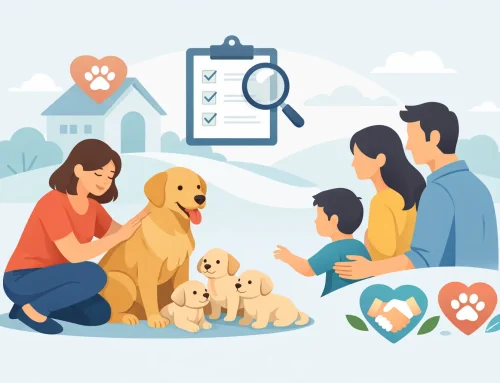
When families ask what to ask dog breeder, they are often looking for a checklist. Checklists are helpful, but the real goal is a clear, honest conversation. You want specifics about health testing, early socialization, temperament, parent dogs, and support. You also want to hear how the breeder thinks.
That is usually where trust is built. A breeder who cares deeply about their puppies will not just answer your questions. They will ask some of their own. They will want to know about your home, your schedule, your children, your experience, and what kind of dog you hope to welcome into your family.
That kind of two-way conversation is a very good sign. When a breeder is careful about where their puppies go, it usually means they were careful about how those puppies were bred and raised as well.
The right puppy starts with the right questions, and families rarely regret taking the time to ask them well.