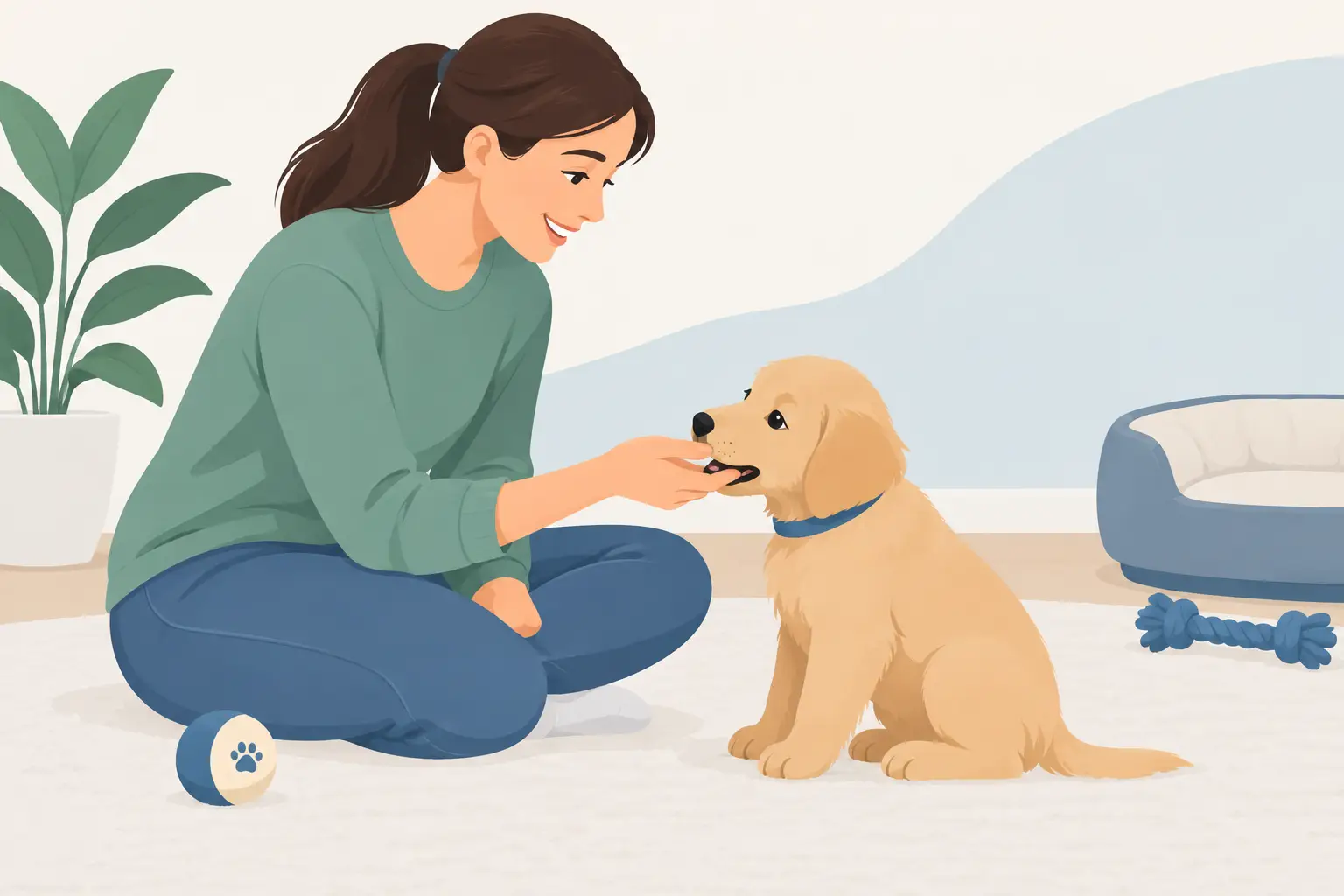
A puppy’s little teeth can feel surprisingly sharp during a happy evening of play. The good news is that mouthing is a normal part of puppyhood, not a sign that your sweet new companion is aggressive. When you teach puppy bite inhibition, you are helping your puppy learn that people are never chew toys and that gentle mouths keep play going.
For families welcoming an Australian Labradoodle puppy, this lesson is especially worthwhile. These bright, people-focused dogs often love interactive play, and early, consistent guidance gives that enthusiasm a polite direction. The goal is not to make your puppy afraid to use their mouth. It is to teach control, appropriate choices, and calm ways to join family life.
What Bite Inhibition Really Means
Bite inhibition is a dog’s ability to control the pressure of their mouth. Puppies begin learning it with their mother and littermates. If one puppy bites too hard during play, the other puppy squeals, stops engaging, or moves away. The biter learns that rough behavior ends the fun.
When a puppy joins your home, people continue that education. At first, you may notice that your puppy is gentler with some family members than others. That is normal. Puppies need every person to respond in a similar, predictable way.
There is a useful distinction here. Teething, exploring, and playful mouthing are common in young puppies. Growling over food, stiff body language, repeated biting that breaks skin, or behavior that seems fearful deserves a more individualized conversation with your veterinarian or a qualified force-free trainer. Most puppy nipping, however, improves beautifully with management, patience, and short daily lessons.
How to Teach Puppy Bite Inhibition at Home
The clearest lesson is simple: gentle play continues, teeth on skin make play stop. Your timing matters more than a big reaction. Respond the moment teeth touch skin with enough pressure to be uncomfortable, then calmly remove your attention.
A brief, neutral phrase such as “too bad” or “all done” works well. Stand up, turn away, and keep your hands still for 10 to 20 seconds. If your puppy is very excited, step behind a baby gate or out of reach for a moment. Then return quietly and offer a chance to make a better choice.
Avoid turning this into a dramatic event. Some puppies become more wound up when a person yelps, waves their hands, or talks loudly. A high-pitched “ouch” helps certain puppies understand, but it can sound like an invitation to chase and play for others. If yelping increases the excitement, skip it and use the calm pause instead.
When your puppy returns with a softer mouth, praise warmly and continue the interaction. Your puppy is learning through a clear pattern: calm, gentle behavior keeps their favorite people close.
Keep a Toy Within Reach
During the puppy stage, have an appropriate toy nearby wherever your family commonly plays. If your puppy heads for fingers, sleeves, or pant legs, smoothly present the toy and encourage them to grab it instead. Tug toys, soft rubber toys, and puppy-safe chew toys give your puppy a legal outlet for normal chewing needs.
Redirection works best when it happens before a puppy is fully overstimulated. If teeth are already on your hand, pause the play first, then re-engage with a toy. Otherwise, a puppy may learn that biting hands is the quickest way to make a fun toy appear.
Choose toys that fit your puppy’s size and supervise play. Avoid letting puppies chew on children’s stuffed animals, old shoes, or household items you eventually want them to leave alone. Puppies do not understand the difference between the old slipper you offered and the new one by the door.
Notice the Moments That Lead to Nipping
Puppies often mouth more when they are tired, hungry, teething, overstimulated, or overdue for a potty break. Many families assume their puppy needs more play when the zoomies and nipping begin. Often, the puppy actually needs a quiet nap in their crate, pen, or other safe resting space.
A young puppy may need 18 to 20 hours of sleep in a day. Plan short play sessions followed by potty breaks and rest. This rhythm makes it easier for your puppy to succeed and prevents the evening “land shark” phase from taking over family time.
Teething can also make chewing feel especially rewarding. Offer chilled puppy-safe chew options and rotate toys so they stay interesting. Do not use frozen items that are hard enough to damage teeth, and always follow the product’s safety guidance.
Give Children a Simple Plan
Children and puppies can become wonderful companions, but they need adult guidance while everyone learns the rules. A child’s quick movements, squeals, and face-level play can be very exciting to a puppy. Rather than expecting children to manage nipping alone, set up calm interactions that let both feel safe.
Teach children to be still like a tree if a puppy becomes mouthy: hands tucked close, feet quiet, eyes looking away from the puppy. An adult can then redirect the puppy or guide them to a short reset behind a gate. Children should not push a puppy away, run from them, put their face close to the puppy’s face, or use hands as toys.
Adults should supervise play closely, especially during the first months at home. A baby gate, exercise pen, or leash can create breathing room before everyone becomes frustrated. This is not a punishment. It is good management, and it protects the trusting relationship you are building.
What Not to Do When Puppies Bite
It is understandable to feel discouraged when your puppy bites after you have offered toys, affection, and training. Still, harsh corrections tend to create more problems than they solve. Holding a puppy’s muzzle shut, tapping their nose, yelling, or using physical intimidation can make a sensitive puppy worried or defensive around hands.
Avoid rough wrestling games and hand-chasing games, too. They may seem harmless when a puppy is small, but they rehearse exactly the behavior you are trying to reduce. Save lively play for toys, and practice calm affection when your puppy has four paws on the floor.
Consistency also matters. If one person laughs at hand biting while another ends play, the puppy receives mixed information. Talk through the family plan before your puppy comes home, including the words you will use and where you will take brief breaks from play.
Reward the Behavior You Want More Of
Bite inhibition is not only about stopping unwanted behavior. It is about noticing the lovely choices your puppy already makes. Praise your puppy when they lick instead of nip, bring a toy over to play, settle beside you, or greet visitors with a relaxed body.
Short training sessions build self-control as well. Practice “sit” before meals, “touch” with a hand target, and “drop it” with an appropriate toy. Keep sessions upbeat and end while your puppy is still successful. A puppy who learns that listening leads to praise, treats, and connection is easier to guide through exciting moments.
Providence Hill Australian Labradoodles are raised with early socialization in mind, but every puppy still needs their new family’s patient follow-through. The first weeks are a time to build routines, not expect perfection. Progress may look like fewer hard bites, faster recovery after a pause, or your puppy choosing a toy on their own.
When to Ask for Extra Support
Most puppy mouthing fades as adult teeth arrive and home routines become familiar. Still, ask for support if bites regularly break skin, your puppy guards food or objects, their body becomes stiff or tense before biting, or the behavior is becoming more frequent rather than gradually improving.
A veterinarian can rule out discomfort that may be affecting behavior, while a qualified trainer can watch the full picture and help you create a plan. Getting guidance early is kind to your puppy and reassuring for your family.
Your puppy is not trying to give you a hard time. They are learning how to live in a human family, one playful moment at a time. Calm boundaries, enough rest, safe chewing outlets, and plenty of praise will help those sharp little teeth become the gentle mouth you can trust for years to come.