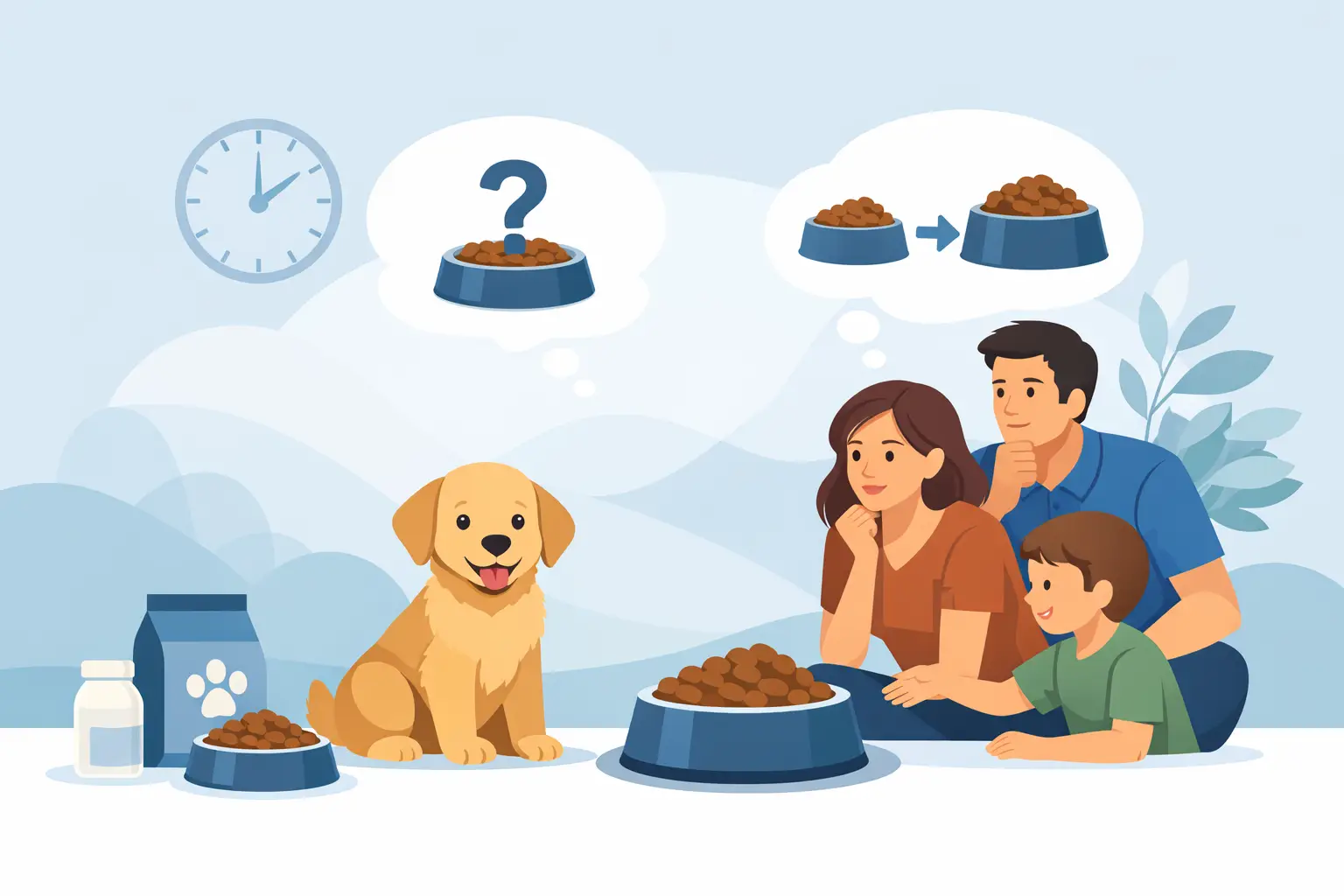
Your puppy may look nearly grown, but their nutritional needs can still be very different from an adult dog’s. Knowing when to switch puppy food helps support healthy growth without rushing a change simply because your puppy seems bigger, hungrier, or ready to sample whatever the adult dog eats.
For most puppies, the transition from puppy food to adult food happens around 12 months of age. Australian Labradoodles and other medium-sized dogs often fit comfortably within that timeline, but your puppy’s growth rate, body condition, activity level, and veterinarian’s guidance should lead the decision. The goal is not to switch on a certain birthday. It is to move to adult nutrition when your puppy has finished most of their physical growth.
Why Puppy Food Matters During Growth
Puppy food is formulated for a demanding season of life. Growing dogs need concentrated calories, quality protein, essential fatty acids, and carefully balanced minerals to build bone, muscle, organs, and a healthy immune system. A young puppy also burns a tremendous amount of energy learning, playing, training, and exploring their new family life.
Adult dog food is designed for maintenance rather than development. Switching too early may mean your puppy receives fewer calories and nutrients than their growing body needs. On the other hand, feeding puppy food long after a dog has reached maturity can contribute to unwanted weight gain because it is typically more calorie-dense.
This is why the question is not just, “How old is my puppy?” It is also, “Is my puppy still growing?”
When to Switch Puppy Food for an Australian Labradoodle
Most Australian Labradoodles can begin transitioning to adult food between 10 and 14 months old, with 12 months being a common starting point. Because Australian Labradoodles vary in size depending on their breeding and adult weight, there is some room for individual adjustment.
A smaller dog who has reached their adult frame may be ready closer to 10 months. A larger or slower-maturing puppy may benefit from puppy food for a few additional months. If your puppy is still gaining height and length quickly, has a lean adolescent build, or is going through another noticeable growth phase, it may be sensible to wait.
A healthy adult body condition matters more than a number on the scale alone. You should be able to feel your dog’s ribs with gentle pressure, see a defined waist from above, and notice a tucked abdomen from the side. Puppies naturally go through awkward stages, so do not make a food decision based on one week of lankiness or a temporary appetite change.
Signs Your Puppy May Be Ready for Adult Food
Age gives you a helpful starting point, but your puppy’s body provides the clearest clues. A puppy nearing adulthood usually has a more stable frame and is no longer outgrowing their collar, harness, or crate at the same rapid pace. Their weight gain also begins to slow.
You may notice that your dog has settled into a more consistent appetite and activity rhythm. Adolescence can still be energetic and playful, especially for an intelligent, people-focused Australian Labradoodle, but the intense calorie demands of early puppyhood begin to ease.
Regular wellness visits are an excellent time to ask about timing. Your veterinarian can assess your puppy’s growth, weight trend, and body condition while considering factors such as spay or neuter timing, activity level, and any digestive sensitivities. This is especially helpful for first-time puppy families, since a healthy puppy can still look quite different from one month to the next.
Do Not Switch Too Early Because of Hunger
A hungry puppy is not always a puppy who has outgrown puppy food. Growth spurts, increased training, more time outdoors, and a naturally active temperament can all increase appetite. Before changing foods, make sure your puppy is receiving the correct daily amount for their current age and expected adult size.
It is also worth looking at treats, chews, and table scraps. A puppy who fills up on extras may eat meals inconsistently, while a puppy receiving too few calories at meals may seem constantly hungry. Treats are useful for positive training, but they should be part of the total daily food picture.
If your puppy suddenly becomes unusually hungry, loses weight, develops loose stool, vomits, or seems low-energy, contact your veterinarian rather than assuming it is time for adult food. Sudden changes in appetite deserve attention.
How to Switch From Puppy Food to Adult Food
Once your puppy is ready, a gradual transition is the kindest approach for their digestive system. Even if the new food is the adult version of the same brand, its ingredients and nutrient profile may differ enough to cause stomach upset if introduced too quickly.
Plan for a transition of about seven to 10 days. Start with mostly puppy food and a small amount of adult food. Over several days, gradually increase the adult food while decreasing the puppy food. A simple schedule may look like this:
- Days 1-3: 75% puppy food and 25% adult food
- Days 4-6: 50% puppy food and 50% adult food
- Days 7-9: 25% puppy food and 75% adult food
- Day 10: 100% adult food
Watch your puppy’s stool, appetite, and overall comfort during the change. Mildly softer stool for a day can happen, but persistent diarrhea, vomiting, itching, or refusal to eat means you should slow down and speak with your veterinarian. Some puppies need a longer transition, particularly if they have a sensitive stomach.
Keep the rest of your routine steady while changing food. Avoid introducing new treats, a new supplement, boarding, or a major travel day at the same time if possible. When several things change at once, it becomes difficult to know what caused a digestive issue.
Choosing an Adult Food That Fits Your Dog
The best adult food is one that supports your individual dog, not simply one with the most impressive package claims. Look for a complete and balanced formula made for adult maintenance, then consider your dog’s size, activity level, coat condition, digestion, and any recommendations from your veterinarian.
For an active family companion, steady energy and a healthy body condition are more valuable than a food marketed as extra-rich or high-performance. Australian Labradoodles often thrive with a consistent routine, and frequent food-hopping can make it harder to identify what agrees with them.
If your dog has a history of food sensitivity, recurring ear irritation, itchy skin, or digestive trouble, do not make multiple diet changes on your own. Your veterinarian can help determine whether the issue is food-related and recommend a thoughtful next step. Many common puppy concerns have causes unrelated to the main diet, so a clear plan is better than guessing.
What About Large-Breed Puppy Food?
Large-breed puppy food is not necessary for every puppy that may grow into a medium or larger adult dog. These formulas are specifically designed with controlled mineral and calorie levels for puppies expected to reach a larger adult size. The right choice depends on your puppy’s projected adult weight and your veterinarian’s advice.
For most Australian Labradoodles, a quality puppy food appropriate for their expected adult size is a good fit through the growth period. If you are unsure which formula your puppy should remain on or transition from, ask before changing. Nutrition is one of the easiest areas of puppy care to overcomplicate, but a steady, well-matched food and a gradual transition usually serve dogs very well.
Keep Watching After the Transition
Switching to adult food is not the last nutrition decision you will make for your dog. Check your dog’s body condition every few weeks, especially during adolescence when activity can change quickly. You may need to adjust portion sizes even when the food itself is working beautifully.
A shiny coat, comfortable digestion, steady energy, good stool quality, and a healthy waistline are encouraging signs that your dog is doing well. Providence Hill Australian Labradoodles families often find that a consistent feeding routine makes everything else easier too, from potty schedules and training rewards to maintaining a calm, predictable day at home.
Your puppy will not stay small for long, but there is no prize for making the switch early. Give their growing body the time and nourishment it needs, then transition thoughtfully when they are ready for the next healthy stage of life.