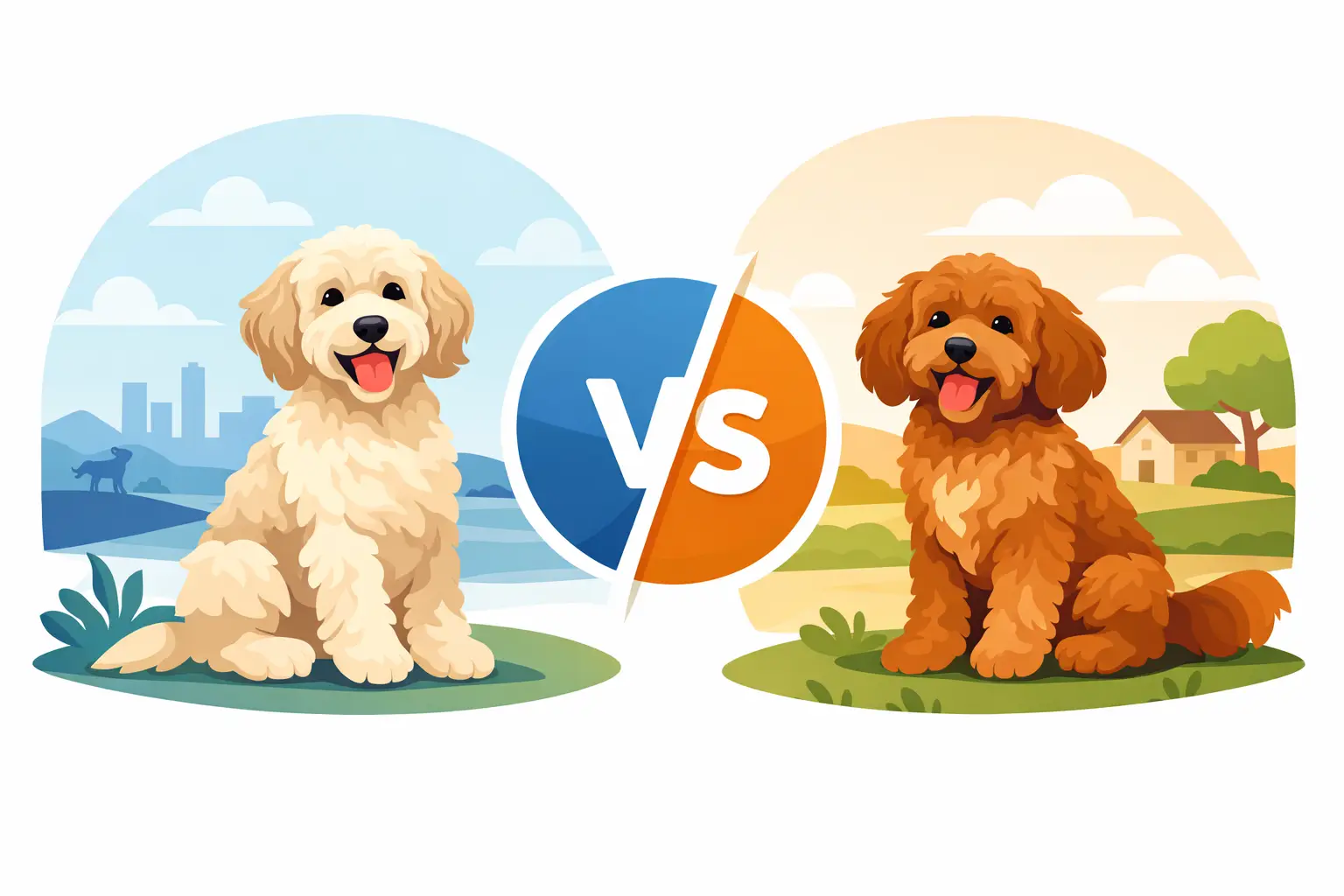
A puppy can look perfect in a photo and still be the wrong fit for your household rhythm. When families compare an Australian Labradoodle vs Cavapoo, they are usually drawn to the same qualities: an affectionate nature, a soft low-shedding coat, and a size that feels manageable. The meaningful differences show up in daily life, from grooming appointments and exercise needs to the way each dog handles a busy home.
Both can become wonderful companions. The right choice depends less on which breed is “better” and more on your family, your expectations, and the care you are prepared to provide for the next 12 to 15 years.
Australian Labradoodle vs Cavapoo: The Main Difference
An Australian Labradoodle is not simply a first-generation Labrador Retriever and Poodle mix. The breed was developed over generations with carefully selected lines that may include Labrador Retriever, Poodle, and Cocker Spaniel ancestry. Responsible breeders focus on developing consistent companion-dog qualities, including a friendly temperament, intelligence, and a fleece or wool-type coat.
A Cavapoo is a cross between a Cavalier King Charles Spaniel and a Poodle. Like Australian Labradoodles, Cavapoos can vary depending on the Poodle parent, the generation of the cross, and the individual puppy. Their smaller stature and expressive, teddy-bear appearance are a major part of their appeal.
In simple terms, a Cavapoo is often the more compact option, while an Australian Labradoodle generally offers more size variety and a more established multi-generational breeding background. Neither label alone guarantees a particular temperament, coat, or health outcome. The quality and care behind the breeding program matter greatly.
Size and Space at Home
Cavapoos are typically small dogs. Many mature somewhere around 10 to 20 pounds, though size can vary based on the Poodle parent. Their smaller frame can suit apartment living, retirees, couples, and families who prefer a dog that is easy to lift, travel with, and manage in tight spaces.
Australian Labradoodles come in more size ranges. Miniatures are often a comfortable choice for families who want a smaller companion, while medium and standard Australian Labradoodles can offer a sturdier presence for active homes. A medium Australian Labradoodle may feel especially well matched to a family with school-age children who want a dog ready for backyard play, neighborhood walks, and weekend outings.
Smaller does not automatically mean lower energy. A Cavapoo still needs daily walks, play, training, and companionship. Likewise, an Australian Labradoodle does not need a huge property to thrive. What matters is whether your household can provide consistent exercise and meaningful time together.
Temperament and Family Life
Both breeds are often sought after for their social, loving personalities. Cavapoos commonly have a sweet, people-focused nature that reflects their Cavalier heritage. Many enjoy being close to their family, curling up on the couch, and joining in wherever life is happening. That strong attachment can be lovely, but it also means some Cavapoos may struggle if left alone for long or introduced too quickly to an independent routine.
Australian Labradoodles are also known for being affectionate and family-oriented. Well-bred puppies are often bright, responsive, and eager to engage with people. Their trainability and even-tempered nature can make them a strong fit for homes with children, first-time dog owners, and families looking for a companion that can participate in everyday activities.
Individual personality matters in either breed. The calmest puppy in a litter may not be the best choice for every family, and the boldest puppy is not necessarily difficult. A responsible breeder gets to know each puppy and can help match temperament to your household, children, activity level, and previous dog experience.
Children and other pets
A sturdy medium Australian Labradoodle may be easier for young children to interact with than a very small dog, especially during the energetic puppy stage. Cavapoos can do beautifully with respectful children, but their smaller size calls for closer supervision and gentle handling.
Both breeds can live happily with other dogs and cats when introductions are managed thoughtfully. Early socialization, patient training, and clear routines will do more for a peaceful home than breed assumptions alone.
Coat, Shedding, and Grooming Needs
Families often begin their search because they want a dog that sheds less. Australian Labradoodles and Cavapoos may both have low-shedding coats, especially when they inherit more Poodle-like coat traits. Still, no dog is completely non-shedding, and no breed can promise to be allergy-proof for every person.
Australian Labradoodles are often bred with fleece or wool coats in mind. These coats can be soft and beautiful, but they need a committed grooming routine. Regular brushing keeps knots from becoming painful mats, while professional grooming is typically needed every six to eight weeks, depending on coat length and lifestyle.
Cavapoo coats can range from loose and wavy to curly. A Cavapoo with a straighter, silkier coat may shed more than one with a curlier coat. Because the coat is less predictable across crosses and generations, families should ask direct questions about the parents’ coats, the expected puppy coat, and the grooming needs they should realistically plan for.
For either breed, grooming is not just about appearance. Brushing creates a chance to check ears, skin, paws, and teeth. It also helps your puppy learn that being handled is safe and normal, which makes lifelong care easier.
Training and Exercise Expectations
Australian Labradoodles and Cavapoos are intelligent, people-oriented dogs, which can make training rewarding. Both respond best to positive, consistent instruction. Short practice sessions, praise, treats, and clear household rules will build confidence far more effectively than harsh corrections.
Australian Labradoodles may have an edge for families who want a dog that enjoys a wider range of training activities. Many love learning cues, participating in family adventures, and having a job to do, even if that job is simply carrying a toy to their bed or practicing calm greetings at the door.
Cavapoos are often eager learners, too, though some can have a sensitive side. Gentle consistency is especially valuable. Do not mistake a sweet disposition for a dog that will train itself. Potty training, crate comfort, leash skills, and early socialization all require time from day one.
Neither breed is a fit for a home hoping for a puppy that can entertain itself all day. These are companion dogs. They need connection, structure, and age-appropriate activity.
Health and Responsible Breeding
This is where families should slow down and ask better questions. A cute puppy, a popular breed name, and a clean website are not enough. Health-focused breeding begins with appropriately screened parent dogs, thoughtful pairings, and a breeder who can clearly discuss the health history and testing behind their program.
Cavaliers can be prone to certain inherited concerns, including heart conditions, while Poodles and Labrador-related lines have their own health considerations. Australian Labradoodles and Cavapoos can both inherit health risks from their parent lines. Crossing breeds does not remove the need for careful testing.
Ask a breeder what health testing is completed, what records are available, how puppies are raised, and how they support families after go-home day. You should also ask about temperament, not just color or size. A breeder who welcomes those conversations is helping you make a long-term decision, not simply a quick purchase.
At Providence Hill Australian Labradoodles, this kind of preparation is central to the process because a family companion should be thoughtfully raised, well-socialized, and supported from the start.
Which Breed Is Right for You?
A Cavapoo may be the better match if you want a smaller, deeply affectionate companion and are prepared to protect a petite dog in a home with young children. They can be especially appealing for households with limited space or people who prefer a lap-sized dog with a playful spirit.
An Australian Labradoodle may be the better choice if you want a slightly sturdier, highly trainable family dog with size options and a companion-oriented temperament. They are often a lovely fit for families who want their dog involved in daily life, from carpool mornings to evening walks and quiet time at home.
Before choosing either one, picture an ordinary Tuesday rather than a puppy pickup day. Who will handle the morning walk? Is someone home often enough for a young puppy? Can your budget include quality food, training, grooming, preventive veterinary care, and unexpected needs? Those answers will guide you toward the dog who fits not only your heart, but your real life.
The best puppy is not defined by the trendiest breed name or the fluffiest coat. It is the one raised with care and matched thoughtfully to a family ready to offer the same devotion in return.