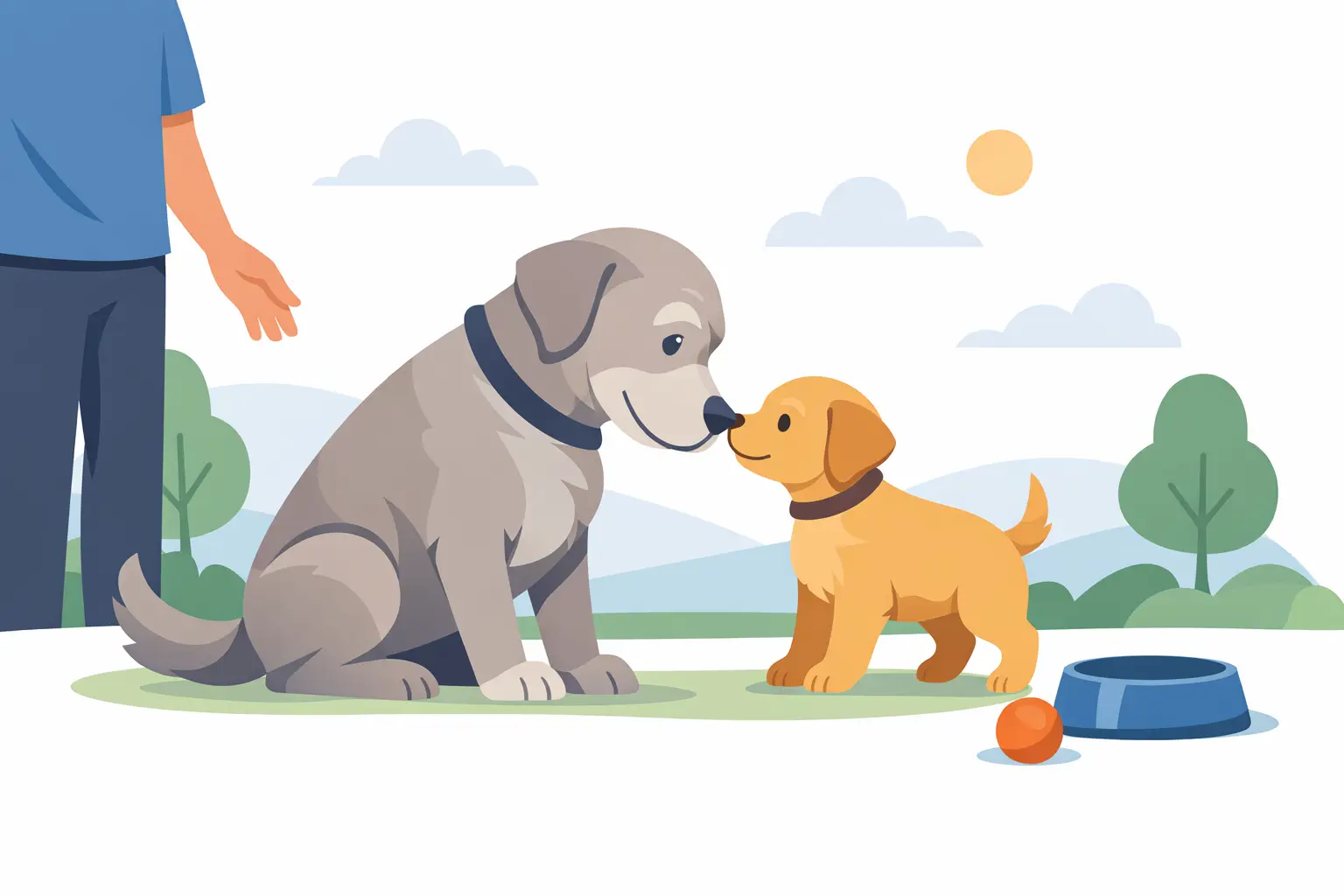
A new puppy can feel like the most exciting arrival in the house – until your older dog sees a bouncy, noisy stranger heading straight for their favorite bed. Introducing puppy to older dog is not about making them become best friends in one afternoon. It is about creating enough space, structure, and positive experiences for both dogs to feel safe.
For many families, especially those bringing home a social Australian Labradoodle puppy, a thoughtful first introduction helps protect the peaceful relationship you already have with your adult dog. Puppies need guidance. Older dogs need reassurance that their routines, belongings, and place in the family still matter.
Prepare Before Your Puppy Comes Home
The smoothest introductions begin before the puppy steps through the door. Your older dog should have a comfortable, puppy-free place where they can rest without being followed, stared at, or pounced on. This might be a crate, a gated room, or a favorite bed behind a baby gate.
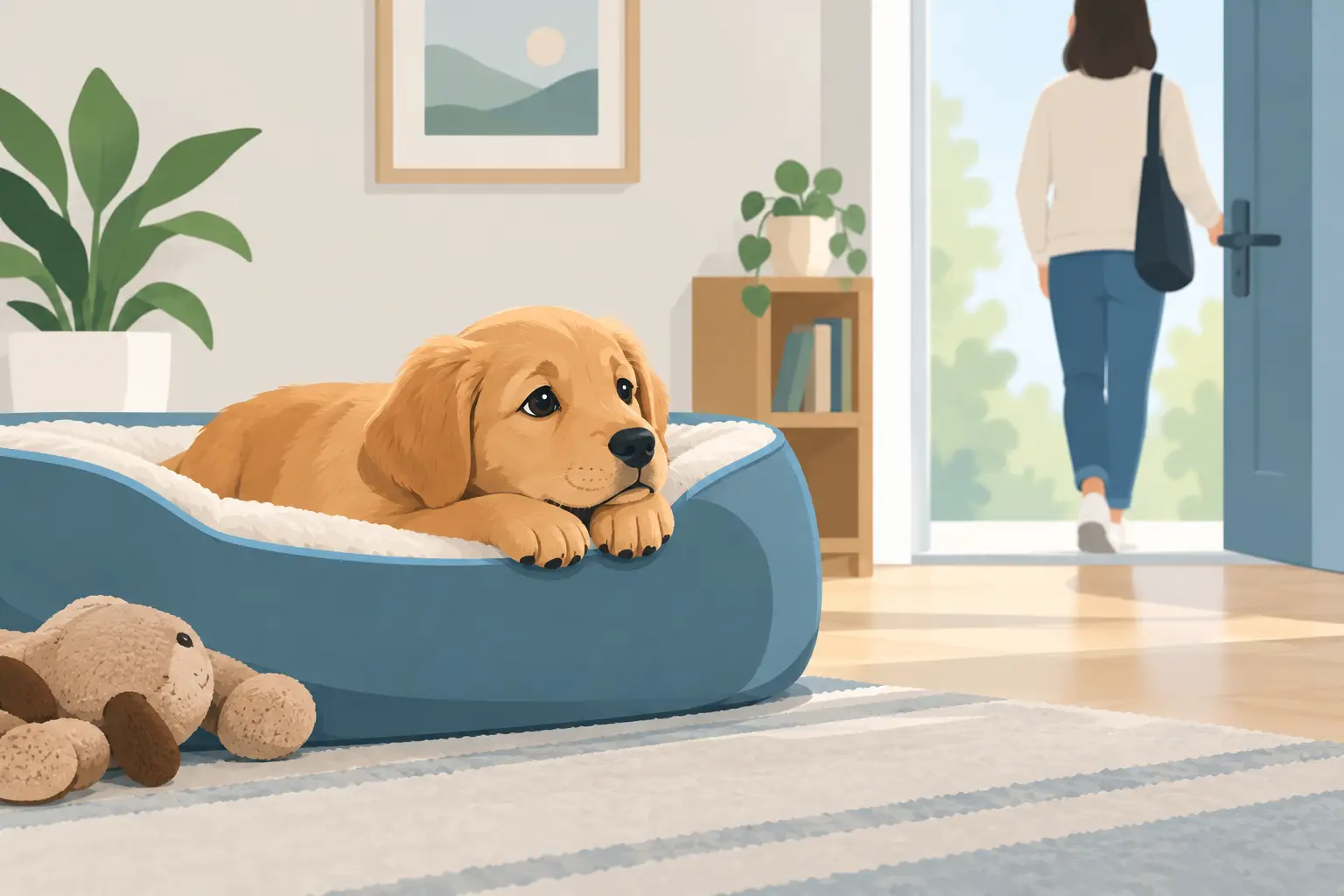
Set up the puppy’s own area as well. A crate or playpen gives a young dog a place to nap and settle, while preventing them from practicing the habit of chasing your older dog around the house. Separation is not unkind. It gives both dogs a chance to adjust without constant pressure.
It also helps to put away high-value toys, chew bones, and food bowls before the first meeting. Even a normally easygoing adult dog may guard a prized item when a new puppy enters the picture. You can reintroduce shared activities later, once each dog is relaxed around the other.
If possible, allow your older dog to smell a blanket or towel that carries the puppy’s scent before the puppy arrives. Scent is an important part of how dogs gather information. A familiar smell can make the first face-to-face meeting feel less sudden.
Introducing Puppy to Older Dog on Neutral Ground
A quiet outdoor location is often the best setting for the first meeting. Choose a fenced yard, a calm driveway, or another low-distraction space rather than your older dog’s favorite room. Avoid crowded parks or places with unfamiliar dogs, traffic, or lots of noise.
Have one calm adult handle each dog. Begin with both dogs on loose leashes and walk them several feet apart in the same direction. This parallel walk allows them to notice one another without the pressure of a direct greeting. Keep your voice relaxed and your leash loose. Tight leashes can make dogs feel trapped or signal that something is wrong.
After a few minutes, if both dogs appear comfortable, allow a brief sniff. Then cheerfully separate them and continue walking. Short, successful greetings are better than one long interaction that becomes too exciting.
Look for soft, wiggly body language: relaxed ears, loose tails, curved approaches, and an ability to look away from the other dog. These are encouraging signs. Stiff bodies, hard staring, tucked tails, growling, repeated attempts to hide, or nonstop jumping tell you the dogs need more space.
Do not punish a growl. A growl is valuable communication that says, “I am uncomfortable.” Calmly separate the dogs, lower the intensity, and try again later with more distance and structure. Correcting the warning can leave a dog feeling they cannot communicate discomfort, which may make future interactions less predictable.
Bring Them Inside With a Plan
Once the dogs have had a positive outdoor meeting, bring them indoors together. Keep the first indoor visit short and supervised. It is often helpful to allow your older dog to enter first, then bring the puppy in calmly rather than carrying them directly into the older dog’s space.
For the first few days, think in small windows of interaction. Let the puppy explore for a few minutes, guide them away for a nap or crate break, then offer another calm opportunity to be together. Young puppies become overtired quickly, and an overtired puppy is often the one who ignores every polite signal from an older dog.
Your adult dog does not need to entertain the puppy. In fact, they should not be expected to. Use gates, leashes, a playpen, and planned naps to keep your puppy from repeatedly bothering them. This protects the older dog’s patience and teaches the puppy that calm behavior is part of family life.
Keep Daily Routines Familiar
A puppy changes the household rhythm, but your older dog should still receive the predictable attention they enjoy. Keep meal times, walks, bedtime routines, and one-on-one affection as consistent as possible. For a senior dog, familiar routines can be especially reassuring.
Give your older dog quiet time with you each day without the puppy present. A short walk, a gentle grooming session, or a few minutes on the couch can make a real difference. The goal is not to make the dogs compete for love, but to show each one that there is plenty of security and attention to go around.
Feed the dogs separately from the beginning. This prevents food tension and allows you to monitor how much each dog is eating. It is also wise to offer chews and special treats only when dogs are apart until you know they can relax around valued items.
Teach the Puppy Good Dog-to-Dog Manners
Your puppy is still learning how to communicate. They may bark in an older dog’s face, tug at ears, steal toys, or keep trying to play after the older dog has walked away. Those behaviors are normal for a puppy, but they are not something your older dog should have to manage alone.
Step in early and kindly. Call your puppy away, redirect them to a toy, ask for a simple cue such as “sit,” or guide them to their pen for a rest. Reward your puppy when they choose to lie down near the older dog, walk past without jumping, or respond when called away. Calm coexistence deserves as much praise as play.
Your older dog may give an appropriate correction, such as a brief growl, air snap, or walk away. If the correction is quick and the puppy responds, it can be a normal part of canine communication. Your job is to make sure the puppy listens and to prevent repeated pestering.
However, separate the dogs promptly if corrections become intense, the puppy seems frightened, or either dog cannot settle. An older dog with arthritis, reduced vision or hearing, anxiety, or a history of guarding may have less tolerance for puppy energy. In these cases, slower introductions and professional training support can be especially helpful.
Know When to Slow Down
Some dogs become friendly quickly. Others need days or weeks of careful management before they can share space comfortably. The right pace depends on personality, age, health, prior experiences with dogs, and the puppy’s energy level.
Slow down if your older dog avoids common rooms, stops eating, becomes unusually clingy, guards you or household spaces, or seems unable to rest. Also pay attention to the puppy. If they freeze, hide, yelp frequently, or seem overwhelmed, give them more protected breaks.
It is wise to speak with your veterinarian if behavior changes appear sudden or severe, particularly with a senior dog. Pain and medical discomfort can reduce a dog’s tolerance and make normal puppy behavior feel much harder to handle. A qualified positive-reinforcement trainer can also provide support before a small concern becomes a larger conflict.
Build a Relationship, Not a Forced Friendship
Some older dogs will play with a puppy every day. Others will prefer to share the house politely, with occasional sniffing and side-by-side naps. Both outcomes can be wonderful. Dogs do not have to wrestle, cuddle, or share every toy to have a healthy relationship.
Celebrate small signs of progress: your older dog choosing to stay in the same room, your puppy resting quietly nearby, or both dogs taking a calm walk together. Those ordinary moments are often the foundation of trust.
With patient supervision and respect for each dog’s needs, your puppy can learn that the older dog is a valued companion, not an always-available playmate. And your older dog can learn that this new family member brings good things, gentle routines, and a home where they still belong.