Bringing home a puppy is exciting, but it also comes with a big question for thoughtful families: what health tests for puppies should you actually ask about before you say yes? The answer matters more than many people realize. A sweet face and playful personality are wonderful, but good breeding starts long before a puppy goes home.
When families begin looking for a companion dog, they often focus on coat type, size, or temperament first. Those things do matter, especially for homes with children, allergies, or a busy family schedule. But the health foundation behind a litter is what helps support a puppy’s long-term quality of life. Responsible breeders do not guess. They test, document, and make careful decisions based on those results.
What health tests for puppies really include
This topic can be confusing because people often use the word “puppy testing” to describe two different things. One is the testing done on the parent dogs before breeding. The other is the veterinary care and health checks done on the puppies themselves after they are born. Both are important, but they serve different purposes.
Health testing of the parents helps reduce the risk of passing along inherited conditions. A puppy cannot be fully cleared of every future health issue just because the parents were screened, but strong parent testing gives families a far better starting point. Puppy health checks, on the other hand, help confirm that each individual puppy is developing well and is ready for the transition home.
That distinction is where many families get tripped up. If a breeder says, “The puppies are healthy,” that is not the same as showing that the breeding dogs were properly screened for genetic and structural concerns.
The most important tests start with the parents
If you are asking what health tests for puppies matter most, begin with the dam and sire. For breeds and breed mixes used to develop Australian Labradoodles, health screening often includes hips, elbows, eyes, and genetic panels. The exact mix of testing can vary depending on the lines involved, but the goal stays the same: reduce avoidable inherited risk and protect future generations.
Hip testing is one of the biggest priorities. Poor hip structure can contribute to pain, mobility issues, and costly treatment later in life. Elbow testing is also important, since elbow dysplasia can affect comfort and movement. These structural screenings help breeders choose parents with sounder orthopedic health.
Eye testing matters because some inherited eye conditions may not be obvious when a dog is young. Annual eye exams by a veterinary eye specialist can help identify concerns before a dog is bred. Then there is genetic testing, which screens for inherited diseases that may be carried silently. A dog can look perfectly healthy and still pass along a recessive condition if the right testing has not been done.
For a family choosing a puppy, this means one practical thing: ask not only whether the puppies have been seen by a vet, but whether the parents have completed breed-relevant health testing before the litter was planned.
Genetic screening is not the same as a basic vet check
This is where it helps to be specific. A routine veterinary exam checks a puppy’s current health at that moment. A genetic test looks at inherited risk written into the dog’s DNA. Both are useful, but they are not interchangeable.
A vet may listen to the heart, examine the eyes and ears, check growth, confirm bite alignment, look for hernias, assess stool quality, and make sure the puppy appears healthy overall. That is excellent and necessary care. Still, a basic exam cannot tell you whether a puppy comes from lines screened for inherited disease unless the breeder has already done that work.
Genetic screening is especially valuable in thoughtfully developed companion lines because it helps breeders avoid pairing two carriers of the same condition. In many cases, that means reducing the chances of affected puppies. It is not a promise of perfection, because no living thing comes with guarantees, but it is one of the clearest signs that a breeder is planning for health instead of hoping for it.
What should happen with the puppies before they go home
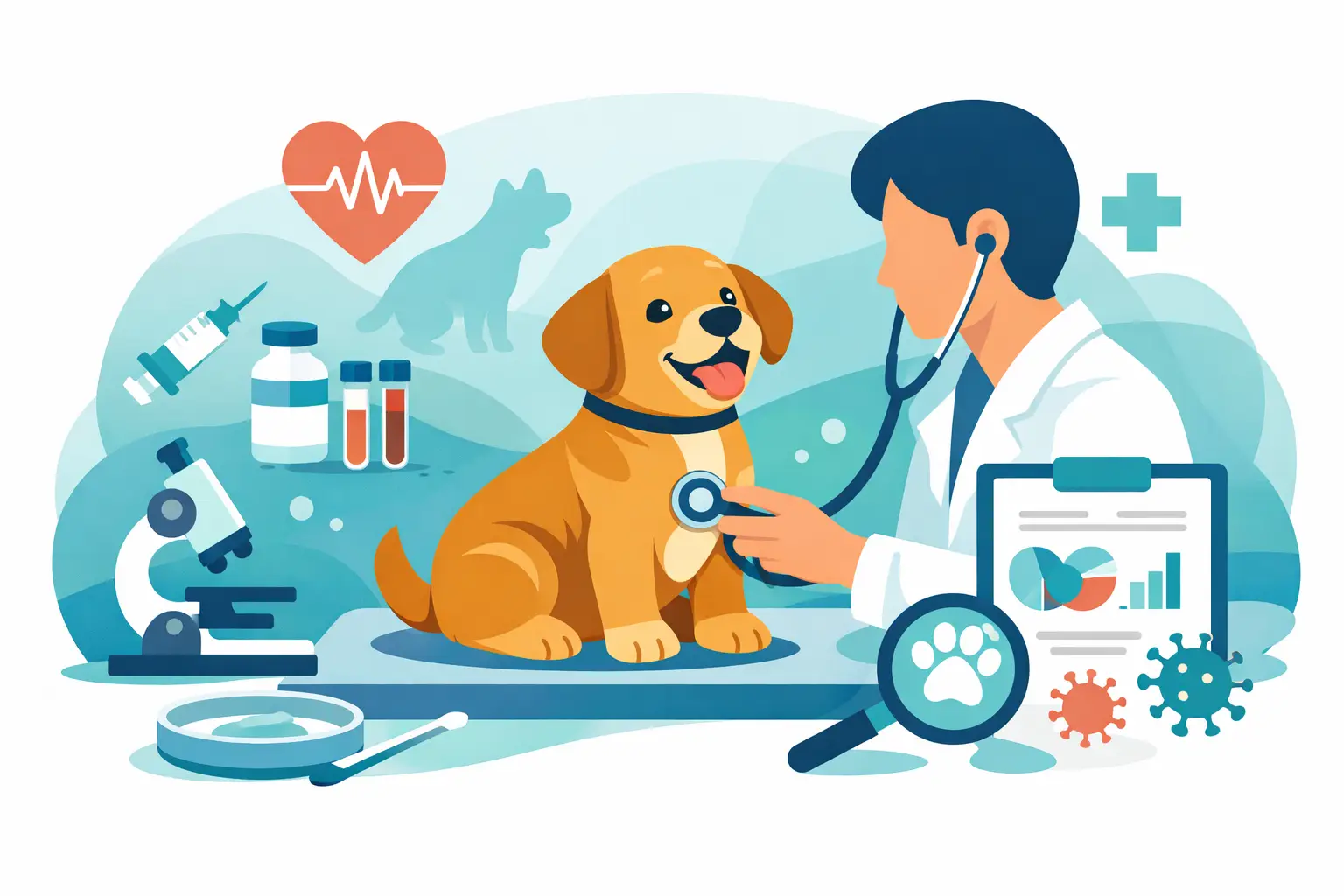
Once the litter is on the ground, each puppy should receive appropriate veterinary oversight and early care. That usually includes a physical exam, age-appropriate deworming, and initial vaccinations based on the puppy’s age and the veterinarian’s guidance. Records should be clear and easy for families to understand.
A good puppy exam often includes checking the heart for murmurs, evaluating joints and movement, looking at eyes and ears, checking the mouth and bite, feeling the abdomen for concerns like hernias, and reviewing weight gain and overall development. For very young puppies, this is less about proving lifelong health and more about confirming that the puppy is thriving and ready for the next stage.
Some families assume extensive testing should be done on every puppy for every possible condition. In reality, it depends. Not every individual puppy needs every test. What matters is whether testing is appropriate, honest, and guided by the breed, the parent dogs, and any specific concerns in the litter.
Red flags to watch for when asking about health testing
The easiest red flag is vagueness. If a breeder says, “Our dogs are healthy” but cannot explain what was tested, that is worth pausing over. Another concern is when someone talks only about vaccines and worming but avoids questions about the parents’ genetic or orthopedic screenings.
It is also wise to be cautious if the breeder seems annoyed by questions. Families should feel comfortable asking about hips, elbows, eyes, DNA testing, and veterinary records. A responsible breeder welcomes those conversations because health transparency is part of responsible breeding.
There is also a difference between testing and marketing language. Terms like “healthy bloodline” or “great genes” sound reassuring, but they are not the same as documented health clearances. Clear records matter more than broad claims.
Why this matters so much for family dogs
For most families, a puppy is not a short-term purchase. This dog will be in the middle of daily life for years – playing with children, greeting visitors, riding in the car, resting at your feet, and becoming part of your routines. Health testing helps protect that future.
It also supports temperament in a practical way. A puppy that is physically uncomfortable or predisposed to painful conditions may face extra challenges in training and confidence. Sound health and sound temperament are not identical, but they are closely connected in real life. Families looking for an affectionate, trainable, easy-to-live-with companion should care about both.
That is one reason careful breeders put so much emphasis on parent selection. The goal is not just adorable puppies. It is raising dogs that can succeed as stable, loving companions in real homes.
How to ask the right questions without feeling overwhelmed
You do not need to sound like a veterinarian to ask good questions. Keep it simple and direct. Ask what health testing was done on the parents before breeding. Ask whether orthopedic, eye, and genetic screening were completed. Ask what veterinary care the puppies have received so far and whether records will be provided.
It is also fair to ask how the breeder uses test results. Testing alone is not enough if those results do not guide breeding decisions. A thoughtful answer should show that pairings are planned carefully, not casually.
For families considering an Australian Labradoodle, this matters even more because consistency in health and temperament comes from disciplined selection over time. At Providence Hill Australian Labradoodles, that kind of careful planning is part of producing companion puppies families can feel confident bringing home.
A healthy start is about more than paperwork
Health tests are essential, but they are not the whole picture. Early nutrition, cleanliness, socialization, stress levels, and the home environment all shape a puppy’s start. A well-bred puppy should also be well-raised.
That is where families should look at the full standard of care. Are the puppies raised in a hands-on environment? Are they observed closely? Are concerns addressed quickly? Is the breeder invested after pickup day, or only until payment is complete? Those details say a lot about the kind of support a puppy has received.
The best breeders combine documented health testing with intentional early care. One without the other leaves gaps. Families deserve both.
If you are trying to choose wisely, remember this: the right breeder will never make you feel like health questions are too much. They will understand that you are not just buying a puppy. You are choosing a future family member, and that decision deserves real care from the very beginning.