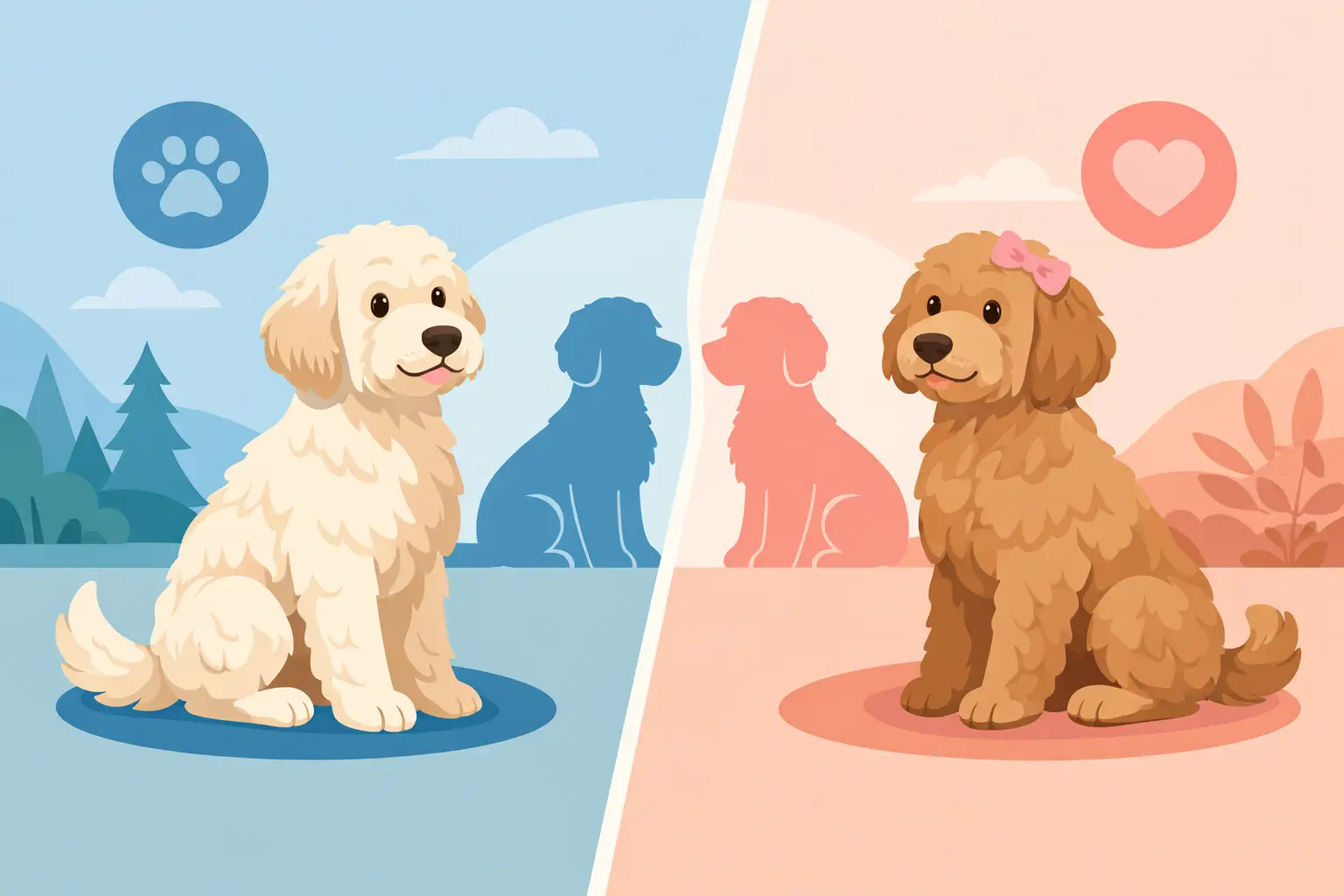
You may already know you want an Australian Labradoodle. The harder question is often whether a male or female puppy will be the better fit for your home. When families ask about male vs female labradoodle choices, they are usually trying to predict personality, trainability, size, and how a puppy will settle into everyday family life.
That is a smart question, but it helps to start with one honest answer: sex matters less than temperament, early socialization, and thoughtful breeding. A well-bred Australian Labradoodle with a stable, people-focused temperament can thrive in many different homes, whether that puppy is male or female. Still, there are some patterns that can help you make a confident decision.
Male vs Female Labradoodle Temperament
The biggest assumption people bring into this conversation is that males are always more affectionate and females are always more independent. There can be some truth in those general trends, but they are not rules.
Male Australian Labradoodles are often described as a little more easygoing and openly affectionate. Many families feel that males stay puppy-like a bit longer, which can translate into a cheerful, playful, attached companion. If you want a dog that happily follows you from room to room and greets your children like it is the best part of the day, a male may naturally fit that picture.
Females are often described as slightly more observant and a little quicker to mature. Some owners feel females develop focus earlier and show a more steady, sensible style. That can be appealing for families who want a dog that settles into routines smoothly and reads the room well.
Even so, broad labels can be misleading. We have seen gentle, calm males and outgoing, cuddly females. We have also seen the reverse. What matters most is the individual puppy’s energy level, confidence, and social nature, along with the care taken in breeding for sound temperament.
Size and Physical Differences
If you are comparing male vs female labradoodle puppies, size is one of the more predictable differences. In many cases, males are slightly larger and a bit more solidly built than females. Females tend to be a touch smaller and lighter in frame.
That difference is usually modest, not dramatic. You are not choosing between a tiny dog and a large dog. You are more likely choosing between slightly more substance and slightly more compact size.
For some families, that matters. If you have very young children, live in a smaller space, or simply prefer a dog that is easier to lift, groom, or travel with, a female’s slightly smaller build may feel more manageable. On the other hand, if you like the look and presence of a sturdier companion, a male may be appealing.
Still, size predictions depend on parent size, generation, and the specific breeding line. Sex is only one piece of that puzzle.
Are Males or Females Easier to Train?
Families often hope there is a simple answer here. The truth is that both sexes can be highly trainable when they come from strong lines and receive early guidance.
Australian Labradoodles are known for intelligence, human focus, and responsiveness. Those traits usually matter far more than whether the puppy is male or female. A puppy raised with structure, consistency, and positive training methods is set up for success either way.
That said, some owners report that females mature faster and show impulse control a little earlier. This can make them seem easier in the early months. Males, by contrast, may act a bit sillier for longer, especially during adolescence. That does not mean they are harder to train. It usually means they may need a little more patience while their maturity catches up with their enthusiasm.
For first-time dog owners, the better question is not which sex is easier to train. It is whether the puppy has a stable temperament and whether you are ready to provide clear routines, crate training, potty training, and daily engagement.
Family Life and Affection
For homes with children, either sex can be a lovely fit. Australian Labradoodles are popular with families because they are typically social, intuitive, and eager to be part of daily life.
Some families are drawn to males because they often come across as openly loving and highly connected. They may seek more physical closeness and seem especially happy to join every family activity. That can be wonderful in a busy household that wants a dog fully in the mix.
Females can be just as affectionate, but some have a slightly more measured way about them. Instead of constant closeness, they may show affection while also keeping a bit of composure. Many families appreciate that balance.
If your household is active and full of motion, either sex can do well with proper socialization. If your home is quieter, either can also adapt beautifully. The key is matching the puppy’s individual energy level and confidence to your household rhythm.
Confidence, Sensitivity, and Social Dynamics
One area that deserves more attention is how a puppy handles pressure, change, and social interaction. This is often more useful than stereotypes about males and females.
Some male puppies are naturally social and bounce back quickly from new experiences. Some female puppies show thoughtful confidence and excellent adaptability. Others, regardless of sex, may be more sensitive and need a gentler pace.
This matters if you have frequent visitors, children, other pets, or travel plans. A puppy’s resilience, recovery after stress, and interest in people often tell you more about long-term fit than sex alone.
In homes with another dog, sex can sometimes play a role in the social dynamic, but there is no guarantee. Opposite-sex pairings are often thought to be simpler, yet personality and proper introductions matter just as much. A respectful, well-matched dog can coexist beautifully with another dog of either sex.
Health and Spay or Neuter Considerations
When people compare male vs female labradoodle puppies, they sometimes worry that one sex is healthier than the other. In a responsibly bred dog, overall health should come from genetics, health testing, and careful breeding decisions, not from sex alone.
Males and females each have sex-specific health considerations, especially related to reproductive organs if they are not altered. Once spayed or neutered, many of the day-to-day behavioral concerns people associate with sex become much less significant.
Timing for spay or neuter is a conversation to have with your breeder and veterinarian. Growth, development, and long-term wellness all matter. A responsible breeder should be able to guide you on what is best for the puppy you bring home.
What Matters More Than Sex
If you are trying to make the best possible choice, focus first on these questions. Do you want a more laid-back puppy or a busier one? Do you want a dog that is highly snuggly, more independent, or somewhere in the middle? Are you prepared for puppy training, grooming, and consistency during the adolescent months?
A good breeder does not simply hand you a puppy based on color or sex. They pay attention to temperament, confidence, handling tolerance, sociability, and family goals. That matching process is where the best outcomes happen.
At Providence Hill Australian Labradoodles, that family-fit mindset matters because a puppy is not just joining a house. That puppy is joining your routines, your children, your travel plans, and the everyday feel of your home.
So, Should You Choose a Male or Female?
Choose a male if you are drawn to a dog that may be a bit more openly affectionate, playful, and easygoing in style. Many families love that warm, cheerful presence.
Choose a female if you prefer a dog that may mature a little faster, stay slightly smaller, and bring a steady, observant energy. Many owners appreciate that balanced temperament.
But if you have access to a breeder who truly knows their puppies, let temperament lead the decision. The right puppy for your family may not be the sex you expected. It may simply be the one whose personality fits your home best.
That is usually how great matches happen – not by chasing a stereotype, but by choosing the puppy that feels right for the life you actually live.