If you are comparing a multigenerational vs first generation labradoodle, you are probably trying to answer one practical question – which puppy will fit your home more predictably? That is the right question to ask, because while both can be wonderful dogs, they are not bred with the same level of consistency in coat, temperament, and overall expectations.
For families looking for a companion dog, especially in homes with children, mild allergies, or a busy household routine, predictability matters. It affects grooming, shedding, training, energy level, and how confidently you can prepare for life with your puppy. The difference between first generation and multigenerational breeding is not just a label. It tells you a great deal about what traits are more likely to show up over time.
What does first generation Labradoodle mean?
A first generation Labradoodle, often called an F1, is a direct cross between a Labrador Retriever and a Poodle. In simple terms, one parent is a Lab and the other is a Poodle.
This pairing was originally appealing because it combined two very desirable breeds. Labs are known for their friendly, eager-to-please nature. Poodles are known for their intelligence, athleticism, and lower-shedding coat. On paper, that sounds like the best of both worlds.
Sometimes it is. But first generation dogs can also vary quite a bit within the same litter. One puppy may take strongly after the Labrador side in coat and shedding, while another may inherit more of the Poodle coat. Temperament can vary too. Many first generation Labradoodles are lovely family dogs, but the range of outcomes is usually wider.
What does multigenerational Labradoodle mean?
A multigenerational Labradoodle comes from Labradoodle-to-Labradoodle breeding over multiple generations, with intentional selection for specific traits. In the Australian Labradoodle world, this process has been used to strengthen consistency in coat type, temperament, trainability, structure, and low-shedding qualities.
That is an important distinction for families. Multigenerational breeding is not simply about producing more puppies with the same name. It is about carefully building a line of dogs with greater reliability from one generation to the next.
When breeders are selecting parents based on health testing, temperament, coat, and overall breed goals, families usually have a clearer picture of what to expect. That does not mean every puppy is identical. Dogs are living, developing individuals. But it does mean there is often less guesswork.
Multigenerational vs first generation Labradoodle: the biggest differences
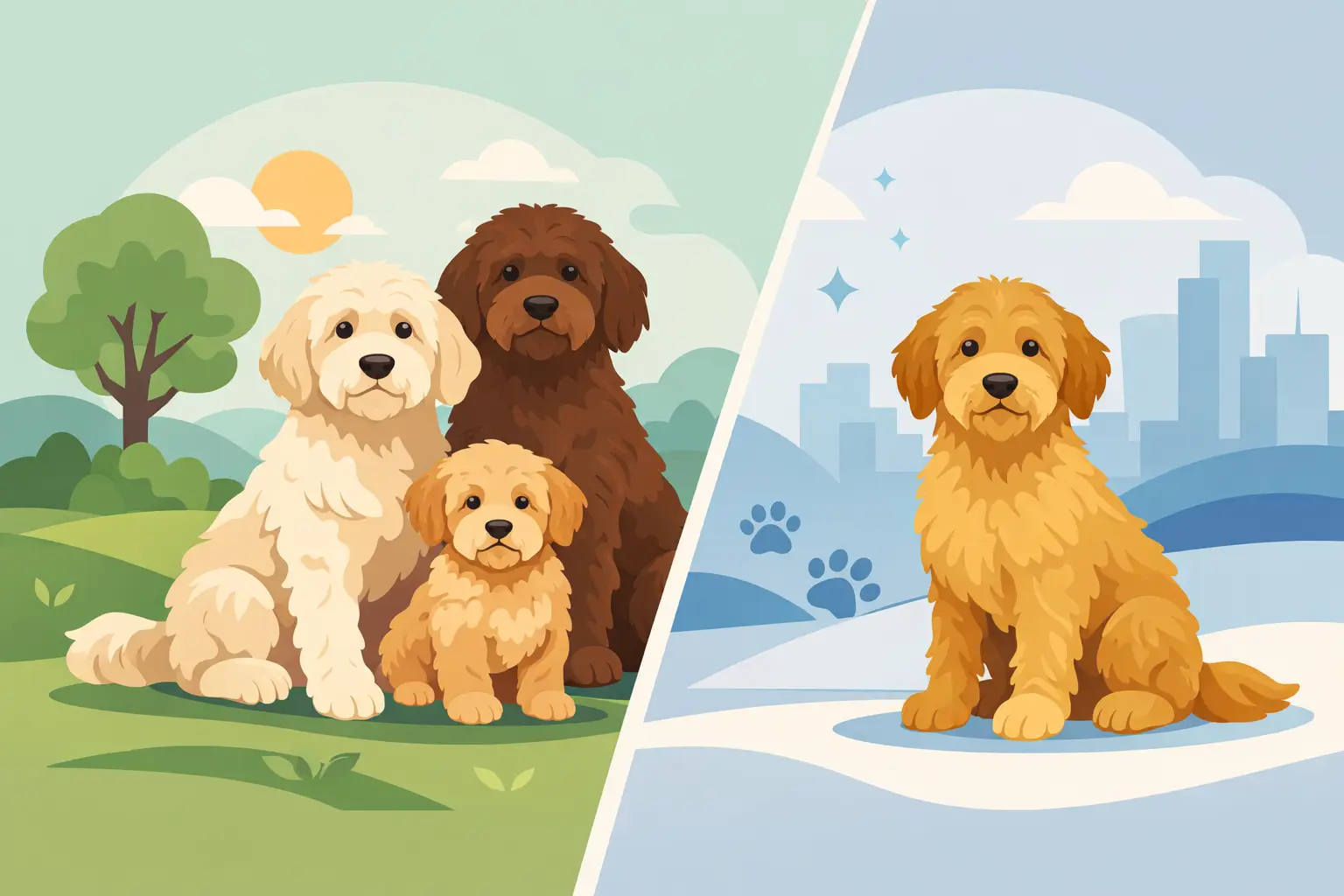
The biggest difference in a multigenerational vs first generation labradoodle comparison is consistency. First generation puppies can be more variable because they are a direct cross between two different breeds. Multigenerational puppies are typically bred for more stable and repeatable traits.
Coat is often the first thing families ask about, and for good reason. A first generation Labradoodle may have a fleece-like coat, a looser shaggy coat, or a coat that sheds more than expected. Some families are surprised by this. A multigenerational Labradoodle is more likely to have the soft, low-shedding coat many people picture when they hear the name Labradoodle.
Temperament is another major point. Labs and Poodles are both intelligent, affectionate breeds, but they can express those traits differently. A first generation puppy may lean more heavily toward one side. Multigenerational breeding allows experienced breeders to select for the calm, social, trainable qualities families usually want most in a companion dog.
Size can also be a little less predictable in first generation litters, especially if the parents are not carefully matched. In well-established multigenerational programs, adult size is usually easier to estimate.
Coat and shedding expectations
This is where many families need the most clarity. Not every Labradoodle is equally low-shedding, and the generation matters.
With a first generation Labradoodle, coat outcome can be harder to predict. Some will shed very little. Others may shed moderately, especially during seasonal changes or as the adult coat comes in. For households managing allergies or simply hoping to avoid dog hair throughout the house, that uncertainty can be frustrating.
Multigenerational Labradoodles are generally bred with coat consistency as a top priority. That does not make any dog completely hypoallergenic, because no dog can promise that for every person. Still, families often find that a carefully bred multigenerational dog gives them a much better chance of getting the low-shedding, allergy-friendly coat they hoped for.
Grooming is the trade-off. A lower-shedding coat usually needs regular brushing and professional grooming. So while you may get less hair on the couch, you should plan for ongoing coat care.
Temperament and family fit
Most families are not just buying a breed label. They are choosing the dog that will live in their kitchen, ride in the car with the kids, rest at their feet in the evening, and learn the rhythm of their home.
First generation Labradoodles can absolutely be loving and intelligent dogs. The challenge is that temperament may be a bit less uniform. Some may have the easygoing sociability of a Lab. Others may show more of the Poodle’s sensitivity or alertness. Neither is wrong, but it can change what daily life feels like.
Multigenerational breeding gives breeders more ability to select for the qualities that matter most in family companionship – stable disposition, trainability, confidence, and social ease. This is one reason many families who want a dependable home companion, therapy prospect, or child-friendly dog tend to prefer multigenerational lines.
Early socialization still matters a great deal. Even the best genetics need good handling, thoughtful exposure, and age-appropriate training. But strong breeding decisions create a much better starting point.
Health and responsible breeding matter more than the label alone
Generation is helpful, but it should never be the only thing you evaluate. A first generation puppy from a highly responsible breeder may be healthier and better prepared than a multigenerational puppy from a careless one.
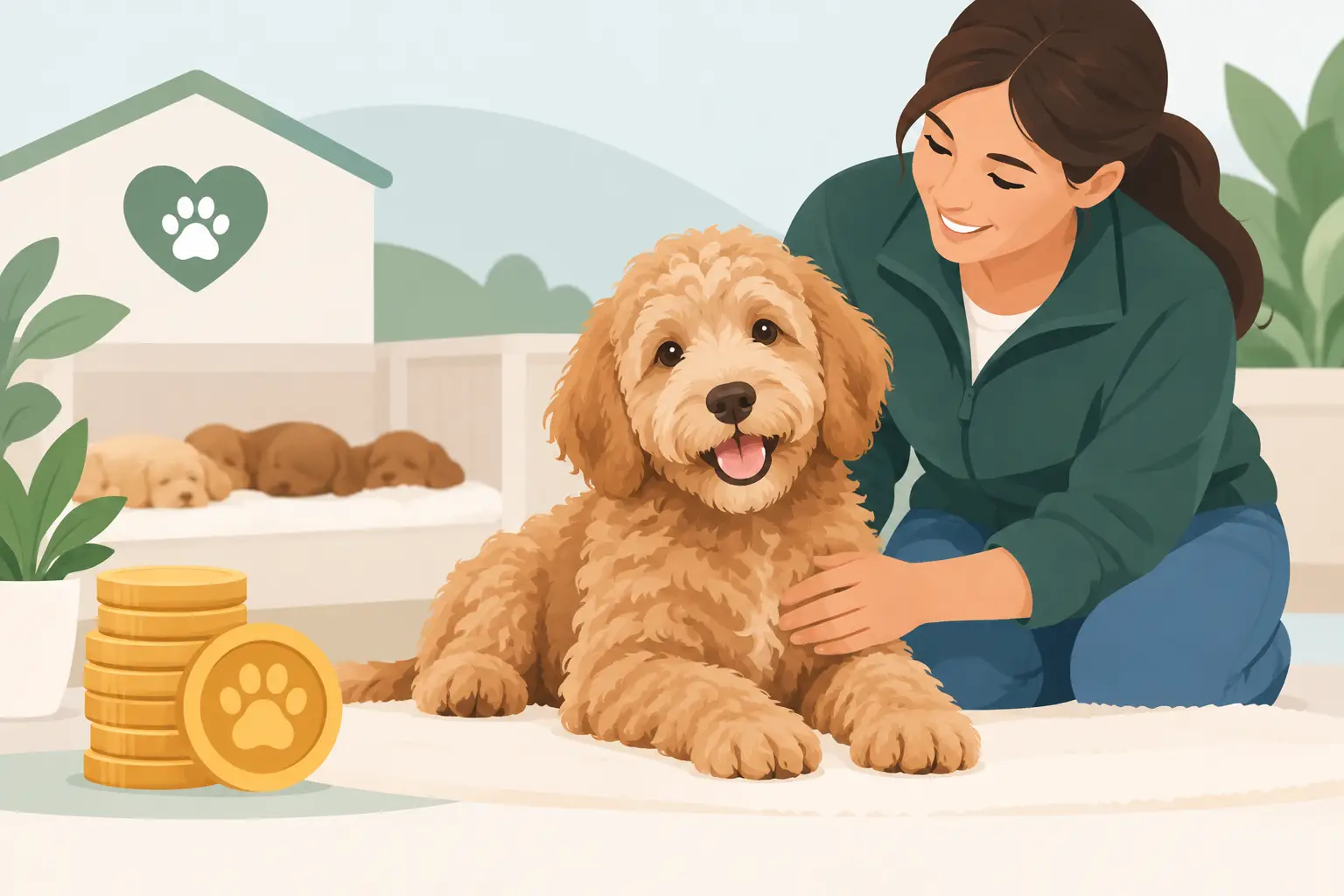
That is why health testing, parent evaluation, puppy raising practices, and breeder transparency matter so much. You want to know that the parents have been screened appropriately, that temperaments have been considered carefully, and that puppies are being raised in a way that supports confidence and social development.
A good breeder should be able to explain not just what generation a puppy is, but why those lines were paired, what traits they were aiming to preserve, and what families can realistically expect.
Which is better for your household?
If you are looking for more predictability in coat, lower shedding, and a temperament that has been refined over generations for family companionship, a multigenerational Labradoodle is often the better fit.
If you are open to more variation and are simply drawn to the idea of a Lab-Poodle cross without needing as much consistency, a first generation Labradoodle may still be a great dog for you.
For many households, especially first-time owners, the deciding factor comes down to confidence. They want to know they are making a well-informed choice. They want fewer surprises around coat care, shedding, energy level, and personality. That is exactly why so many families lean toward carefully bred multigenerational Australian Labradoodles.
At Providence Hill Australian Labradoodles, that focus on consistency is part of what helps families feel prepared from the beginning. When breeding is intentional, health-focused, and rooted in temperament, the result is not just an attractive puppy. It is a dog that is better positioned to thrive in real family life.
Final thoughts on multigenerational vs first generation Labradoodle
The right puppy is not just the cutest one in the litter. It is the one whose breeding, temperament, and care match the life you are ready to offer. If you keep your attention on predictability, health, and responsible breeding rather than labels alone, you will be much closer to choosing a dog who feels at home with your family from day one.