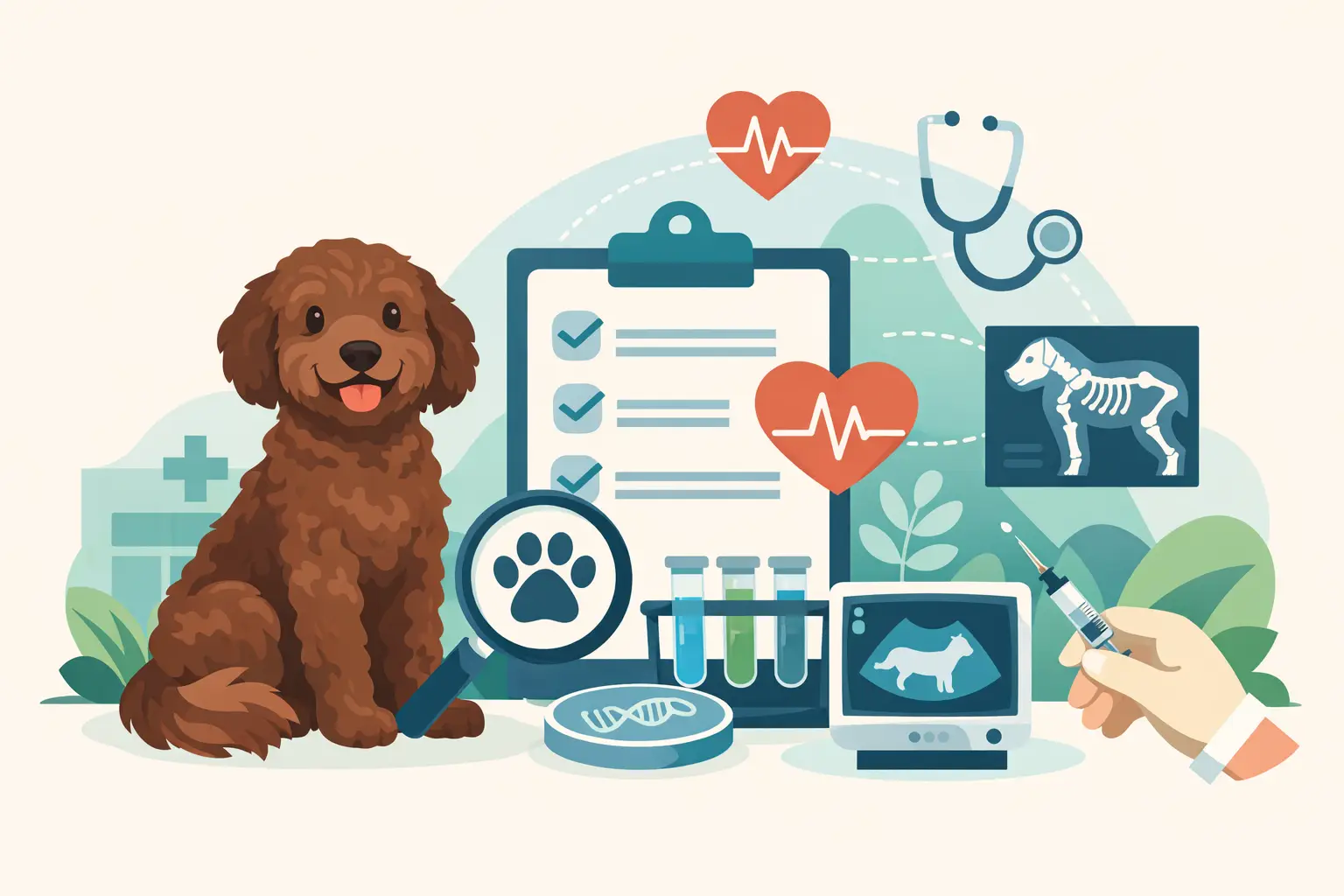
When families start asking about australian labradoodle health testing, they are usually trying to answer one big question: how do I know this puppy was bred with real care? That question matters. A sweet face and a soft coat are easy to fall in love with, but health testing is what helps protect a puppy’s future and gives families more confidence in the breeder behind the litter.
For a family companion, health is never a small detail. It shapes comfort, activity level, trainability, and quality of life for years to come. Good breeders understand that health testing is not a marketing extra. It is part of the foundation of responsible breeding.
What australian labradoodle health testing really means
Australian Labradoodle health testing is the process of screening breeding dogs before they are paired, with the goal of reducing the risk of passing on inherited disease or structural problems. That usually includes a combination of genetic testing, orthopedic evaluations, and eye testing. The exact list can vary somewhat by breeder, bloodline, and breeding program, but the purpose stays the same: make thoughtful decisions that support healthier puppies.
This is where many families get confused. A breeder may say their dogs are checked by a vet, but a routine veterinary exam is not the same as formal health testing. A healthy-looking adult dog can still carry genes for inherited conditions or have joint issues that are not obvious in casual day-to-day life. True health testing goes beyond a standard wellness visit.
That distinction matters because Australian Labradoodles are bred to be wonderful companions – affectionate, intelligent, family-oriented, and often a great fit for homes looking for a low-shedding dog. To preserve those qualities well, breeders need to pay close attention to both health and temperament, not just appearance.
The screenings responsible breeders often use
A quality breeding program usually looks at several areas of health before a dog is considered for breeding. Hips and elbows are a major part of that conversation. Orthopedic screening helps identify dogs with structural soundness and lowers the chance of producing puppies with painful joint concerns.
Eye testing is another important piece. Certain inherited eye conditions may not be visible to a puppy buyer, but they can affect a dog later in life. Formal eye exams help breeders avoid pairing dogs that may increase that risk.
Genetic testing is also central to Australian Labradoodle health testing. Depending on the line, breeders may test for inherited disorders that can affect vision, blood clotting, the nervous system, or general long-term health. These tests do not eliminate every possible issue, because no breeder can promise a dog will never face a health concern, but they do help reduce avoidable risk.
Patella and cardiac evaluations may also be considered depending on the dog and the breeding program. The strongest breeders are not simply checking boxes. They are looking at the whole dog and making pairing decisions carefully.
Why health testing in parent dogs matters more than promises
Families sometimes hear reassuring phrases like “our puppies are healthy” or “we have never had a problem.” Those statements may sound comforting, but they are not a substitute for documented testing. Good intentions are not the same as verifiable standards.
Health testing matters in the parent dogs because that is where prevention begins. Once a puppy is born, a breeder cannot go back and change inherited risk. The work has to happen before the litter is planned.
This is also why health guarantees, while helpful, should not be the first thing families focus on. A guarantee is a policy. Health testing is a practice. One tells you what happens after a problem appears. The other shows what the breeder did to reduce the chance of that problem in the first place.
What families should ask a breeder
If you are comparing breeders, it is completely reasonable to ask direct questions. In fact, responsible breeders expect it. You can ask which health tests were completed on the sire and dam, whether those results are available for review, and how the breeder uses those results when planning a litter.
It also helps to ask how the breeder evaluates temperament alongside health. A wonderful family dog needs more than clear testing. Sound nerves, trainability, and a stable disposition matter just as much in everyday life, especially in homes with children or first-time dog owners.
You may also want to ask whether the breeder raises puppies in the home, how early socialization is handled, and what kind of support is offered after take-home day. Health testing is essential, but it works best as part of a bigger picture of responsible breeding.
Red flags to watch for
One red flag is vague language. If a breeder says their dogs are “tested” but cannot explain what that means, pause there. Another concern is when a breeder only mentions DNA testing and skips orthopedic or eye evaluations. Genetic panels are valuable, but they are only one part of a full health program.
Price alone should not be used to judge quality, but very low pricing can sometimes reflect shortcuts in health screening, puppy care, or socialization. On the other hand, a higher price does not automatically mean a breeder is doing everything right. Families should look for transparency, documentation, and consistency.
Another sign to take seriously is pressure to move quickly without answering questions. A good breeder wants informed, prepared homes. They do not mind explaining their process because they have built their program around those standards.
Health testing and the reality of risk
It is important to be honest here: even excellent Australian Labradoodle health testing does not create a risk-free puppy. Biology does not work that way. Dogs, like people, can still experience unexpected health issues. Environment, nutrition, exercise, growth patterns, and simple chance all play a role over time.
What health testing does is stack the odds in a better direction. It helps breeders avoid known inherited concerns, make stronger pairing decisions, and breed with greater care. For families, that means more confidence that the puppy they bring home came from a thoughtful, responsible program rather than a casual or profit-driven breeding decision.
That balance matters. If a breeder claims perfect outcomes, be cautious. The better answer is usually the more honest one: we test thoroughly, we breed carefully, and we do everything we can to support healthy puppies.
Why this matters so much for family life
A family dog is woven into everyday routines. That puppy grows up alongside your children, greets you at the door, joins you on walks, learns your schedule, and becomes part of your home in a very real way. Health problems can affect not only veterinary costs, but also the dog’s comfort and the family’s daily experience.
That is one reason many families looking for an Australian Labradoodle are drawn to breeders who place such a strong emphasis on health, temperament, and early development. They are not just buying a breed. They are choosing the level of care that shaped the puppy before it ever came home.
At Providence Hill Australian Labradoodles, that kind of thoughtful breeding standard is part of why health and parent screening matter so much. Families deserve clarity, not guesswork, when they are making such an important decision.
The connection between health testing and long-term breeder trust
One of the clearest signs of a trustworthy breeder is that they are willing to talk about health testing in plain language. They do not hide behind buzzwords. They explain what they test, why they test it, and how it supports the future of their lines.
That openness builds trust because it shows care before the sale ever happens. Families should feel comfortable asking questions and receiving real answers. The right breeder will understand that those questions come from love and responsibility, not skepticism.
If you are searching for the right puppy, let health testing guide your decision more than polished photos or quick promises. A well-bred Australian Labradoodle starts with careful choices long before a litter arrives, and those choices can shape your dog’s life in meaningful ways.
The best place to begin is simple: ask to see the standards behind the puppy, not just the puppy itself.