If you are weighing an australian labradoodle vs goldendoodle, you are probably not just picking a cute puppy. You are trying to choose the dog that will live in your home, fit your routine, and grow up alongside your family. That decision deserves more than a quick glance at photos or a few broad breed claims.
At first glance, these two doodle types can look similar. Both are known for friendly personalities, intelligence, and soft coats. Both are often chosen by families who want a companion dog with lower shedding than many traditional breeds. But once you look past the surface, there are meaningful differences in predictability, coat type, temperament, and what daily life may actually feel like.
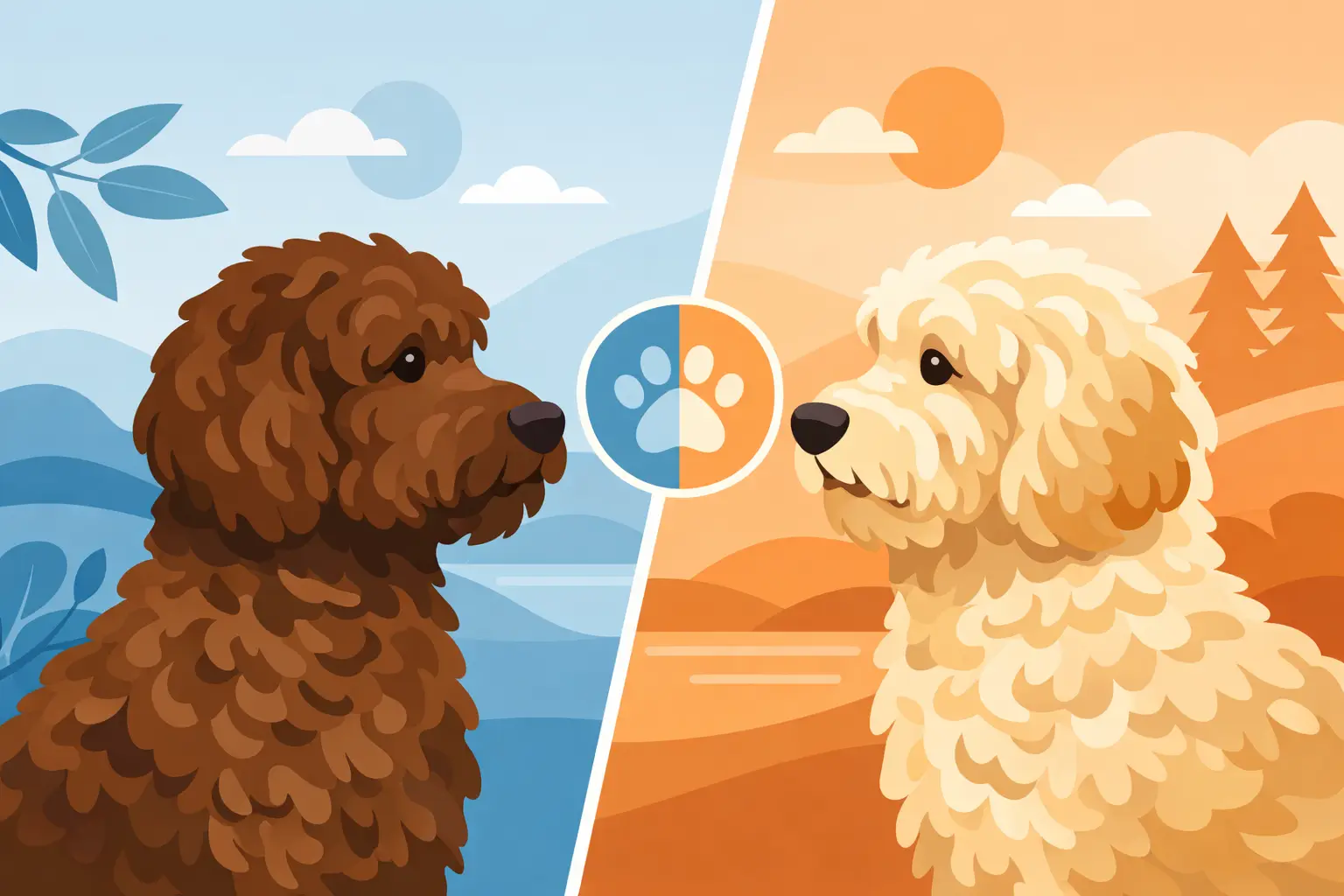
Australian Labradoodle vs Goldendoodle: what is the real difference?
The biggest difference is in breed development. A Goldendoodle is a cross between a Golden Retriever and a Poodle. Depending on the breeder and generation, that mix can vary quite a bit in coat, structure, energy level, and personality. Some are more retriever-like, some are more poodle-like, and some land somewhere in the middle.
An Australian Labradoodle is not simply a Labrador and Poodle mix from Australia. It is a carefully developed multi-generational breed line created for temperament, coat consistency, and companion qualities. Over time, several breeds contributed to the development of the Australian Labradoodle, including the Labrador Retriever, Poodle, Cocker Spaniel, and others in earlier foundation lines. In a well-bred program, that longer development process often leads to more predictability.
That word matters. For many families, predictability is the difference between hoping for a good fit and choosing one with confidence.
Temperament in family life
Both breeds can be loving, social, and highly trainable. That is part of why doodles have become so popular. Still, there are some tendencies worth understanding.
Goldendoodles often bring the happy, outgoing, people-oriented nature of the Golden Retriever. Many are affectionate and playful, and they can make wonderful family pets. They also may be a bit more exuberant, especially in younger years. For some households, that sounds perfect. For others, especially families with very young children or first-time dog owners, that extra bounce can feel like a lot.
Australian Labradoodles are often prized for their balanced, intuitive temperaments. In thoughtfully bred lines, they are known for being affectionate without being overwhelming, playful without staying in high gear all day, and responsive to training. Many families are drawn to them because they tend to settle well into home life while still being social and engaged.
Of course, no breed type guarantees a personality. Early socialization, genetics, training, and the individual puppy all matter. But if your priority is a steady companion with family-friendly softness and dependable trainability, an Australian Labradoodle often has an edge.
Shedding and allergy concerns
This is one of the biggest reasons people compare the two.
Neither breed should be described as completely hypoallergenic, because dogs are living animals and people react differently. That said, coat type makes a major difference in shedding and dander spread within the home.
Goldendoodles can be lower shedding, but they are often less predictable in this area. Some inherit a coat that sheds very little. Others have a looser, more retriever-influenced coat that sheds more than expected. This is especially true in certain generations where coat outcomes can vary widely.
Australian Labradoodles are often intentionally bred for fleece or wool coats that are low shedding and more consistent from one puppy to the next. For families who are specifically trying to reduce shedding in the home, this can be a major reason to lean toward the Australian Labradoodle.
If allergies are a serious concern, breeder transparency matters just as much as breed label. You want a breeder who understands coat genetics, tracks outcomes in past litters, and is honest about what can and cannot be promised.
Coat care is not the same as easy care
People sometimes hear low shedding and assume low maintenance. That is rarely true.
Both Australian Labradoodles and Goldendoodles require regular grooming. If you skip brushing, both can mat. If you let the coat grow long without maintenance, both can become difficult to manage quickly. Professional grooming is often part of life with either breed.
The difference is usually not whether grooming is needed, but how predictable the coat is. Goldendoodles can have a wider range of textures, from wavy to curlier to more open coats. Some are easier to maintain than others. Australian Labradoodles, when bred carefully, tend to have more consistent coat goals. For families who want to know what they are signing up for, that consistency can make planning easier.
A breeder who educates owners on brushing, bathing, grooming schedules, and coat transition is doing families a real service. Puppy ownership gets easier when expectations are clear from the start.
Trainability and energy level
Both breeds are smart. Both usually respond well to reward-based training. Both need structure, exercise, and early guidance.
Where families sometimes notice a difference is in intensity. Goldendoodles can be wonderfully trainable, but they may also be higher energy or more distractible, especially if they strongly favor their retriever side. They often thrive in active homes that enjoy regular outings, training sessions, and a dog that likes to be in the middle of everything.
Australian Labradoodles are also active and intelligent, but many families appreciate their off-switch. They often enjoy play and walks, then settle comfortably at home. That can be especially appealing for households wanting a dog that joins family life without constantly demanding the next big activity.
There is no perfect breed for everyone. If you want a big, cheerful, highly social dog with lots of enthusiasm, a Goldendoodle may suit you well. If you want a companion more intentionally bred for consistency in home temperament, an Australian Labradoodle may be the better fit.
Size and appearance
Goldendoodles can vary quite a bit in size depending on whether the poodle parent was toy, miniature, medium, or standard. Australian Labradoodles also come in different sizes, but in established breeding programs, that size range is often more carefully planned and better communicated.
For families, this matters more than people think. Size affects travel, crate training, feeding costs, exercise needs, and how a dog fits with children or older adults. A well-run breeding program should be able to give you a realistic expectation of adult size, coat type, and general build.
Appearance is personal, and both breeds can be beautiful. But choosing a dog mainly for looks can lead to disappointment if the coat, energy, or temperament is not what you expected. The better question is not which dog is cuter. It is which dog fits your life.
Why breeding practices matter more than buzzwords
This is where many buyers get tripped up.
You can find excellent dogs and poor breeding in many categories. The label alone does not protect you. Health testing, parent temperament, early puppy raising, socialization, and breeder support all matter. A poorly bred doodle of any type can bring heartache, unpredictability, and avoidable challenges.
That is why families should ask detailed questions. Were the parents genetically screened? How are puppies raised in the first weeks of life? Are temperaments being selected intentionally? Is the breeder preparing families for nutrition, grooming, training, and transition into the home?
For families looking specifically at Australian Labradoodles, this is where specialization matters. A breeder focused on this breed line, rather than offering many trendy mixes, is often in a stronger position to produce consistency and guide families well. At Providence Hill Australian Labradoodles, that focus on health, temperament, and in-home raising reflects what many families are actually searching for – not just a puppy, but confidence in the process.
Which one is right for you?
If your household is flexible on coat outcome, enjoys a more buoyant retriever-style personality, and is comfortable with a little more variation from one dog to the next, a Goldendoodle may be a good fit.
If your priorities are low-shedding consistency, a steady family-centered temperament, and a dog bred with long-term companion qualities in mind, an Australian Labradoodle is often the more dependable choice.
That does not mean one is universally better. It means one may be better for your goals. Families with allergies, young children, or first-time dog ownership concerns often appreciate the thoughtful predictability that a well-bred Australian Labradoodle can offer. Families wanting a sportier, more exuberant personality may find themselves drawn to a Goldendoodle.
The best choice usually becomes clear when you stop asking which breed is more popular and start asking which dog will feel right in your everyday life. The puppy who fits your home should bring peace, joy, and confidence from the beginning, and that is always worth choosing carefully.