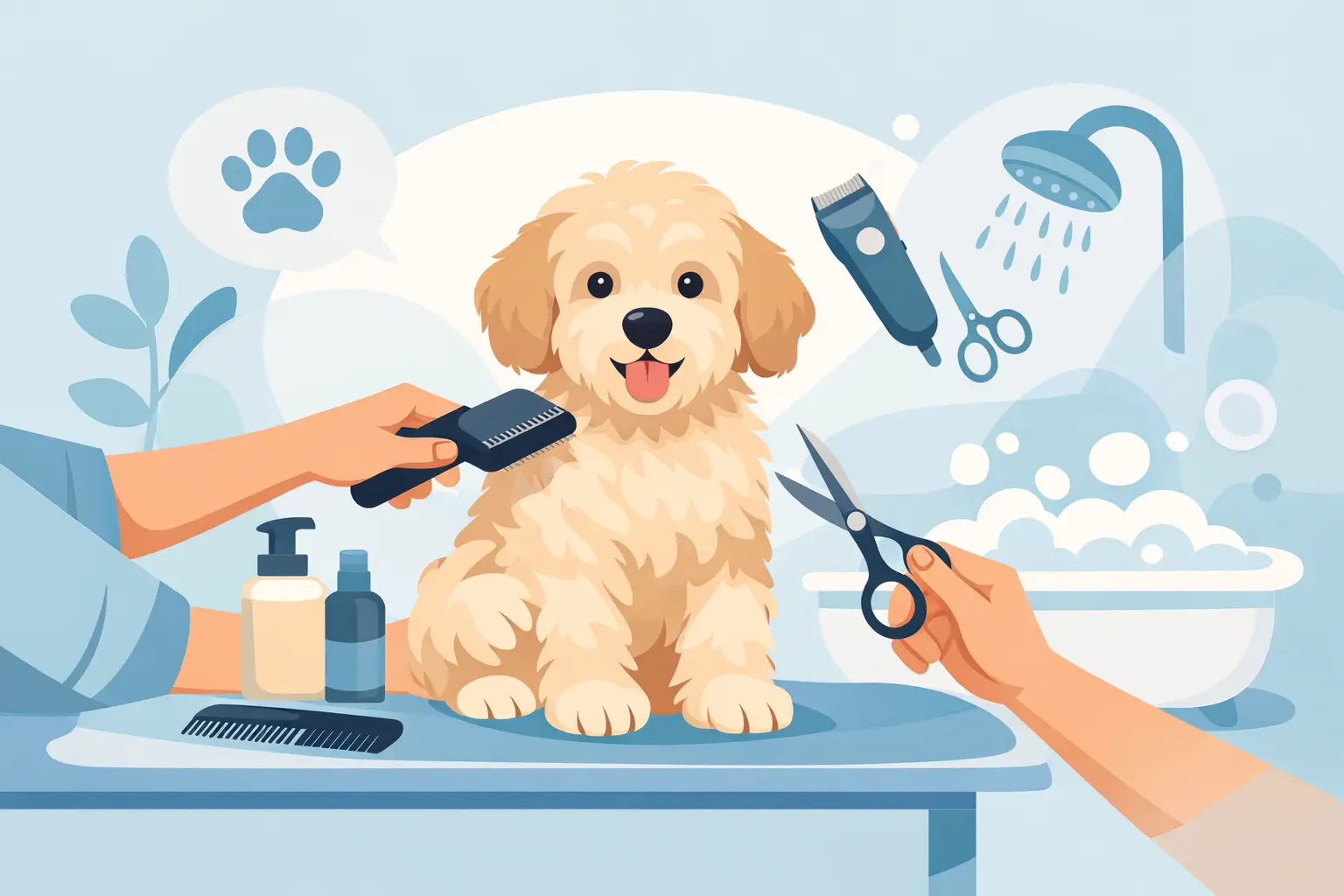
A soft doodle puppy coat can make it tempting to put grooming off for another week. Then, almost overnight, a few small tangles become tight mats behind the ears, under the collar, or where little legs meet the body. Learning how to groom a doodle puppy early is less about creating a perfect haircut and more about teaching your puppy that being handled, brushed, and cared for is safe.
Australian Labradoodles are bright, people-focused companions, and most puppies respond beautifully to grooming when it is introduced in short, cheerful sessions. Start before your puppy truly needs a bath or trim. That early practice builds the calm routine that will make home grooming and future professional appointments much easier for your whole family.
Why Doodle Puppy Grooming Starts Earlier Than You Think
Doodle coats are not all the same. A puppy may begin with a soft, fluffy coat that feels simple to manage, then transition into a thicker adult coat between roughly 6 and 12 months of age. During that change, loose puppy hair can become caught in the new coat growth, which makes matting much more likely.
Low-shedding does not mean no-maintenance. In fact, the hair that would normally shed around the house often stays in a doodle’s coat until brushing removes it. Regular grooming protects the skin, keeps your puppy comfortable, and helps you notice issues such as a burr, a tick, irritation, or a tender spot before they become a bigger concern.
For a young puppy, think in minutes rather than marathon sessions. Two or three calm minutes each day is more valuable than a stressful 30-minute brushing session once a month. End while your puppy is still successful, offer praise or a small treat, and gradually add time.
Supplies for Grooming a Doodle Puppy at Home
You do not need a grooming room full of equipment. A few well-chosen tools will cover most early puppy care:
- A slicker brush with soft, flexible pins
- A stainless-steel greyhound-style comb with both wide and narrow teeth
- A detangling spray made for dogs
- Dog shampoo and a gentle conditioner
- Clean towels and a pet-safe dryer with adjustable heat and airflow
- Nail clippers or a nail grinder, plus styptic powder for accidental quick nicks
Avoid using human shampoo, which can be too harsh for canine skin. For scissors, less is more. Sharp grooming shears near a wiggly puppy can turn a simple touch-up into an injury. If your puppy needs a substantial face, foot, or sanitary trim, a professional groomer is often the safest choice until you have experience.
How to Groom a Doodle Puppy: Build the Routine Step by Step
Begin with handling practice
Before picking up a brush, help your puppy get comfortable being touched. Gently lift each paw, look between the toes, touch the ears, hold the chin for a second, and run your hand over the tail and belly. Pair each new touch with a calm voice and a treat.
This is especially helpful for families with children. Adults should do the actual grooming, but children can sit nearby, offer a treat when asked, or help your puppy settle on a non-slip mat. Your puppy learns that grooming is a normal, positive part of family life, not something to fear.
Brush in small sections
Mist the coat lightly with dog-safe detangling spray before brushing. Brushing a completely dry coat can cause breakage, while soaking it can make small tangles harder to find. Use the slicker brush in gentle, short strokes, starting at the skin and working outward in thin layers rather than skimming over the top.
Follow each brushed section with the metal comb. If the comb glides from skin to the ends of the hair, that section is clear. If it catches, return to the slicker brush and work patiently on the tangle. Never pull hard. Hold the hair close to the skin with one hand so there is less tugging, then separate the knot a little at a time.
Pay special attention to the places that mat first: behind and beneath the ears, under the collar or harness, the armpits, the chest, the belly, the rear legs, and around the tail. A puppy who loves muddy play may also need feet checked after every outdoor adventure.
Bathe only when your puppy needs it
Most doodle puppies do not need frequent full baths. Every four to six weeks is often plenty, unless your puppy gets into something messy or develops an odor. Overbathing can dry the skin and coat.
Brush out tangles before the bath. Water tightens mats, making them much harder and more uncomfortable to remove afterward. Place a non-slip mat in the tub or sink, use lukewarm water, and keep the first bath brief. Speak calmly, protect the ears from direct water spray, and rinse very thoroughly. Shampoo residue can leave skin itchy.
A light conditioner can help keep a doodle coat manageable, especially as the adult coat begins to arrive. Rinse according to the product directions, towel dry gently, and avoid vigorous rubbing that can create tangles.
Dry completely, then comb again
A damp doodle coat can mat quickly, especially in dense areas near the skin. Towel drying is a good start, but it is rarely enough for a thicker coat. Use a pet dryer on a low or cool setting and introduce the sound from a distance before aiming airflow toward your puppy.
Keep the dryer moving and watch your puppy’s comfort level. Some puppies need several short practice sessions before they accept it. Once the coat is fully dry, comb through it again. This final comb-out is one of the best ways to find hidden tangles before they become mats.
Care for nails, ears, and eyes
Nails are easiest to manage when they are trimmed often and only a tiny amount is removed. Weekly handling and small trims help keep the quick from growing too long. If you can hear nails clicking loudly on the floor, they may be ready for attention.
Check ears weekly for odor, redness, heavy wax, or repeated scratching. Doodles can have hair around and within the ear opening, but pulling ear hair is not automatically necessary for every dog. Ask your veterinarian or professional groomer what is appropriate for your puppy’s individual ears rather than removing hair routinely at home.
Use a soft, damp cloth to wipe normal eye discharge from the corners of the eyes. Persistent tearing, redness, squinting, or thick discharge calls for a veterinarian, not a grooming solution.
When to Call a Professional Groomer
A first professional grooming visit can be a positive learning experience even if your puppy only receives a bath, blow-dry, brush-out, nail trim, and light face or foot tidy. Many families schedule this introduction after their veterinarian has cleared the puppy for public settings and required vaccinations.
Professional care becomes particularly useful during coat transition, when mats are close to the skin, or when your puppy needs a clip. Mats should not be cut out with household scissors. Skin can pull up into the mat, and even careful owners can accidentally cut it. A groomer can assess whether gentle de-matting is humane or whether a short clip is the kinder option.
Bring your puppy to grooming appointments with realistic expectations. A short, comfortable first experience is a win. The goal is not a show-ready haircut at four months old. The goal is a dog who can be safely handled for life.
A Simple Grooming Schedule for Busy Families
Daily, spend a minute checking the ears, paws, collar area, and any spots where your puppy tends to tangle. Brush two to four times each week, increasing frequency as the adult coat comes in. Plan a bath about every four to six weeks as needed, and check nails weekly.
The right schedule depends on your puppy’s coat, activity level, and haircut. A short sporting clip generally needs less at-home brushing than a longer, fuller look, but every doodle needs regular combing to stay comfortable. Consistency matters more than doing everything perfectly.
Your puppy will remember how grooming feels. Keep your voice gentle, work slowly, and make room for breaks when needed. With patient practice, grooming becomes another quiet moment of trust between you and the loving companion growing up at your feet.