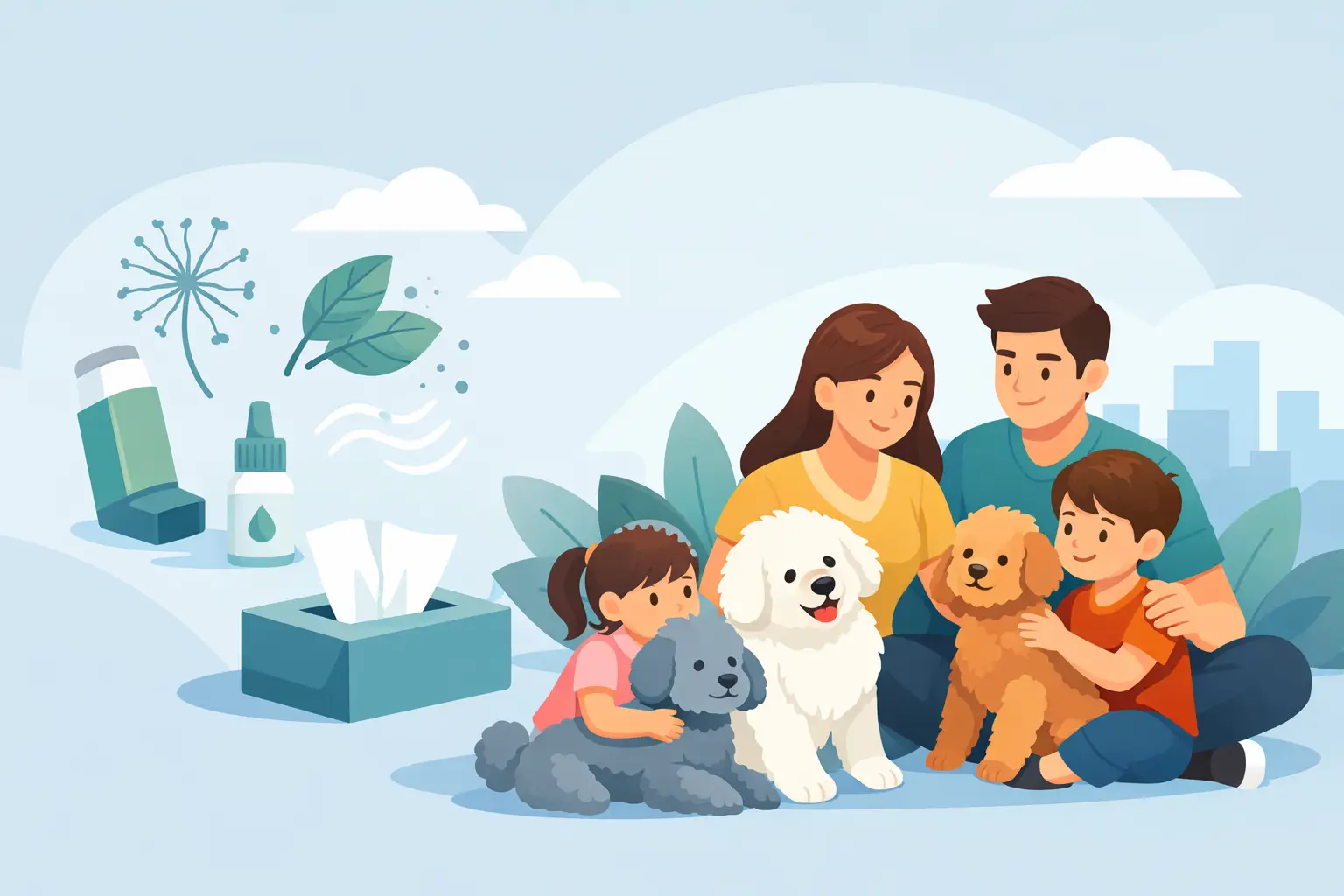
A child may fall in love with every dog they meet, but a parent with itchy eyes, congestion, or asthma has to make a more careful choice. The best family dogs with allergies are not simply the dogs labeled “hypoallergenic.” They are dogs whose coat, grooming needs, activity level, temperament, and fit with your household make daily life more comfortable for everyone.
For many families, a low-shedding companion dog can be a wonderful answer. Still, it is important to begin with honest expectations: no dog is completely allergen-free. The goal is to reduce exposure while choosing a dog that is gentle with children, easy to train, and prepared to become a true part of family life.
What Causes Dog Allergies?
Dog allergies are usually triggered by proteins found in dander, saliva, and urine, not the hair itself. A shedding coat can carry dander around the home, which is why dogs that shed less are often easier for allergy-sensitive households. But a low-shedding dog can still produce allergens, and one person’s reaction may be very different from another’s.
This is why breed research matters, but meeting dogs matters too. Before bringing home a puppy, spend time around adult dogs from the breed you are considering whenever possible. If a family member has severe allergies or asthma, speak with their allergist first. A thoughtful decision before puppy day helps prevent a painful situation later.
Best Family Dogs With Allergies: What to Look For
The right dog for an allergy-aware family should offer more than a curly or low-shedding coat. Families with young children often need a patient, people-focused dog that can handle a busy home. First-time owners may also benefit from a dog with strong trainability and a willingness to engage with its people.
Look for a breed or individual dog with these qualities:
- A low-shedding coat that can be maintained on a reliable grooming schedule
- A stable, affectionate temperament that suits children and visitors
- Good trainability and a desire to work with people
- An energy level that matches your family’s actual routine
- Health-focused breeding and clear information about the puppy’s parents
A dog’s upbringing is just as meaningful as its breed label. Puppies raised with daily household sounds, gentle handling, age-appropriate play, and positive early experiences are better prepared for family life. Responsible breeders also evaluate the health and temperaments of their breeding dogs rather than relying on appearance alone.
Breeds Families Commonly Consider
Several breeds are regularly considered by households looking for a family-friendly, lower-shedding companion. Each comes with its own strengths and trade-offs.
Australian Labradoodles
Australian Labradoodles are often a strong choice for families seeking an affectionate, intelligent, low-shedding dog. When thoughtfully bred, they are known for their people-oriented nature, trainability, and soft, wavy-to-curly fleece or wool coats. Many families appreciate that they can be playful with children while also settling in close to their people at the end of the day.
Coat type varies, so no breeder should promise that every puppy will be suitable for every allergy sufferer. Regular brushing and professional grooming are part of caring for this coat properly. Families should also ask about parent health testing, temperament, early socialization, and the breeder’s support after a puppy goes home.
At Providence Hill Australian Labradoodles, puppies are raised in a home environment with a focus on healthy temperaments, family readiness, and the guidance new owners need as their puppy grows.
Poodles
Poodles are highly intelligent, athletic, and low shedding. They come in Standard, Miniature, and Toy sizes, giving families options based on their living space and lifestyle. A Standard Poodle can be a wonderful companion for an active family, while a Miniature Poodle may be easier for those who prefer a smaller dog.
Their curls need consistent brushing and grooming, and their intelligence means they need more than a quick walk around the block. Training games, family activities, and regular exercise help a Poodle thrive.
Bichon Frises
The Bichon Frise is cheerful, compact, and typically affectionate with people. Their small size can make them appealing for apartment or townhouse living, although they still need daily play, training, and companionship. Their white, curly coat is low shedding but requires regular professional grooming to avoid mats.
Because they are small, families with toddlers should be ready to supervise interactions closely. Even the friendliest little dog needs gentle handling and a safe place to rest.
Portuguese Water Dogs
Portuguese Water Dogs are energetic, clever, and often devoted to their families. Their curly or wavy coats shed minimally, but their activity needs are considerably higher than some other low-shedding breeds. They can be an excellent fit for families who enjoy hiking, swimming, running, or active outdoor weekends.
For a household hoping for a relaxed dog with modest exercise needs, this breed may feel like more dog than they expected. Matching energy level is one of the kindest things a family can do for a puppy.
Schnauzers
Miniature, Standard, and Giant Schnauzers have low-shedding coats and distinctive personalities. Miniature Schnauzers are often lively, alert companions, while Standard and Giant Schnauzers are larger, more demanding dogs that benefit from experienced training and structure.
They can be devoted family members, but their watchdog instincts and spirited nature may not suit every home. Early socialization and consistent, positive training are especially valuable.
A Low-Shedding Coat Still Needs Care
Choosing a lower-shedding dog does not mean choosing a no-maintenance dog. In fact, coats that release less hair into the house often need more hands-on care. Loose hair can stay caught in curls or waves rather than falling out, which can lead to painful mats if brushing is skipped.
Most families should expect a routine of brushing several times a week, bathing as needed, and professional grooming every six to eight weeks, depending on coat type and haircut. Grooming is also a practical part of allergy management. A clean, well-maintained coat can help reduce the dander and outdoor allergens your dog carries indoors.
Keep grooming calm and positive from puppyhood. Short brushing sessions, treats, and gentle handling around paws, ears, and face make future grooming far easier for both dog and family.
How to Make Your Home More Allergy-Friendly
Your home setup can have as much impact as the dog you choose. Vacuuming regularly with a HEPA-filter vacuum, washing dog bedding weekly, and using a quality air purifier in main living areas can help reduce allergens. Hard flooring is often easier to clean than wall-to-wall carpet, but families do not need to redesign their entire home before getting a dog.
Create dog-free zones where the allergy-sensitive person sleeps or spends significant time. Keeping a puppy off beds and upholstered furniture may reduce exposure, especially in the first months while your household learns what works best. Washing hands after play and changing clothes after close cuddles can also make a noticeable difference for some people.
Avoid over-bathing your dog in an effort to solve allergies. Excessive bathing can dry the skin and cause irritation. Ask your veterinarian or groomer about a schedule appropriate for your dog’s coat and skin.
Questions to Ask Before Choosing a Puppy
A caring breeder should welcome thoughtful questions. Ask what health testing has been completed on the parents, how puppies are socialized, what coat types may be expected, and how the breeder matches puppies with homes. If allergies are part of your decision, be open about that from the beginning.
It is also wise to ask about the puppy’s likely adult size, energy level, grooming needs, and early training foundation. A sweet puppy is only the beginning. Your family is choosing a companion for the next decade or more, and a good match depends on honest conversations about your home and routine.
The best choice is rarely the dog with the trendiest label. It is the puppy whose needs your family can meet with patience, structure, grooming, exercise, and plenty of affection. When allergy considerations are handled realistically from the start, there is more room for the part that matters most: watching a well-loved dog grow into your family’s trusted companion.