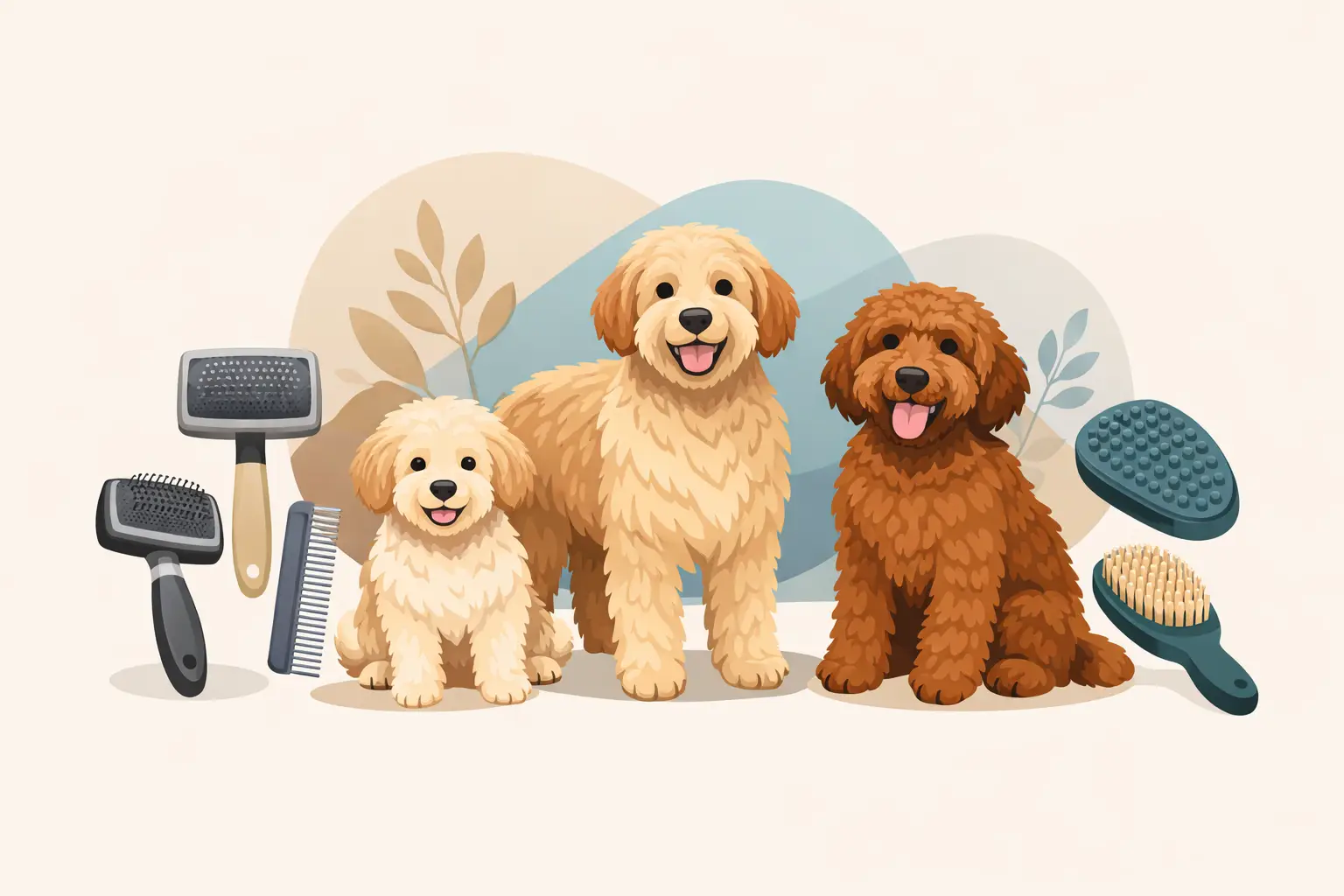
A Labradoodle can look perfectly fluffy on the outside while small tangles are quietly forming behind the ears, under the collar, and between the legs. Those tangles can tighten quickly, especially after a rainy walk, a swim, or a busy week with the kids. Choosing the best brushes for Labradoodles helps protect more than a beautiful coat – it keeps grooming comfortable, supports healthy skin, and makes regular care feel like quality time instead of a struggle.
Australian Labradoodle coats vary. Some are soft and wavy, others have a looser fleece texture, and some are curlier and denser. The right brush is not always the same for every dog, or even for the same dog throughout puppyhood and adulthood. Most families do best with a small grooming toolkit rather than relying on one brush for every job.
What Makes a Brush Right for a Labradoodle?
Labradoodles are often chosen for their low-shedding coats, but low shedding does not mean low maintenance. Loose hair can stay caught in the coat rather than falling onto the floor. When it combines with dirt, moisture, and friction from harnesses or collars, it can become a mat.
The best brush should reach through the coat without scraping the skin, separate strands gently, and allow you to see what is happening close to the skin. A brush that only smooths the top layer may make the coat look tidy while leaving hidden tangles underneath.
Your dog’s age, coat density, grooming length, and comfort level all matter. A young puppy needs a much gentler approach than an adult with a thick, curly coat. If your Labradoodle is kept in a shorter puppy-style trim, brushing may be quicker, but it is still needed regularly in high-friction areas.
The Best Brushes for Labradoodles and When to Use Them
1. A soft slicker brush for regular coat care
A soft slicker brush is the workhorse for many Labradoodle families. It has fine bent pins that lift loose hair and begin separating small tangles. Look for flexible pins and a cushioned pad, particularly for a puppy or a dog with sensitive skin.
Use light, short strokes rather than pressing down and dragging through the coat. Start at the ends of the hair and work gradually toward the skin. For a wavy or fleece-coated Labradoodle, a soft slicker brush two to four times per week is often enough to stay ahead of tangles.
A slicker brush is effective, but it can be uncomfortable when used too firmly. Test it against the inside of your forearm. If the pressure feels sharp to you, reduce the pressure on your dog.
2. A stainless-steel comb for checking your work
If you bring home only one grooming tool in addition to a brush, make it a quality stainless-steel comb with both wide- and narrow-spaced teeth. The comb is how you confirm that the coat is truly free of tangles down to the skin.
After brushing a section with a slicker, slide the wide end of the comb through it. If it catches, there is still a knot to work through. The narrower end is especially helpful around the muzzle, ears, feet, and tail. This simple “brush, then comb” habit prevents many small tangles from becoming painful mats.
3. A pin brush for soft, long, wavy coats
A pin brush has longer, straighter pins than a slicker brush. It is a lovely choice for a Labradoodle with a long, flowing wavy coat that needs gentle daily maintenance. It glides well through clean hair and helps fluff the coat after a bath or blow-dry.
A pin brush is usually not enough on its own for a dense or curly coat because it may not reach through the full coat. Think of it as a gentle maintenance tool, not a substitute for checking with a comb. It can be particularly useful for helping a puppy become comfortable with being handled before introducing more detailed grooming.
4. A flexible-head slicker for dense fleece or curls
For adult Labradoodles with thick fleece or curly coats, a flexible-head slicker can be a helpful upgrade. The head bends with the shape of the body, spreading pressure more evenly and making it easier to work through dense areas such as the chest, shoulders, and hindquarters.
This style can be very effective, but it still requires a gentle hand. Work in small sections, lifting a layer of coat and brushing from the ends toward the roots. Groomers often call this line brushing. It takes a little more time than brushing over the top, but it is one of the best ways to prevent hidden mats.
5. A small face-and-feet brush
A small slicker or compact pin brush is useful for the details that larger brushes miss. Labradoodles often grow soft hair around their eyes, mouth, paws, and lower legs. These areas collect moisture, crumbs, mud, and burrs, so they benefit from frequent, gentle attention.
Choose a small tool with soft pins and a comfortable handle. Keep sessions brief and calm. A few strokes around the face after breakfast or a paw check after an outdoor adventure can make grooming feel normal rather than overwhelming.
6. A detangling comb for small knots
A rotating-pin detangling comb can help with minor tangles that a standard comb catches on. Because the pins rotate, they can move through a small knot with less pulling. This is useful behind the ears, under the front legs, and near the collar line, where friction is common.
Use it patiently. Hold the base of the hair near the skin with one hand so your dog does not feel the tug, then work from the outside edge of the tangle inward. If the knot is large, tight, or close to the skin, do not force it. Trying to pull it apart can make a dog fearful of grooming and may irritate the skin.
7. A dematting tool for occasional, careful use
A dematting tool has specially designed blades or teeth that cut through compacted hair. It can be helpful for an experienced owner dealing with an isolated, stubborn mat, but it is not a daily brush and should never be used casually.
These tools can cut skin when used too close to the body, especially in thin-skinned areas like the armpits, groin, ears, and tail. For widespread matting or mats close to the skin, professional grooming is the safest and kindest choice. Sometimes a shorter haircut is the most comfortable reset for a dog, and there is no shame in starting fresh with a manageable grooming routine.
Build a Brushing Routine Your Dog Can Enjoy
The best grooming routine is the one your family can maintain. For many Labradoodles, a quick check every day and a more complete brushing two or three times each week works well. Dogs with longer, curlier, or very dense coats may need more frequent attention, while a short, professionally maintained trim may need less.
Choose a quiet time when your dog is relaxed. Begin with easy areas such as the back and shoulders, then gradually work toward the legs, belly, ears, and tail. Offer calm praise and a small treat for cooperation. For puppies, keep the first sessions to just a few minutes. The goal is not a perfect groom on day one. The goal is to teach that brushing is safe, gentle, and rewarding.
Pay close attention to mat-prone spots: behind and under the ears, beneath collars and harnesses, under the front legs, around the tail, the inner legs, and between the toes. These are the places worth checking even on days when you do not have time for a full brushing session.
Bathing can also affect brushing. Always make sure the coat is thoroughly dry before combing it out. A damp, dense coat can tighten into tangles as it dries. After a bath, use your slicker or pin brush in sections, then follow with the comb to make sure the coat is clear all the way through.
When Brushing Is Not Enough
Brushes are a valuable part of home care, but they do not replace professional grooming. Most Labradoodles benefit from a regular professional schedule that matches their coat and preferred length. Your groomer can trim around the eyes and paws, shape the coat, clean ears as appropriate, and spot early skin or coat concerns.
If you notice redness, a strong odor, flaky skin, repeated scratching, or sensitivity when you touch a certain area, pause the grooming session and speak with your veterinarian. A dog that suddenly dislikes brushing may be dealing with a tender mat, an ear issue, or skin irritation rather than simply being uncooperative.
A well-brushed Labradoodle is not meant to look overly styled every day. It should feel soft, clean, and comfortable to live with. A few patient minutes with the right tools can help your dog stay ready for couch cuddles, family photos, muddy adventures, and all the ordinary moments that make a companion dog part of the family.