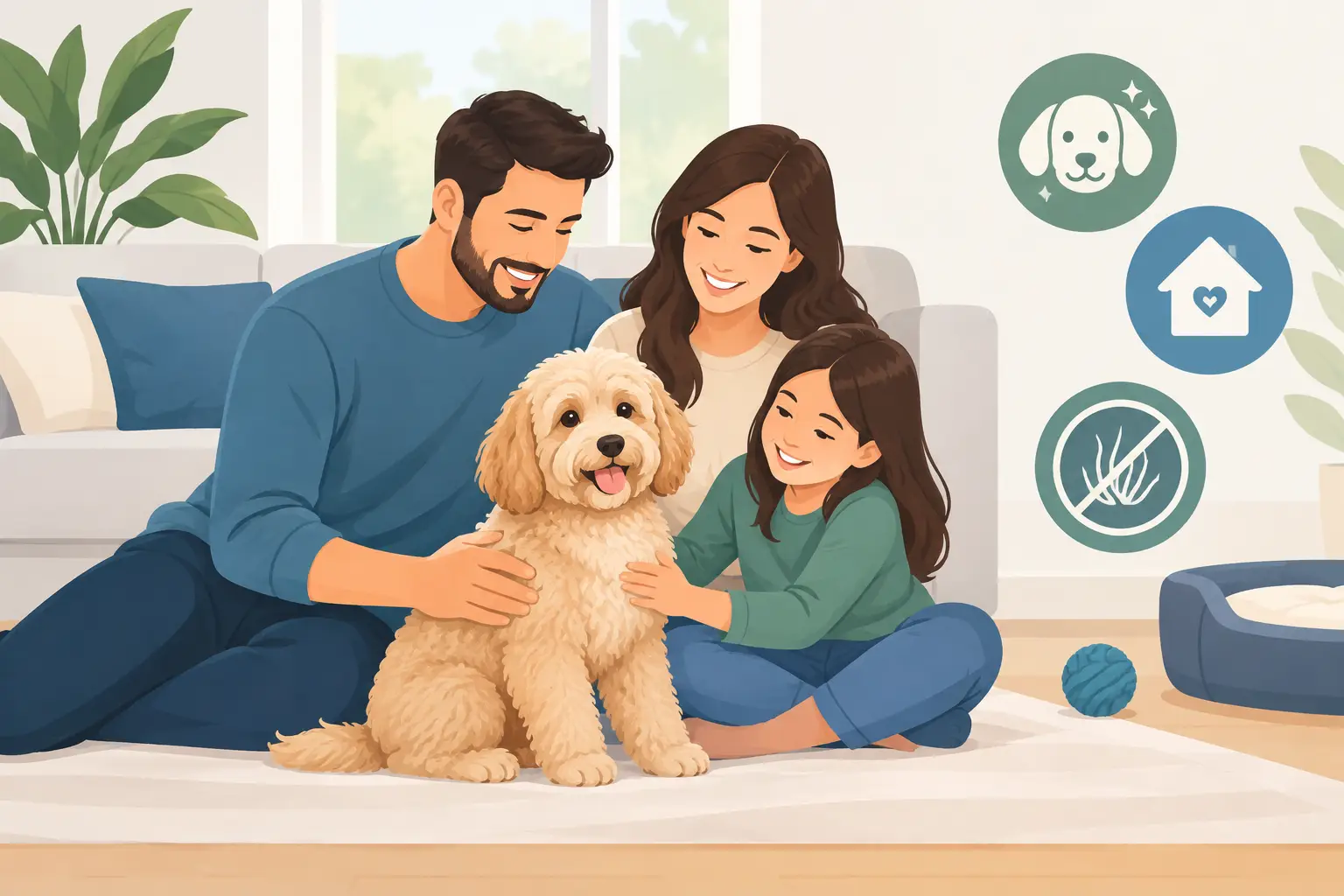
A dark sweater covered in fur, a child rubbing itchy eyes after cuddling the dog, and a vacuum that seems to run every day can make coat type feel like a major family decision. That is why low shedding dog trends have become more than a social media preference. Families are looking for companion dogs whose coats, temperaments, and care needs fit real life.
The best conversations about low-shedding dogs begin with honest expectations. A dog can shed very little and still need consistent grooming. A popular breed can be a wonderful fit for one household and the wrong choice for another. For families seeking a loving, trainable companion, understanding what is behind the trend helps turn an exciting search into a confident decision.
Why Low Shedding Dog Trends Keep Growing
Many families want a dog that can spend time on the couch, ride in the car, greet visitors, and play with children without leaving noticeable hair throughout the house. This is especially appealing in busy homes, apartments, and households where someone is sensitive to pet dander.
The increase in remote and flexible work has also changed what people look for in a dog. More owners have time for companionship, training, and daily routines, but they still want manageable cleanup and a coat that does not constantly cover work clothes and furniture. A low-shedding coat can make day-to-day life feel easier, provided the family is ready for the grooming that comes with it.
There is also greater awareness that a dog is a long-term family member, not a quick purchase. Families are asking more thoughtful questions about health testing, early socialization, adult size, energy level, and the predictability of a puppy’s coat. That shift is a positive one. Coat type matters, but it works best as one part of a larger picture.
Low Shedding Does Not Mean No Grooming
This is the trade-off that deserves the most attention. Dogs that shed less often have hair that continues growing and can hold onto loose hair rather than dropping it around the home. Without regular brushing and professional grooming, that hair can mat close to the skin.
Mats are not simply a cosmetic concern. They can pull on the skin, trap moisture, and make a dog uncomfortable. A family choosing a low-shedding dog should expect to establish a coat-care routine from the beginning. For many dogs, that means brushing several times a week, introducing calm handling as a puppy, and scheduling professional grooming roughly every six to eight weeks. The right timing depends on coat length, texture, activity level, and the haircut a family prefers.
A shorter trim may be easier for an active household, while a longer fluffy look requires more brushing between appointments. Neither choice is better. The best choice is the one your family can maintain comfortably and consistently.
The Difference Between Hair, Shedding, and Allergies
Families often use the terms low-shedding and hypoallergenic interchangeably, but they are not exactly the same. No dog is completely allergen-free. Allergic reactions can be triggered by proteins found in dander, saliva, and urine, not just loose hair.
A low-shedding dog may be a better fit for some allergy-sensitive households because there is less loose hair carrying dander through the home. Still, individual reactions vary. If allergies are a serious concern, spending time around adult dogs with similar coats before making a commitment can be helpful. Regular bathing, cleaning, and grooming also support a more comfortable home environment.
The Move Toward Predictable Family Companions
One of the most meaningful low shedding dog trends is that families are looking beyond appearance. They want a dog with an affectionate nature, sound structure, an appropriate energy level, and the ability to learn household routines. A beautiful puppy picture may begin the search, but temperament is what shapes daily life for years.
This is where responsible breeding makes a difference. Breeding decisions should consider the health and temperament of the parent dogs, not simply the demand for a certain color or coat. Genetic screening and health testing help breeders make informed choices, while thoughtful puppy raising gives young dogs an early foundation for confidence and connection.
For a family with children, a dog that can recover well from new experiences, respond to training, and enjoy being near people is often far more valuable than a particular trend online. For a first-time owner, a puppy raised with early handling and exposure to normal household sights and sounds can make the transition home feel more manageable.
Why Australian Labradoodles Remain a Popular Choice
Australian Labradoodles continue to draw interest from families because they were developed as companion dogs with people-focused, intelligent temperaments and low-shedding coat potential. Their soft, fleece-like or wool-like coats are often a strong match for homes looking to reduce loose hair, while their affectionate nature can make them a natural part of family routines.
That said, not every doodle-type dog has the same coat, size, or temperament. The word “doodle” alone does not tell a family enough about what to expect. Parentage, multigenerational breeding, early care, and the individual puppy all matter. Families should ask clear questions about the expected adult coat, grooming needs, health clearances, and the breeder’s approach to socialization.
At Providence Hill Australian Labradoodles, we believe a puppy’s preparation should support the whole family experience. A puppy needs more than a desirable coat. It needs a healthy start, patient guidance, and a home ready to continue the routines that help it thrive.
What Smart Families Are Asking Before Choosing a Puppy
The most useful trend is not a coat style or a viral breed label. It is better questions. A responsible breeder should welcome conversations about how puppies are raised, what health testing is completed, and what support is available after a puppy goes home.
Families should also be honest about their own lifestyle. A low-shedding dog may reduce the amount of fur on the floor, but it does not reduce the need for exercise, training, companionship, or veterinary care. Puppies need structure. They need frequent potty breaks, gentle boundaries, safe social experiences, and time to learn how to settle.
Consider who will brush the dog, schedule grooming, and practice training each day. Think about whether your household enjoys weekend walks, visits with friends, or quieter evenings at home. A good breeder can help match a family with a puppy whose personality and energy fit those routines rather than encouraging a one-size-fits-all choice.
Avoiding the Trend Trap
A popular dog can attract breeders who focus on quick sales instead of long-term quality. Families should be cautious of broad promises such as “completely hypoallergenic,” “no grooming needed,” or “perfect for everyone.” Real expertise sounds more balanced because every puppy and every home has individual needs.
Look for clear information about the parents, health standards, puppy environment, and the breeder’s willingness to answer questions. Puppies raised in a caring home setting benefit from early exposure to the everyday sounds and interactions that will become part of their new lives. Ongoing guidance can also be especially valuable when families are navigating crate training, nutrition, grooming, and the first few weeks at home.
Price should be considered in context, too. A responsibly raised puppy reflects the investment in health testing, quality care, socialization, and breeder support. The lowest initial price is not always the best value when a family is welcoming a dog expected to be part of its life for many years.
A Coat Choice That Supports Your Everyday Life
Low shedding dog trends point to something families have always wanted: a companion who feels at home in the center of family life. The right dog is not defined only by how much hair it leaves behind. It is defined by the relationship built through patient training, daily care, healthy breeding, and plenty of shared affection.
Choose a puppy whose needs your family is ready to meet, including the brush on the counter and the grooming appointments on the calendar. When coat care, temperament, and responsible breeding all receive equal attention, you are far more likely to bring home a companion who fits beautifully into the life you already love.