
A puppy can look perfect in a photo and still leave families with unanswered questions about health. When you evaluate puppy genetic testing, the goal is not to hunt for a promise that a dog will never become ill. The goal is to understand whether a breeder has made thoughtful, transparent decisions to reduce avoidable genetic risk before a litter is planned.
For families choosing an Australian Labradoodle, this matters because you are selecting a companion expected to share everyday life with children, visitors, travel, training, and quiet nights at home. Good genetic testing is one part of responsible breeding. It should sit alongside health clearances, stable temperament, sound structure, careful puppy raising, and a breeder who is ready to answer direct questions.
What Puppy Genetic Testing Can Tell You
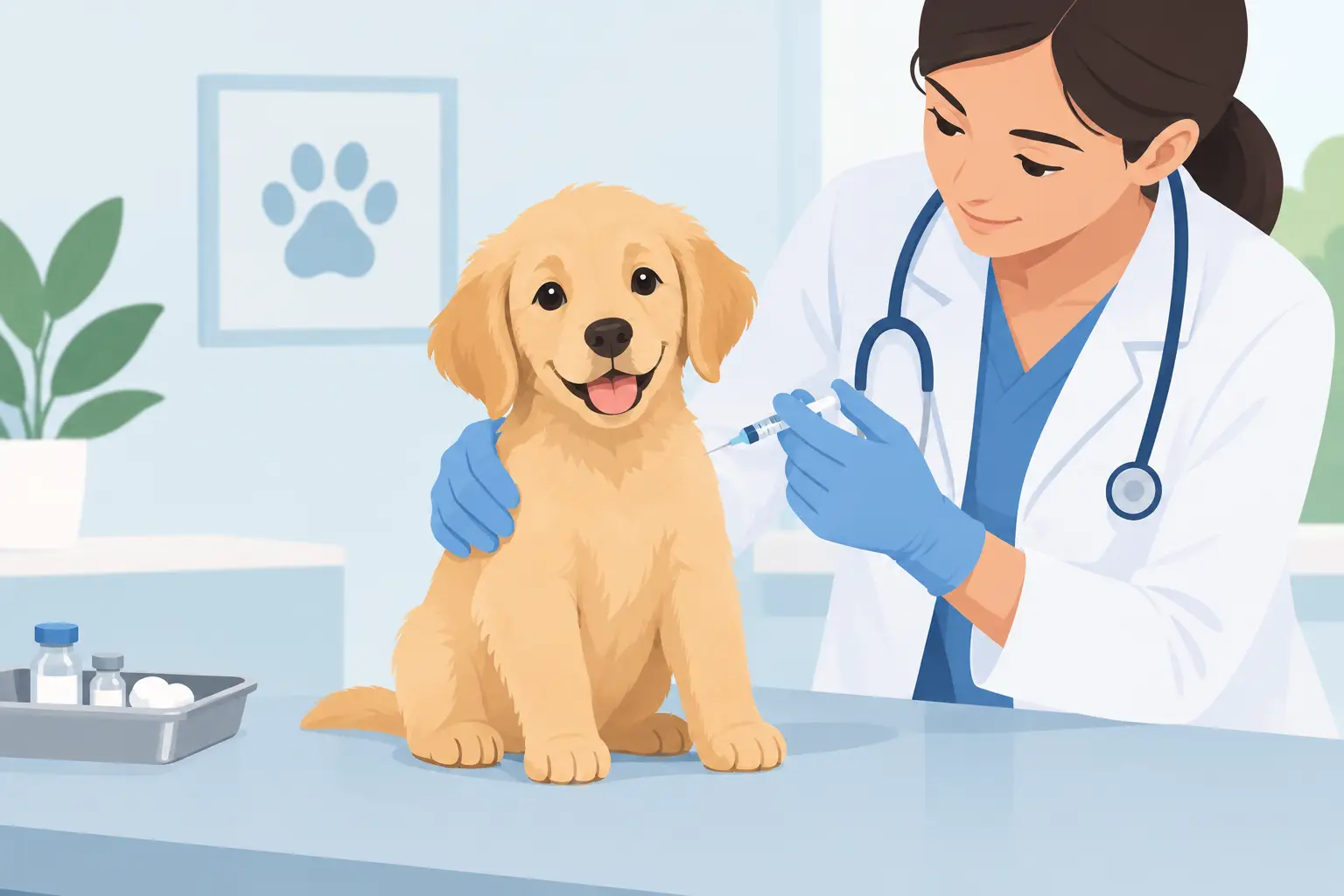
Genetic testing looks for specific inherited variants associated with particular diseases or traits. A cheek swab or blood sample can identify whether a dog is clear, a carrier, or genetically at risk for a condition included on that test panel. Breeders generally test the parent dogs before breeding, then use the results to make pairings that avoid producing affected puppies.
That distinction is worth understanding. A clear result means the tested dog does not carry the specific variant being screened. A carrier has one copy of a recessive variant and may be healthy, but can pass that variant to offspring. A dog considered at risk or affected has the genetic combination associated with the condition. Responsible breeders do not simply discard every carrier from a breeding program. A carrier may be bred thoughtfully to a clear mate, preserving valuable temperament and diversity while preventing affected puppies.
Testing is powerful, but it has boundaries. A DNA panel cannot identify every possible health condition, predict every future illness, or replace veterinary care. Some diseases involve multiple genes, environmental factors, age, or findings that cannot be captured by a simple DNA result. That is why the strongest health programs combine genetic testing with other screening methods.
How to Evaluate Puppy Genetic Testing From a Breeder
Start by asking whether the breeder tests both parents, not just the puppy. Parent testing is often the most meaningful place to begin because it reveals the health planning behind the litter. If both parents are clear for a recessive condition, their puppies will not be affected by that condition. Depending on the breeder’s records and the specific test, individual puppy testing may not add much new information for that particular gene.
Ask to see actual results or a clear explanation of them. A responsible breeder should be comfortable discussing what was tested, the status of each parent, and how those results informed the pairing. You do not need a genetics degree to have this conversation. Plain, direct answers are a good sign.
When reviewing records, pay attention to four practical details:
- The identity of the dog tested, including registered name or identifying information that connects the report to the parent.
- The laboratory and panel used, along with the date of testing.
- The specific conditions included on the report rather than a vague statement that a dog is “DNA tested.”
- The breeder’s plan when a parent is a carrier, including confirmation that the mate is clear for the same recessive condition.
A report full of unfamiliar abbreviations can feel intimidating, but the breeder should be able to translate it without minimizing your questions. “Clear by parentage” can also be valid when documented results from both parents establish that a puppy cannot have inherited a particular variant. Still, families should ask how parentage was verified and request the supporting records.
Look for Breed-Relevant Testing
Not every genetic panel is equally useful for every dog. Broad panels can offer helpful information, but a thoughtful breeder also understands conditions that may be especially relevant to the lines and breeds behind their dogs. Australian Labradoodles have a carefully developed heritage, and responsible health planning considers more than one label on a test report.
Rather than asking only, “Was the dog tested?” ask, “What testing do you consider most important for your breeding dogs, and why?” The answer should reflect familiarity with the breed, the breeder’s own lines, and current health recommendations. A breeder who can explain their choices clearly is showing the kind of attention families should expect.
Genetic Testing Is Not the Same as a Full Health Program
A clean DNA panel is reassuring, but it does not prove a puppy is free of all health concerns. Some of the most meaningful evaluations are physical or clinical screenings that cannot be replaced by genetics alone.
For example, breeders may pursue orthopedic evaluations for hips and elbows, eye examinations performed by a veterinary ophthalmologist, and cardiac evaluations when appropriate. These assessments help identify concerns that may affect comfort, mobility, or quality of life. Ask which clearances are completed for the parents and when they were performed.
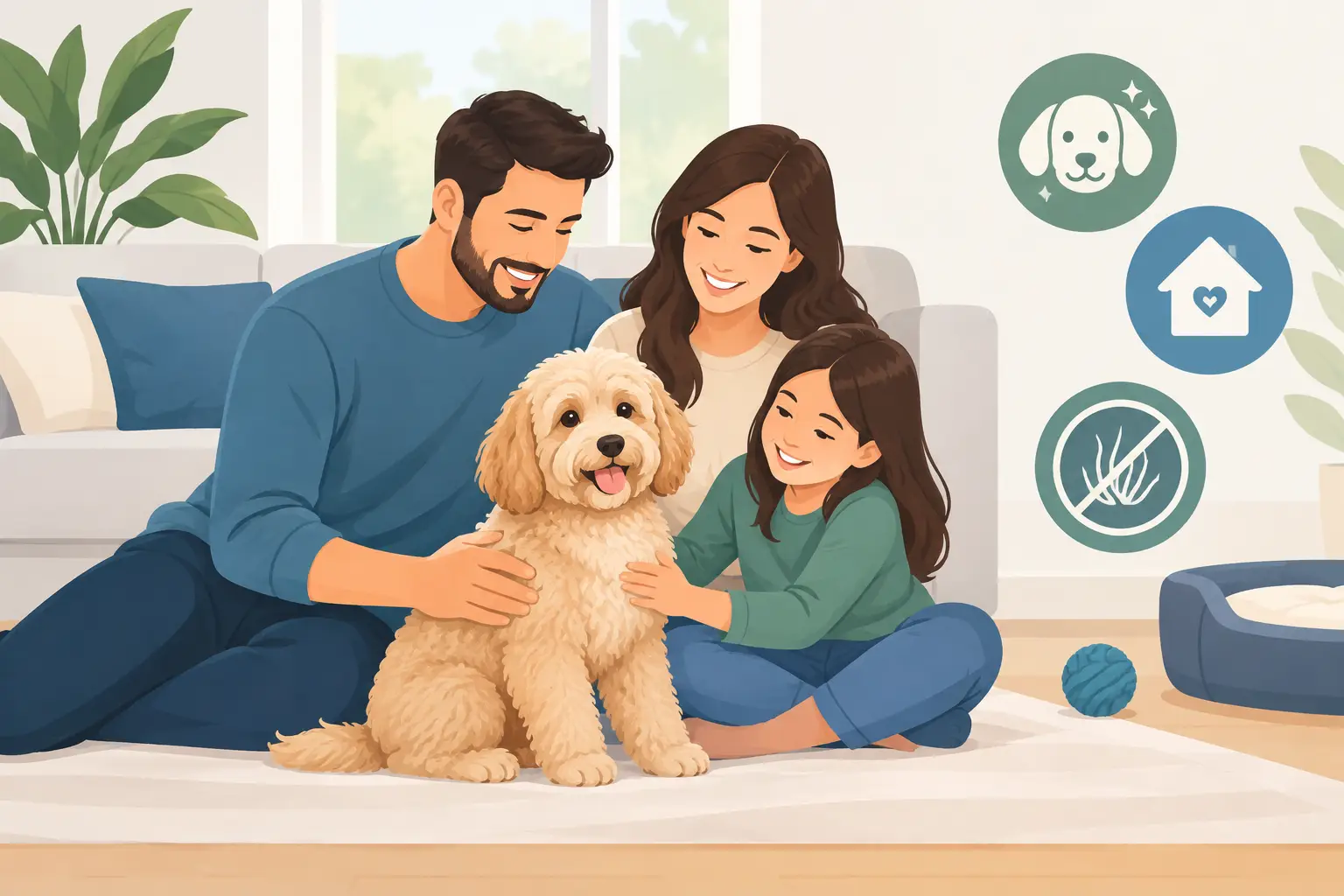
Temperament deserves the same practical attention. Families often choose Australian Labradoodles because they hope for a friendly, trainable, low-shedding companion with the potential to fit beautifully into family life. Genetics influence temperament, but early experiences matter greatly as well. Puppies raised in a busy, caring home environment have opportunities to become familiar with gentle handling, household sounds, people, and early routines. Health testing and early socialization work together, but neither replaces the other.
Red Flags to Take Seriously
Most families are not looking to interrogate a breeder. They simply want enough information to make a confident choice. A few responses should prompt you to slow down and ask more questions.
Be cautious if a breeder makes absolute claims that their puppies are “guaranteed healthy” with no discussion of limitations. Also be wary of breeders who say DNA testing is unnecessary, cannot provide records, or use a single health label without explaining what it means. A promise of “hypoallergenic” should also be handled honestly. Australian Labradoodles are often low-shedding and may be a better fit for some allergy-sensitive households, but no dog can be guaranteed allergy-free for every person.
It is also reasonable to pause when a breeder focuses only on color, size, or availability while avoiding questions about parent health and puppy raising. A puppy’s appearance may catch your eye, but the care behind that puppy’s first weeks should guide your decision.
Questions That Lead to Clear Answers
A good conversation does not need to be complicated. Ask which genetic conditions both parents were screened for, whether either parent is a carrier, and how the breeder selected the pairing. Ask what non-DNA health clearances were completed and whether you can review the documentation.
You can also ask how the breeder follows puppies after they go home. Responsible programs want to hear how their dogs mature because that feedback helps inform future breeding decisions. Health guarantees and contracts should be read carefully as well. They are not a substitute for testing, but they show whether the breeder stands behind their process and provides a clear plan if a covered concern arises.
If you are considering a puppy for therapy work, frequent travel, or a home with young children, share that early. The right match involves more than test results. A knowledgeable breeder can help guide you toward a puppy whose energy level, confidence, and personality fit the life you are building.
A Balanced Way to Choose With Confidence
The best breeders welcome informed families. They do not use genetic testing as a marketing phrase or expect you to accept broad assurances without context. Instead, they can show how testing fits into a larger commitment to healthy dogs, thoughtful pairings, nurturing early care, and lifelong support for the families who welcome their puppies home.
As you compare breeders, let transparency carry real weight. The right puppy is not simply the one with the cutest face or the earliest pickup date. It is the puppy backed by careful decisions, honest communication, and a breeder who treats your future family member with the care that relationship deserves.