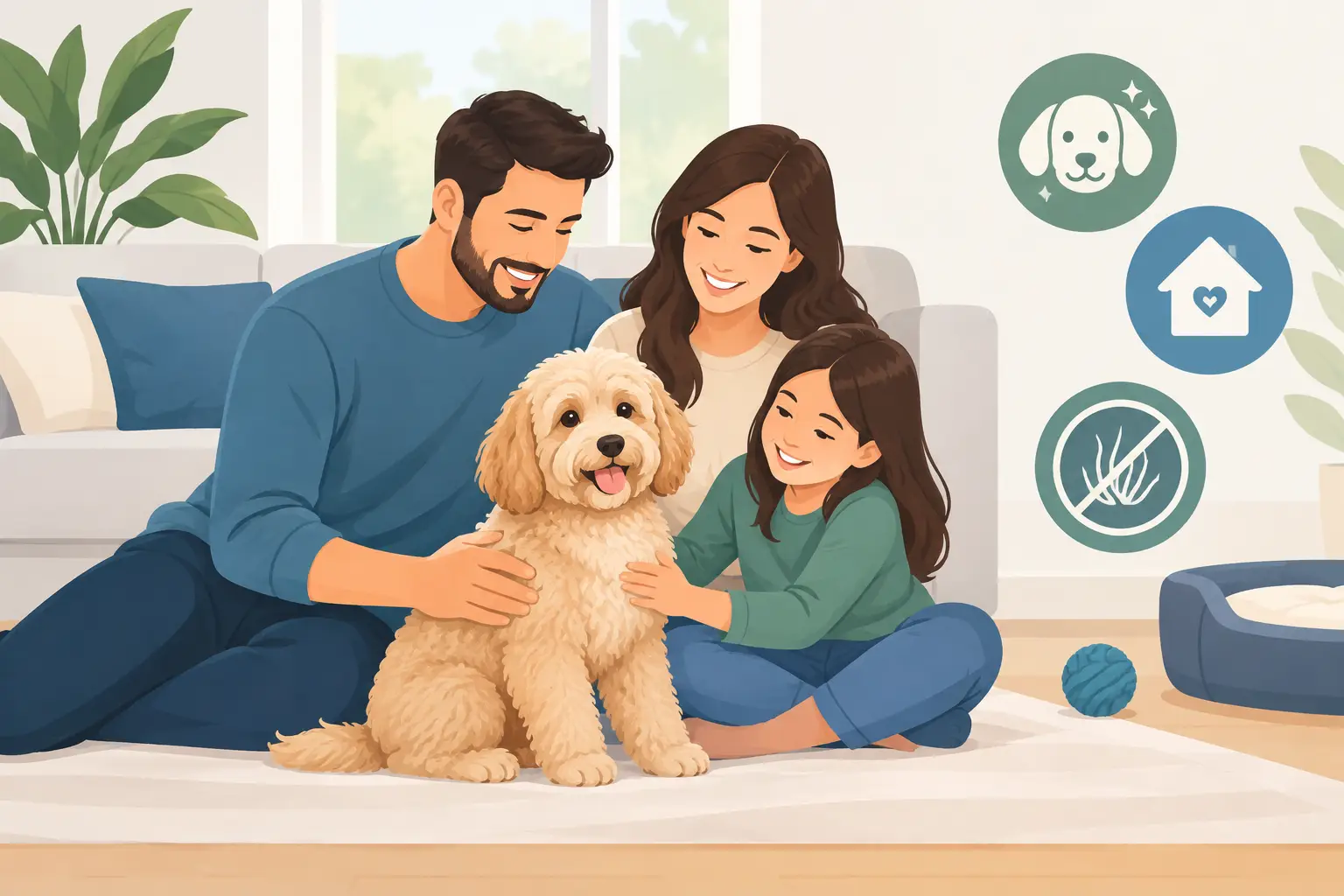
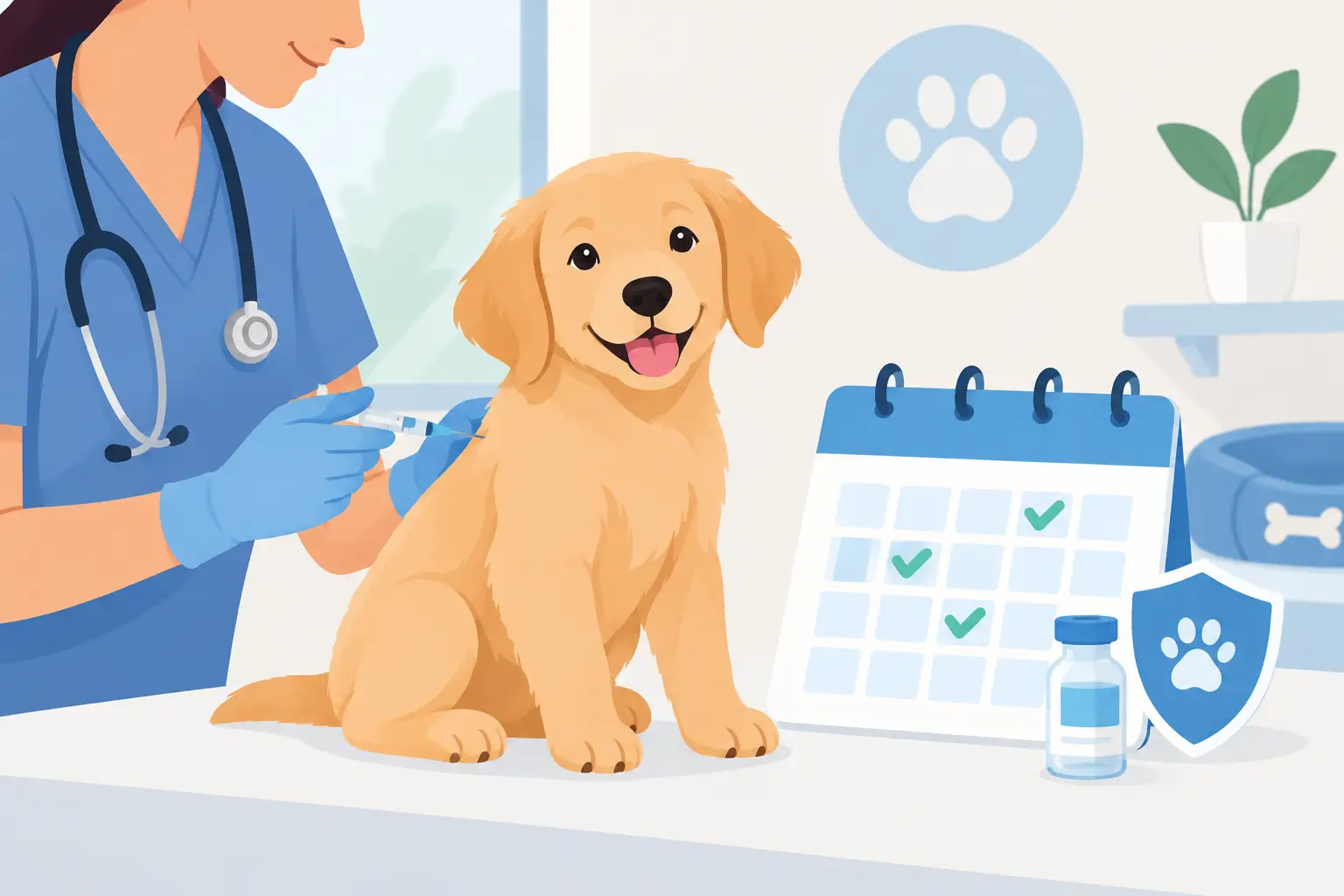
The first weeks with a new puppy are full of joyful milestones: the first night home, the first successful potty break, and the first tiny tail wag when your family walks into the room. A puppy vaccination schedule guide helps you plan another essential part of that season: protecting your puppy while their immune system is still developing.
For families welcoming an Australian Labradoodle or any new puppy, vaccines are not simply another appointment to check off. They create the foundation for safe adventures, puppy classes, neighborhood walks, grooming visits, and a healthy life alongside the people your dog loves.
Why puppy vaccines follow a series
Puppies receive early immune protection through their mother’s milk. Those maternal antibodies are valuable, but they gradually fade at different rates in different puppies. Until they fade, they can also interfere with how well a vaccine works.
That is why veterinarians give a series of vaccines rather than one injection. Repeating core vaccines at carefully spaced intervals gives your puppy the best chance to build reliable immunity as maternal antibodies decline. The final puppy doses matter just as much as the first ones.
Your veterinarian should always set the plan for your individual puppy. Your puppy’s age at homecoming, medical history, local disease risks, and lifestyle all influence the right timing. Keep your breeder’s health records and bring them to the first veterinary visit so your veterinarian has a clear starting point.
Puppy vaccination schedule guide by age
The following timeline reflects the general schedule many US veterinarians use. Think of it as a helpful planning tool, not a replacement for veterinary advice.
Six to eight weeks: the first core protection
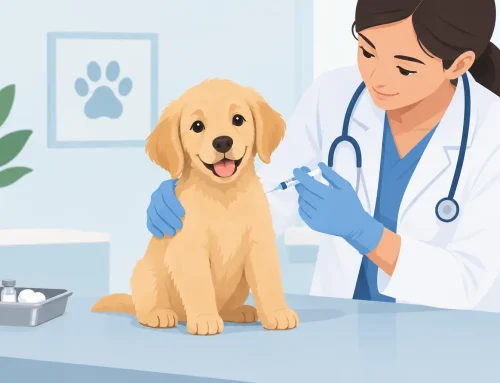
Many puppies receive their first combination vaccine between 6 and 8 weeks of age, often while still with their breeder. This vaccine commonly protects against distemper, adenovirus, parvovirus, and parainfluenza. You may hear it called DHPP or DAPP.
Parvovirus is one reason families should take this timeline seriously. It can survive in the environment and cause severe illness in unprotected puppies. A clean, well-managed early environment is valuable, but it does not eliminate the need for a complete vaccine series.
Nine to 12 weeks: building on the first dose
A second DHPP or DAPP dose is commonly given 3 to 4 weeks after the first. Depending on your veterinarian’s recommendations and local risk, this visit may also be when non-core vaccines are discussed.
Bordetella, often associated with kennel cough, may be recommended for puppies who will attend puppy class, visit a groomer, stay with a sitter, or spend time around other dogs. Leptospirosis may be advised in areas with wildlife, standing water, farms, or rodent exposure. This is a conversation worth having early, especially for active East Coast families who enjoy trails, parks, and time outdoors.
Twelve to 16 weeks: completing the puppy series
Puppies typically receive additional DHPP or DAPP doses every 3 to 4 weeks until they are at least 16 weeks old. The timing is intentional. A dose administered at or after 16 weeks helps cover the period when maternal antibodies may have lasted longer than expected.
Rabies vaccination is required by law in most locations and is commonly given around 12 to 16 weeks, based on state and local rules and your veterinarian’s guidance. Your veterinarian will provide a rabies certificate, so keep it with your puppy’s medical records. You may need it for travel, boarding, grooming, licensing, or rental requirements.
After the first birthday: boosters and adult care
Your puppy will need booster vaccines about a year after the final puppy doses. After that, vaccine timing varies by vaccine, product, local law, and your dog’s exposure risk. Some vaccines may be given annually, while others may be given less often.
This is one area where a one-size-fits-all chart falls short. A homebody with a fenced yard has different exposure than a dog who attends daycare, visits dog-friendly stores, hikes regularly, or stays at boarding facilities. Your veterinarian can help you choose protection that fits your family’s real routine.
Core vaccines and lifestyle vaccines
Core vaccines are broadly recommended because they protect against serious, widespread diseases. For most puppies, these include distemper, adenovirus, parvovirus, parainfluenza, and rabies.
Non-core vaccines are not less valuable. They are simply based more heavily on exposure. Bordetella, leptospirosis, canine influenza, and Lyme disease vaccines may be appropriate depending on where you live and how your puppy will spend time. A family in suburban Virginia with deer in the backyard may have different needs than a family in a city apartment, even if both have healthy, well-loved puppies.
Be honest with your veterinarian about your plans. Mention future puppy kindergarten, grooming, travel, dog parks, hiking, boarding, and contact with other pets. Clear answers lead to better recommendations.
Safe socialization before vaccines are complete
Families sometimes hear that puppies should avoid public places until they are fully vaccinated. That caution comes from a real concern: young puppies can be vulnerable to diseases such as parvovirus. But socialization also has a meaningful developmental window, and waiting until every vaccine is complete can make it harder for a puppy to become confident around new people, sounds, surfaces, and experiences.
The goal is thoughtful exposure, not isolation or unnecessary risk. Until your veterinarian says public ground is safe, carry your puppy in higher-traffic areas, invite healthy and vaccinated dogs you know to visit, and let your puppy watch the world from a clean blanket, stroller, or car. Short, positive outings help your puppy learn that unfamiliar things are normal.
Avoid dog parks, pet store floors, shared apartment dog areas, and places where unknown dogs may have eliminated until your veterinarian approves them. Also avoid contact with dogs that are sick, unvaccinated, or of unknown vaccination status. A good puppy class that requires age-appropriate vaccination can be a wonderful next step, but ask your veterinarian when your puppy is ready.
What to expect after a vaccine visit
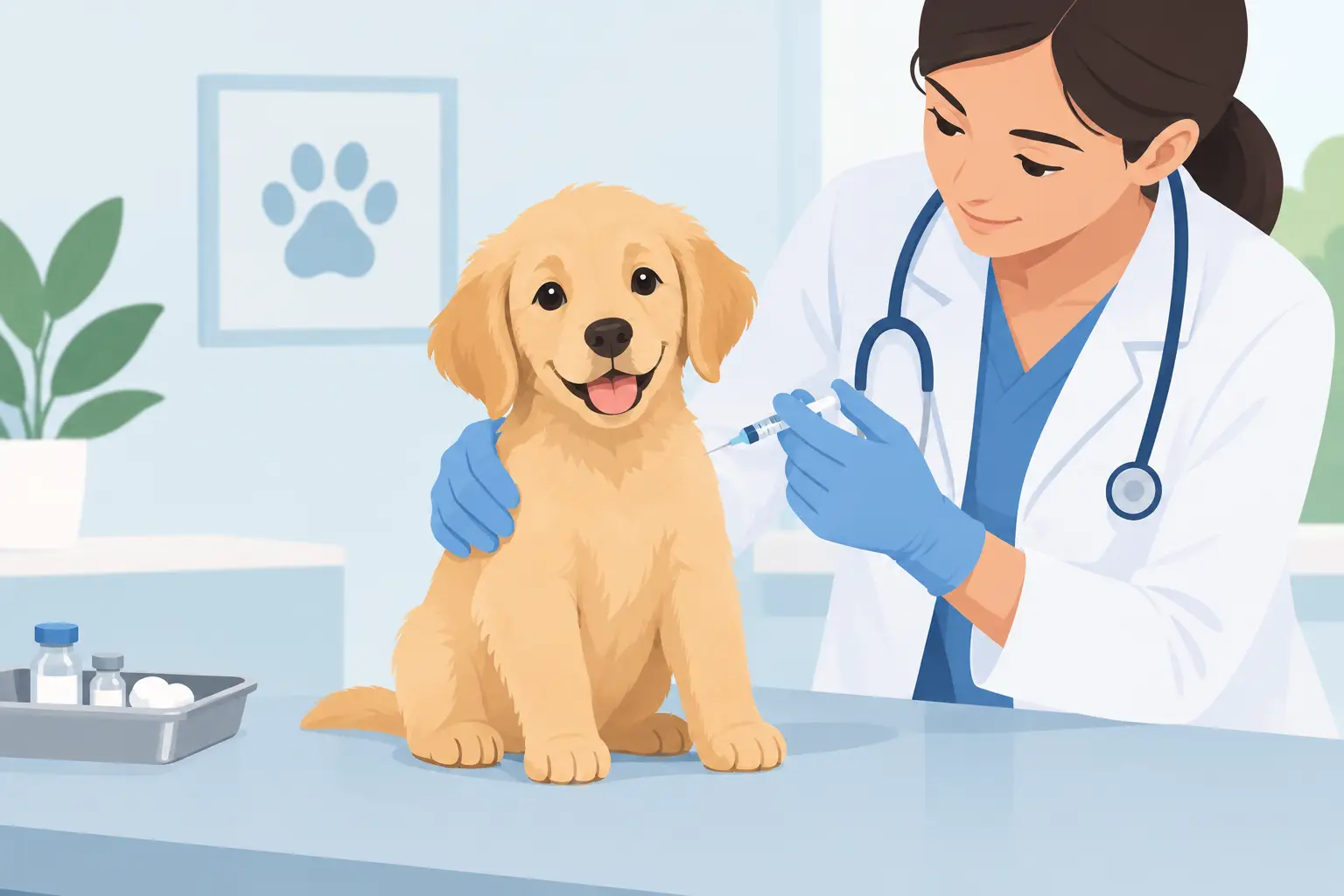
Most puppies do well after routine vaccinations. Mild tiredness, tenderness at the injection site, a reduced appetite for a meal, or a brief low-energy day can happen. Plan a quiet afternoon, offer water, and give your puppy a comfortable place to rest.
Call your veterinarian promptly if you notice facial swelling, hives, repeated vomiting, trouble breathing, collapse, severe lethargy, or any reaction that worries you. These reactions are uncommon, but they need timely care. Never give human pain relievers or medications unless your veterinarian specifically instructs you to do so.
It also helps to keep a simple record of each appointment: the date, vaccines received, product information, reactions, and the next due date. Save paper records and take a photo for your phone. Those details make future grooming, boarding, travel, and veterinary visits much easier.
Preparing for your puppy’s first veterinary appointment
Schedule a new-puppy exam soon after homecoming, even if your puppy has already been examined and vaccinated. Your veterinarian can check overall health, review deworming history, discuss parasite prevention, assess nutrition, and answer questions that are specific to your puppy.
Bring every record you received, including vaccine dates, deworming information, microchip details if applicable, and notes about diet. If you have questions about your puppy’s stool, appetite, sleep, chewing, or training, write them down beforehand. New puppy days are busy, and it is easy to forget the question you meant to ask.
At Providence Hill Australian Labradoodles, we believe informed families are more confident families. Your veterinarian is an essential partner in your puppy’s lifelong care, and following a personalized vaccine plan gives your new companion the protection needed to grow, learn, and enjoy the family life waiting for them.
Keep each vaccine appointment on the calendar, celebrate the small wins between visits, and let your puppy’s world grow at a pace that protects both their health and their confidence.