
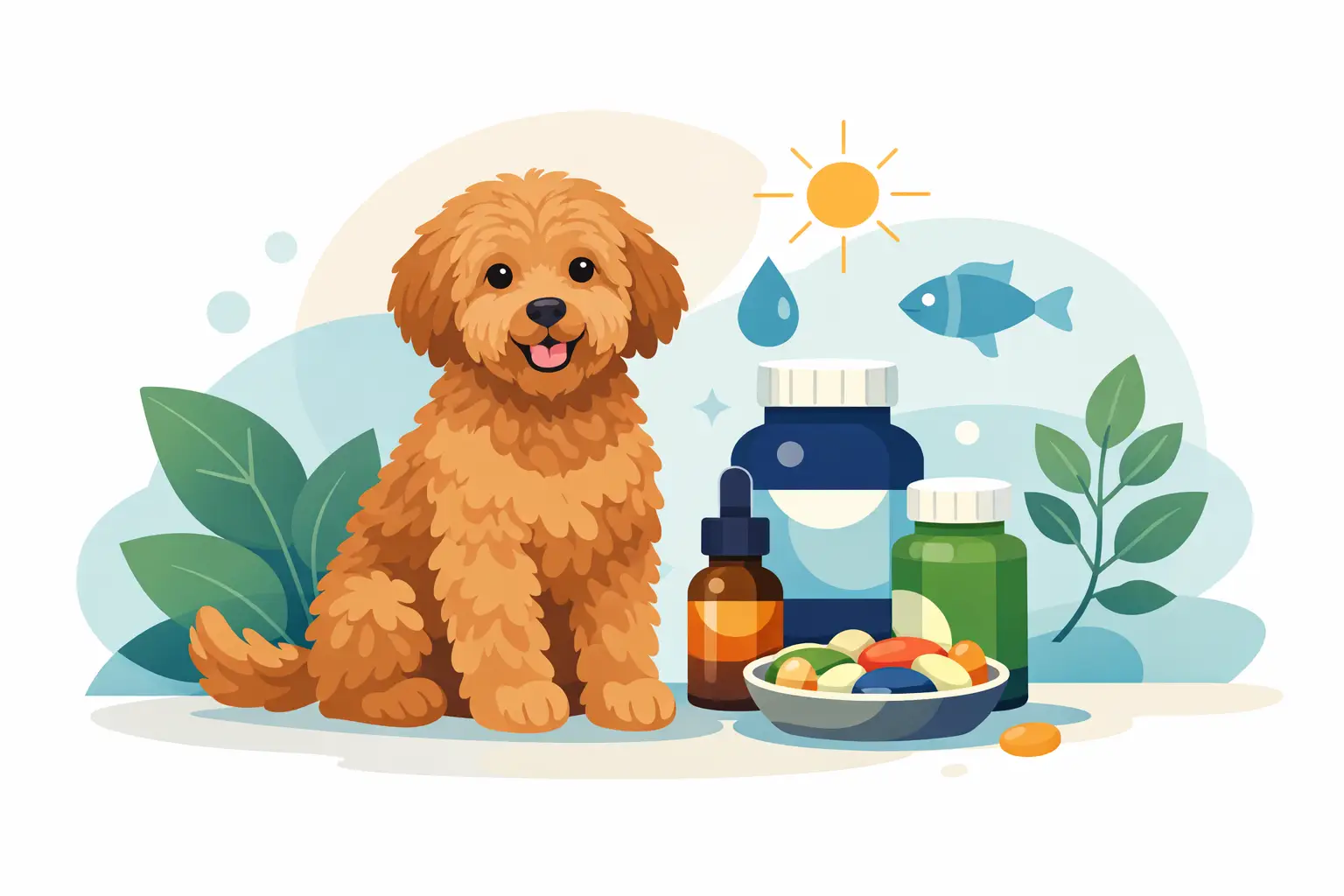
A shiny coat, steady growth, and a settled stomach often tell you more about a puppy’s health than any trendy supplement label ever will. When families ask about australian labradoodle vitamins, the real question is usually this: does my puppy actually need extra support, or is a good diet enough?
For most Australian Labradoodles, a complete and balanced food does the heavy lifting. That is especially true during puppyhood, when the right commercial diet is formulated to provide the vitamins and minerals needed for healthy development. Vitamins can play a helpful role, but they are not a shortcut for poor nutrition, and more is not always better.
Do Australian Labradoodle vitamins matter?
Yes, but context matters. Australian Labradoodles are active, intelligent, family-centered dogs, and their nutritional needs are tied to life stage, activity level, digestion, coat quality, and overall health. A healthy puppy eating a well-made puppy food may not need any additional vitamin support at all. On the other hand, a dog with a sensitive stomach, a picky appetite, skin issues, or a stressful transition into a new home may benefit from carefully chosen supplementation.
This is where many owners get mixed messages. Pet stores are full of products promising better joints, calmer digestion, stronger immunity, and softer coats. Some are useful. Some are unnecessary. A few can even create imbalance if layered on top of an already complete diet.
Start with food before adding supplements
If you are thinking about australian labradoodle vitamins, begin with the basics. Ask what your dog is eating every day, how consistently they eat it, and whether they are thriving on it. A high-quality puppy or adult formula that meets established nutritional standards should already contain the vitamins your dog needs in the right proportions.
That matters because vitamins do not work in isolation. Calcium, phosphorus, vitamin D, trace minerals, and fatty acids all interact with each other. Adding random supplements can throw off that balance, especially in growing puppies. This is one reason breeders and veterinarians often recommend keeping things simple during the early months.
A puppy with good energy, healthy stools, clear eyes, steady growth, and a soft coat is usually telling you the current plan is working. If those signs are off, the answer may be a diet change, a feeding adjustment, or treatment for an underlying issue rather than a shelf full of extras.
Which vitamins and nutrients are most relevant?
Owners often use the word vitamins to mean any nutritional supplement, but it helps to separate true vitamins from broader support products.
B vitamins and energy support
B vitamins help with metabolism, nervous system function, and normal growth. Most complete dog foods already include enough of them, so deficiency is uncommon in well-fed dogs. If a puppy has poor appetite or digestive upset, the issue is usually not a simple B vitamin shortage.
Vitamin A, D, E, and K
These fat-soluble vitamins are essential, but they are also the ones to be careful with. Because the body stores them, too much can become a problem over time. That is why adding extra vitamin drops or powders without guidance is not a great idea, particularly for puppies.
Omega fatty acids for skin and coat
Technically these are not vitamins, but they are often part of the same conversation. For Australian Labradoodles, omega-3 fatty acids can be one of the most useful additions when skin is dry or the coat looks dull. They may also support inflammation balance and overall skin comfort. The trade-off is that quality matters, and too much can cause loose stools.
Probiotics and digestive support
Again, not a vitamin, but commonly grouped with daily wellness products. Many Labradoodle owners find digestive support more helpful than traditional vitamin supplementation, especially during transitions. Moving to a new home, changing food, and adjusting to a new routine can all affect stool quality. A well-chosen probiotic can sometimes help maintain balance while the puppy settles in.
Joint support nutrients
Australian Labradoodles are not typically discussed the way giant breeds are, but joint health still matters. Glucosamine, chondroitin, and related ingredients are not vitamins, yet owners often ask about them early. In a healthy young puppy, these are usually not urgent unless advised for a specific reason. In active adults or aging dogs, they may be more relevant.
When a puppy may benefit from supplementation
There are times when extra support makes sense. A picky eater who is not consuming enough complete food may need short-term help, but the bigger goal is fixing the feeding issue. A dog with chronic loose stools may benefit from digestive support while the cause is sorted out. A dog with skin irritation may improve with omega support, but allergies, environment, grooming products, and food sensitivity should also be considered.
For families bringing home a new puppy, transition is the most common season when questions about vitamins come up. Travel, excitement, new schedules, and learning crate and potty routines can all put mild stress on the body. During that window, simple support products are often more useful than heavy supplementation. Think gentle digestive support, consistency in feeding, and close observation rather than trying five new products at once.
When vitamins can do more harm than good
This is the part many websites skip. Over-supplementing puppies is easy to do because owners want to do everything right. But too much calcium, excess vitamin D, or unnecessary layered products can create problems rather than prevent them.
If your dog is eating a complete puppy food and also getting a multivitamin, fortified treats, skin chews, and extras mixed into meals, you may be doubling up more than you realize. The risk is not always dramatic, but it can lead to digestive upset, nutrient imbalance, and confusion when trying to figure out what is actually helping.
There is also a quality issue. Some pet supplements are excellent. Others are mostly marketing. Labels can sound impressive while offering low potency, poor sourcing, or ingredients your dog does not need.
How to choose australian labradoodle vitamins wisely
If you and your veterinarian decide supplementation is appropriate, choose with a clear purpose. Do not buy a product just because it says puppy wellness or breed support. Ask what job the product is supposed to do.
If the goal is coat support, look for ingredients that genuinely address skin and coat health. If the goal is digestive stability, a probiotic or gut-focused supplement makes more sense than a general multivitamin. If the goal is recovery after appetite loss or stress, use a product suited to that period rather than committing to a permanent routine right away.
It also helps to introduce one product at a time. That way, if stools change or itching improves, you know what likely caused it. Families often make the mistake of changing food, adding vitamins, offering new treats, and starting training rewards all at once. Then no one knows what the puppy is responding to.
What breeders usually want families to remember
A well-bred Australian Labradoodle should begin life with thoughtful nutritional support already in place. That does not mean every puppy needs the exact same plan forever. It means a strong start, consistency, and careful observation tend to matter more than chasing every supplement trend.
At Providence Hill Australian Labradoodles, that kind of practical approach fits the way families succeed with their puppies. New owners usually do best when they focus first on routine, quality food, clean water, healthy digestion, and a calm transition into the home. Once that foundation is in place, it becomes much easier to tell whether a vitamin or supplement is truly helpful.
Questions to ask before adding anything
Before you start a new product, ask a few simple questions. Is my dog eating a complete and balanced diet consistently? Am I trying to solve a real problem or just prevent one I am worried about? Is this a vitamin deficiency issue, or is it more likely related to digestion, stress, skin sensitivity, or food tolerance? Has my veterinarian or breeder suggested this for a reason?
Those questions keep you grounded. They also help you avoid spending money on products that sound reassuring but do not actually change your dog’s day-to-day health.
Australian Labradoodle vitamins can have a place, but the best results usually come from using them thoughtfully rather than automatically. A healthy puppy does not need a complicated wellness routine. Most of the time, what helps most is simple, steady care and paying close attention to the dog right in front of you.